
Roadmap to Reality: Blessed Carlo Acutis’ path to holiness

courtesy photo/Castletown Media
“The infinite is our homeland…” - Blessed Carlo Acutis
If you were to poll a random group of people, asking them to give descriptors for Catholic saints they may have heard of, “relatable” would likely be far down on the list of responses you would get. Other, more to be expected replies would very probably include: “weird,” “out-of-touch,” “backwards.” Someone might finally say the quiet part out loud and flatly call the saint in question, indeed saints in general, “unrelatable.” However, if you informed these same individuals that the Catholic Church has considered sainthood for a 15-year-old who passed away in 2006, was internet-savvy, and who owned a PlayStation, you may see some incredulous expressions.
Tragically, to the modern person, saints have become nearly akin to mythical creatures, figures so utterly removed from 21st century society and, thus, our everyday lives, as to be relevant only in history courses; even then, many would call into question the right of saints to be included in any academic discussion whatsoever. Young people especially, who have grown up in the most spiritually bereft era in human history, where religion is routinely mocked and ridiculed online and those who profess faith of any kind are frequently ostracized, are apt to see religion as just something that their grandparents did; they might even say that they “escaped.” Although they may not realize this, the youth of today are hungering for the example of someone like Carlo Acutis.
“Carlo Acutis: Roadmap to Reality,” in a deft choice of storytelling, follows the journey of a group of high school students from North Dakota who embark on a pilgrimage to Rome organized by the University of Mary. Crucially, they are leaving their phones behind for the trip. Although hesitant at first, the students gradually come to realize (and are quite shocked by the realization) that they spend so much time on the internet that it, not the physical world around them, had begun to feel like the “real” world. One student described the experience of daily life on the sans-smartphone pilgrimage as somewhat dreamlike. Conversations were longer, sounds seemed louder, friendships felt stronger.
One of the rhetorical geniuses of this film is the connections drawn between the balance Carlo himself was able to find between technology and spirituality, and the desperate need for young people to disconnect from the digital world as much as possible, while still being able to recognize the tremendous potential for evangelization that the internet gives us. Through a segment which highlights Blessed Carlo’s website wherein he catalogued Eucharistic miracles from around the world, the film effectively argues for the use of technology as a tool to spread the message of Christ in the digital age. Saint Paul is given as an example of someone who, if the internet had been around in his day, would have most certainly taken advantage of this easy way to spread the Gospel.
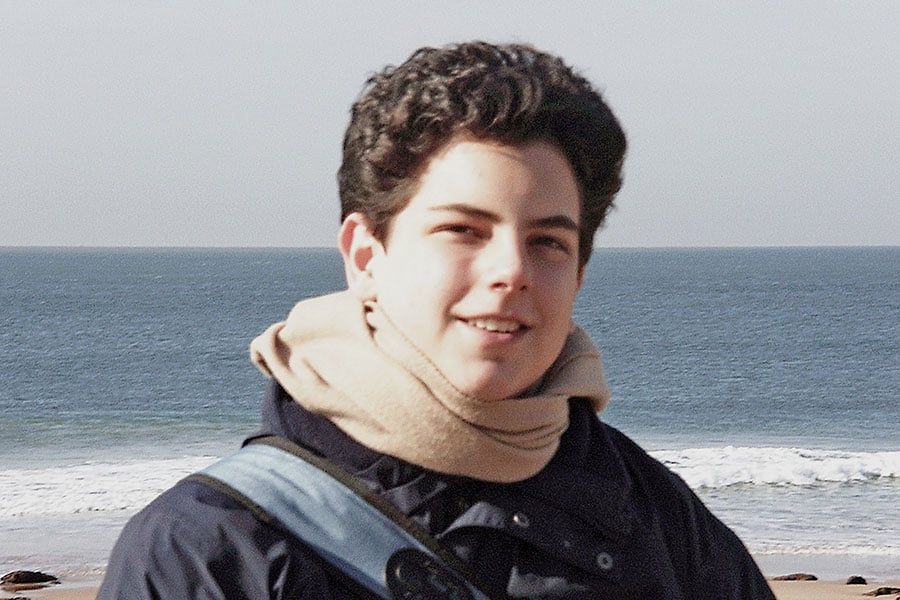
Scoring more points in the relatability column for Carlo, the film showcases testimony from his parents, along with others who knew him well during his life. This lends a profound vivacity to both Carlo and his story; here is a future saint who has living relatives, living friends and acquaintances, all of whom act as living books that tell, in the present moment, how Carlo changed their lives. Imagine if there were people who had made friends with Saint Francis of Assisi still around today. One need only imagine how they would speak of him to others.
Finally, and perhaps most importantly (as no doubt Carlo himself would have thought), this film does a superb job of underscoring the importance of the Eucharist in Catholic life. As a boy, Carlo developed a strong devotion to Christ in the Eucharist, even to the point of confusion regarding his classmates’ seeming apathy concerning the sacrament.
If Jesus, the Incarnate Word of God, was truly present in the tabernacle of every Catholic church, why wouldn’t they all be desperate to be in His presence?
This is a question from which we may all profit by asking ourselves. Our society is obsessed with spectacle, with things that look impressive. Whether or not they actually are is, a great deal of the time, irrelevant. In fact, you might be questioned for trying to peel back whatever layers of chrome might have been painted on something. The Eucharist, however, presents the exact opposite of a spectacle. It forces us to look beyond the accidents of bread and wine, and into the Body, Blood, Soul, and Divinity of the Lord.
“Carlo Acutis: Roadmap to Reality” is true to its title. Not only does it share the journey of Carlo’s path to sainthood, it provides its viewers with what is, truly, a roadmap back to reality. A map back to wonder, a map back to reverence, a map back to connection with God through the person of Jesus Christ. It is a masterwork of Catholic filmmaking, deeply relevant for all people, but deepest of all for the youth.
Carlo Acutis will be a saint forever, but he is, critically, a saint for now.
The film is now streaming exclusively on WatchCredo.com.