
The Path of Hope: What you need to know about the Ordinary Jubilee of 2025, in seven questions
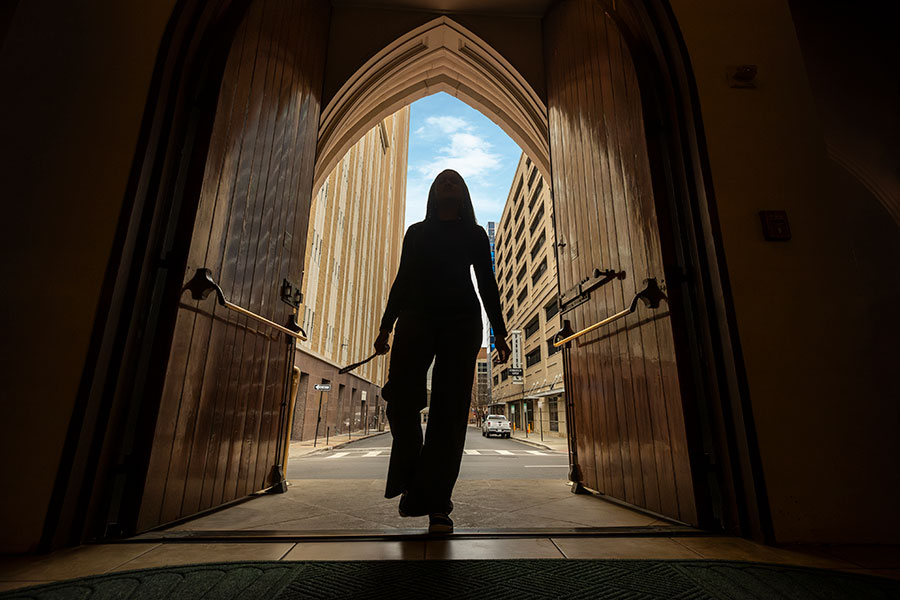
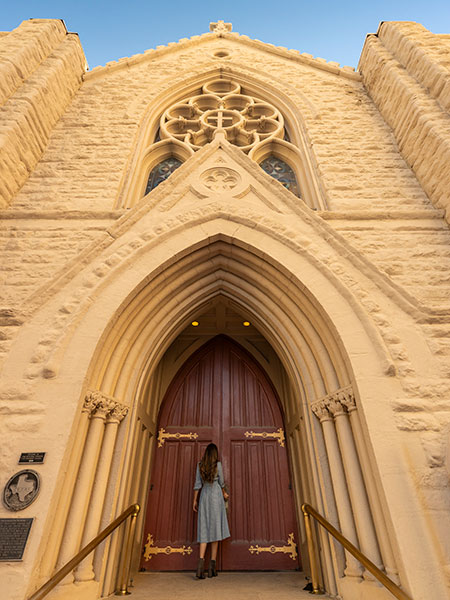
A woman enters the doors of St. Patrick Cathedral in Fort Worth, which has been designated a Jubilee site. (NTC/Juan Guajardo)
As we walk as disciples of Christ, the Church presents special opportunities to remember God’s mercy and to receive God’s graces to comfort and strengthen us on our journey toward our heavenly home.
Some of these opportunities for grace are frequent, such as the Holy Mass and reconciliation, and others less so — such as the Ordinary Jubilee of 2025.
Here, in a nutshell, are the basics of this Holy Year dedicated to growing in hope and bringing the hope of Christ to others.
What is a jubilee?
A jubilee is an ancient tradition of a special Holy Year proclaimed by the pope to experience a “lively experience of grace and hope” through pilgrimage, indulgences, the sacrament of reconciliation, and acts of love and service.
A pilgrimage, whether to Rome or closer to home, is a central component of every jubilee. “Setting out on a journey is traditionally associated with our human quest for meaning in life,” Pope Francis stated.
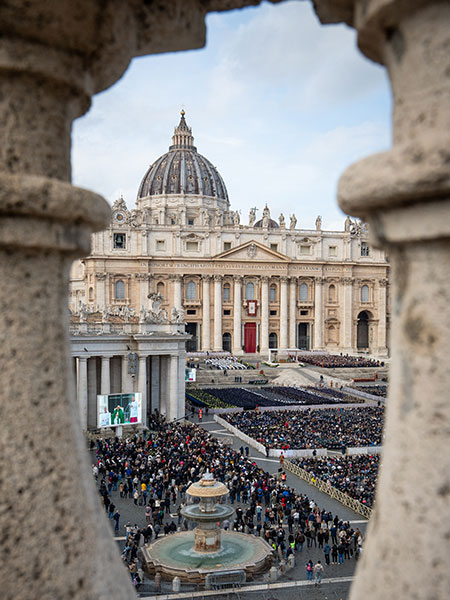
“For everyone, may the Jubilee be a moment of genuine, personal encounter with the Lord Jesus,” Pope Francis said in his proclamation of a Holy Year.
(Source: “Spes non Confundit [Hope does not Disappoint],” the Bull of Indiction of the Ordinary Jubilee of the Year 2025)
When is the Jubilee?
Pope Francis inaugurated the Ordinary Jubilee of 2025 by opening the Holy Door of the Basilica of St. Peter in the Vatican on Christmas Eve, 2024.
The Jubilee will close in churches in the Diocese of Fort Worth on Dec. 28, 2025, and Pope Francis will close the Holy Door of St. Peter on Jan. 6, 2026, the Solemnity of the Epiphany of the Lord.
What is happening in Rome and the Holy Land?
Pope Francis has designated the four papal basilicas and 16 other Roman churches as Jubilee churches, as well as some unexpected sites: Rebibbia Prison in Rome and the chapel of the Italian naval ship “Amerigo Vespucci.”
Visitors to Nazareth, Bethlehem, and Jerusalem will find a basilica chosen as a Jubilee site in each location, as well as churches in Jordan, Cyprus, and North Cyprus.
The Vatican has planned Jubilee gatherings with liturgies, speakers, and papal audiences for more than 30 special groups, including deacons, health care workers, and teenagers, which will coincide with the Mass for the canonization of Blessed Carlo Acutis on April 27.
What can I do in the Diocese of Fort Worth?
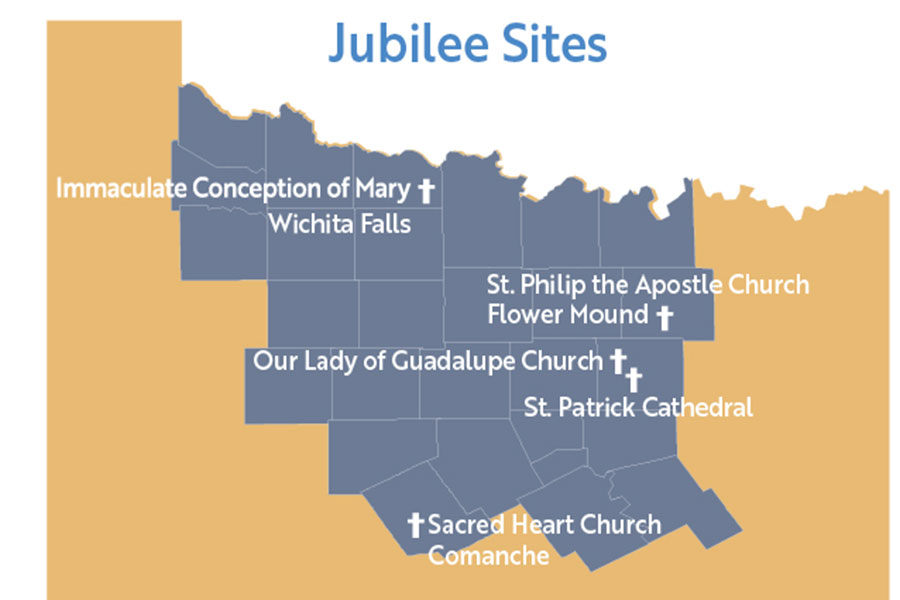
If you aren’t one of the estimated 35 million pilgrims expected to visit Rome during the Jubilee of 2025, Bishop Michael Olson has designated five churches in the Diocese of Fort Worth as sacred Jubilee sites for reconciliation, Holy Mass, or Eucharistic Adoration:
- St. Patrick Cathedral in Fort Worth
- Immaculate Conception of Mary Parish in Wichita Falls
- Our Lady of Guadalupe Parish in Fort Worth
- Sacred Heart Parish in Comanche
- St. Philip the Apostle Parish in Flower Mound
The faithful can obtain a jubilee indulgence for devout visits to sacred sites.
Check the diocesan (fwdioc.org) or parish websites for other information, including Mass, Eucharistic Adoration, and reconciliation schedules.
“Within these sites, the faithful may obtain the jubilee indulgence individually and in groups. ... Through the establishment of these pilgrimage sites, may we all experience renewal in the faith and ‘God’s forgiveness, which knows no bounds.’”
— Bishop Michael F. Olson, "Decree of 2025 Jubilee Sites"
What is the theme of the Ordinary Jubilee of 2025?
In a word — hope.
Pope Francis titled the proclamation of the Holy Year, “Spes Non Confundit,” which means “Hope does not disappoint,” as stated by St. Paul in Romans 5:5.
In the proclamation, he stated, “For all of us, may the Jubilee be an opportunity to be renewed in hope. God’s word helps us find reasons for that hope.
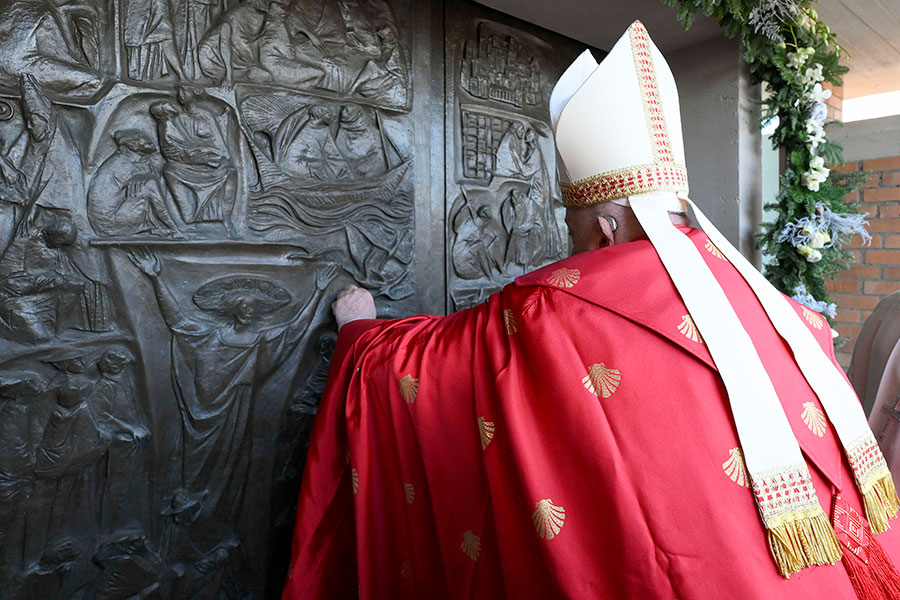
“Now the time has come for a new Jubilee, when once more the Holy Door will be flung open to invite everyone to an intense experience of the love of God that awakens in hearts the sure hope of salvation in Christ,” he continued.
The logo represents our resolute hope in Christ. It depicts four figures, which represent humanity from the four corners of the Earth. Standing on waves, they hold onto a cross, the base of which is an anchor, to symbolize that amid the troubled waters of life, we must hold fast to Jesus Christ, our stability and security. The cross bends toward the figures to illustrate that God reaches out to us.
At the bottom of the image is the motto for the Holy Year: Pilgrims in Hope.

What is an indulgence?
After sin has been forgiven through the sacrament of reconciliation, the effects of sin can still remain. This is known as temporal punishment, and purification from temporal punishment can occur in this life or in purgatory.
The Church identifies penance, prayer, fasting, almsgiving, good works, and sacrifices as means to satisfy temporal punishment. Another way is an indulgence, a special grace to free oneself from temporal punishment.
An indulgence, according to the Catechism of the Catholic Church, is “a remission before God of the temporal punishment due to sins whose guilt has already been forgiven, which the faithful Christian who is duly disposed gains under certain prescribed conditions through the action of the Church” (1471).
In his announcement of the Jubilee year, Pope Francis declared the gift of the indulgence is “a way of discovering the unlimited nature of God’s mercy. Not by chance, for the ancients, the terms ‘mercy’ and ‘indulgence’ were interchangeable, as expressions of the fullness of God’s forgiveness, which knows no bounds.”
What indulgences can be obtained in the Jubilee?
To obtain a plenary, or full, indulgence for yourself or a faithful departed in purgatory, the individual must be in a state of grace and:
- Have the interior disposition of complete detachment from sin.
- Receive the sacraments of reconciliation and Holy Eucharist within 20 days before or after receiving the indulgence.
- Pray for the pope’s intentions.
- And make a pilgrimage to attend a liturgy or Eucharistic Adoration at a sacred Jubilee site or participate in works of mercy and penance.
By practicing the corporal and spiritual works of mercy, Catholics are “tangible signs of hope for those of our brothers and sisters who experience hardships of any kind,” according to Pope Francis.
The jubilee plenary indulgence may also be obtained through penitential acts, recommending that the penitential nature of Friday be observed through abstaining from entertainment and social media or from excessive consumption and donating a proportionate sum of money to the poor.
Those who cannot participate due to illness, imprisonment, or advanced age can obtain the jubilee indulgence through prayer and offering up the hardships of their life.
Typically, only one plenary indulgence is allowed per day, but “the faithful who have carried out an act of charity on behalf of the souls in purgatory, if they receive Holy Communion a second time that day, can obtain the plenary indulgence twice on the same day, applicable only to the deceased. … Through this double act, a praiseworthy exercise of supernatural charity is carried out, through that bond by which the faithful still journeying on this Earth are united in the mystical Body of Christ with those who have already completed their journey.”
(Source: “Decree on the Granting of Indulgence during the Ordinary Jubilee Year 2025 called by His Holiness Pope Francis”)