The Lone Catholic Rebel
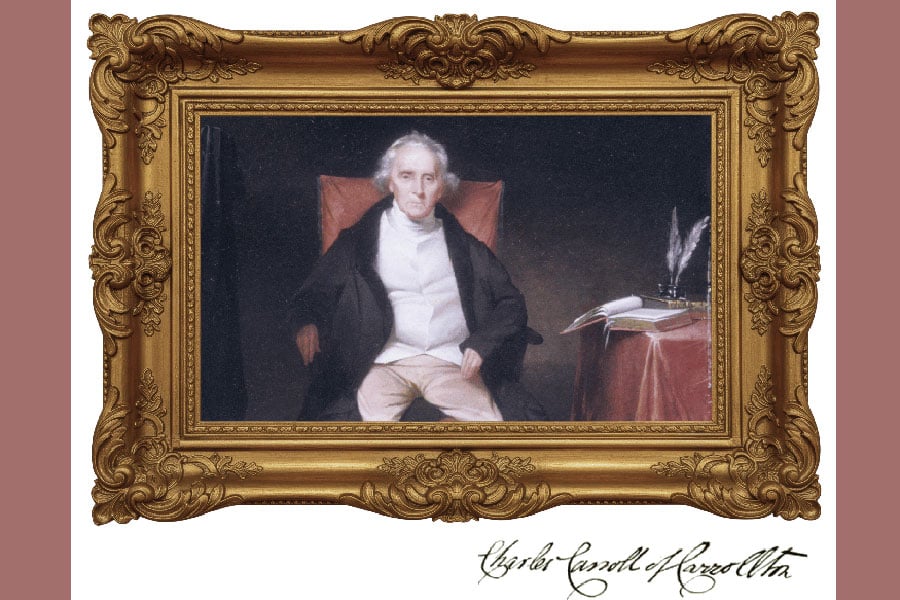
An portrait of Charles Carroll of Carrollton and a copy of his signature. (Adapted from Public Domain)
During this Semiquincentennial — the official way of saying “250th”— anniversary of the adoption of the Declaration of Independence, it is fitting to realize that one solitary Catholic was allowed to sign that crucial document. His activities both before and after that event were as momentous as any other of the Founding Fathers but few know his name any longer.
The apostolic endeavors of missionaries accompanying French, Spanish, and Portuguese explorers graced the New World. In the 1500s the Catholic faith found a permanent home in the southern regions of what became the United States. Not so in the mid-Atlantic colonies of New England and New Amsterdam. No Catholic crew sailed the ocean blue in the English ship “Mayflower” or in the Dutch ship “Fortune.”
The Church of England was established in Virginia and elsewhere whilst dissenters, such as Congregationalists and Presbyterians, established themselves in other colonies. All had laws, more-or-less enforced, barring Catholics from being educated, voting, holding office, practicing law, or engaging in public worship. Pennsylvania alone, founded by peace-loving Quakers, allowed Catholics to build chapels without hindrance.
A place for Catholics
King Charles I granted a proprietary colony in 1632 to George Calvert, the 1st Baron Baltimore, as a refuge for Catholic settlers. Called Maryland, it ostensibly honored Henrietta Maria, Charles’ queen consort. Purchasing land from the Yaocomico Indians — no “stolen land” here — Cecil Calvert, the 2nd Baron Baltimore, established what became the colony’s first capital, St. Mary’s City, demonstrating that the colony was really named for the Mother of God.
The Holy Sacrifice of the Mass was openly celebrated for the first time in an English colony on the Feast of the Assumption, March 25, 1634, the day on which the ships “The Ark” and “The Dove” landed. It is annually celebrated by the state as Maryland Day.
The Maryland Toleration Act allowed anyone who believed in Jesus Christ to settle there. Taking advantage, Puritan rebels seized the colonial government in 1650, burning churches and persecuting Catholics. The Calvert family regained control, ousting the Puritans in 1658.
The Carrolls arrive
In 1689 the first Charles Carroll arrived from Ireland bearing a commission from Baron Baltimore appointing him attorney general. In 1691 the joint monarchs, William and Mary, removed the Calverts as proprietors. Refusing to renounce his faith, Carroll was stripped of his position and imprisoned for a time.
Carroll married the wealthy Mary Darnall in 1693 and cannily began acquiring land. By the time he died in 1720, he was considered the colony’s wealthiest landowner.
He welcomed Catholics to his home each Sunday for Mass, since while seeking “to prevent the growth of Popery in this Province,” an act of 1704 banned public worship but allowed Mass in private.
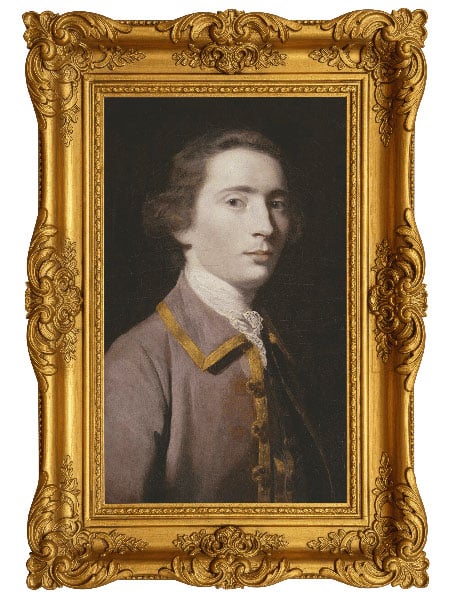
Born in 1702, Charles Carroll of Annapolis inherited and extended his father’s fortune, primarily by growing tobacco and raising thoroughbred horses. As a Catholic, he was forbidden participation in Maryland politics, yet the second Charles, along with his wife, the former Elizabeth Brooke, continued his father’s work to curb anti-Catholic hatred and promote the faith. They lived to see their son eventually secure “his family’s vision of personal, political, and religious freedoms for all citizens” before, during, and after the Revolutionary War.
A founding father
That son was Charles Carroll, born in Annapolis in 1737. He adopted the sobriquet “of Carrollton” primarily to distinguish himself from his father, after accepting a gift from his father of a 10,000-acre estate called Carrollton upon his graduation from university.
Topflight education was important to the Carrolls. At the age of 10, Charles was sent to secretly study at Bohemia Manor, the clandestine Jesuit school in Maryland.
His cousin, John Carroll, destined to become the first archbishop of Baltimore, was a fellow student. Both continued their studies with the Jesuits in Europe. Charles considered his Jesuit education “the most vital component of his spiritual life and successful civic career.”
Says the Catholic Encyclopedia: “In later days he spoke in highest praise of the training he received at St-Omer [Flanders] and the College Louis le Grand [Paris]. To the former he owed his deep conviction of religious truth, and to the latter his critical ability, his literary style, and the basis for the breadth of knowledge which made him an invaluable citizen.”
Charles went on to study law within the exclusive Inner Temple in London before returning to Maryland to wed his cousin, Mary “Molly” Darnall, in 1768. They had seven children, only three of whom survived into adulthood, including a fourth Charles Carroll.
The Carrolls’ personal fortune at this time was some £2.1 million sterling, equivalent to about $375 million today. Welcoming such dignitaries as John Hancock, George Washington, and the Marquis de Lafayette, their home, Doughoregan Manor, and its grounds were the scenes for many social events, “humble feasts,” and after-the-races dinners.
Government by the people
Yet bitterness with George III’s policies grew. Charles staunchly supported colonist demands that their rights be respected by the king, despite his being the wealthiest man in the colonies and thus the man with the most to lose should there be any retaliation from London. In 1770, when the colony’s governor imposed a fee by proclamation, Charles defended Marylanders’ right to tax themselves by representative government.
Beginning with a series of articles appearing in the Maryland Gazette, Charles gained a reputation as a thoughtful scholar and skillful debater, “embracing the principle that the people are the true foundation of government.” After being appointed to the Annapolis Committee of Correspondence and Council of Safety in 1774, Charles Carroll was elected to the 2nd Maryland Convention, effectually ending the ban on Catholics serving in Maryland politics.
In 1775, Charles was elected one of four Maryland delegates to the Second Continental Congress. Early in 1776, Charles, along with Samuel Chase, Benjamin Franklin, and the now-ordained Father John Carroll, were appointed as commissioners to Canada but failed to gain that colony’s support in the growing conflict with Great Britain.
With Chase, Charles persuaded the Maryland Assembly to instruct them to vote in favor of independence. Despite the importance of the date July 4, Charles Carroll of Carrollton, together with many other delegates, did not sign the Declaration until August 2, 1776.
Charles took part in the formation of Maryland’s new government, helping write its first State Constitution and Declaration of Rights in 1776. He served in the Maryland Senate in 1777, being elected president of the Senate in 1783.
Another of Charles’ cousins, Daniel Carroll, was active in Philadelphia, assisting in framing the United States Constitution, specifically the 10th Amendment.
In 1789, Charles became one of Maryland’s first two senators of the new Republic.
The last surviving signer
Through his efforts as city alderman and councilman, St. Mary’s, the first sanctioned Catholic church in Annapolis, was erected on the Carroll property in 1822.
Charles was of two minds when it came to slavery. He had inherited 400-500 Black slaves, needing them for his crops. Yet, knowing persecution as a Catholic, he realized that all men bore the image and likeness of God. He became president of the American Colonization Society (1828-1831) seeking to solve America’s slave problem by humanely resettling them in what would become Liberia.
John Adams and Thomas Jefferson both died on July 4, 1826, the 50th anniversary of the American Republic. On November 14, 1832, Charles Carroll of Carrollton died, a true statesman and public benefactor. He was the last surviving signer of that powerful document proclaiming liberty to all men “endowed by their Creator with certain inalienable Rights, that among these are Life, Liberty and the pursuit of Happiness.”
World without end, Amen.
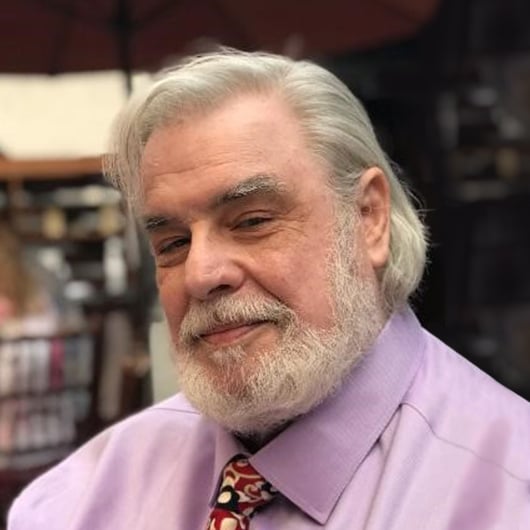
Sean M. Wright, an award-winning journalist and an Emmy-nominated television writer, is a Master Catechist for the Archdiocese of Los Angeles. He is a member of Our Lady of Perpetual Help parish in Santa Clarita, CA and responds to comments sent him at [email protected]. Find more of his columns here.