One Church
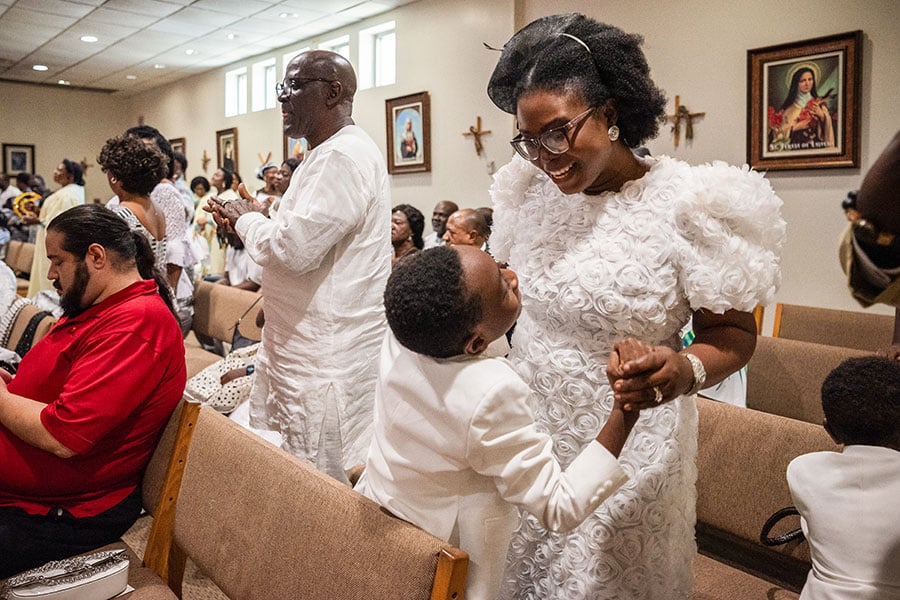
Rosemary Korang Acolatse shares a joyful moment during a Ghanaian Mass at St. Joseph Parish in Arlington on May 31. (NTC/Ben Torres)
Ghana native Charlotte Koranteng began to understand “universality” in the Catholic Church the first time she went to Mass in a foreign country.
“In the 1990s, I was an exchange student in Germany,” remembered the St. Joseph parishioner. “I didn’t understand the German language, but I was able to follow the Mass from beginning to end. Universality means I can go to Mass anywhere in the world and know what’s going on despite the local language.”
Derived from the Greek katholikos, the word “catholic” means universal or according to the whole. The Church is Catholic because all baptized people are members and possess the opportunity for salvation.
Universality refers to its mission to proclaim the Good News of Christ to the entire human race.
The Church’s use of the same liturgical structure, synchronized cycle of Scripture readings, and creed is intentional. It highlights the fundamental belief that the Mass is a unified sacrifice shared by the worldwide Church rather than a local, customized service. All members belong to a single, global community.
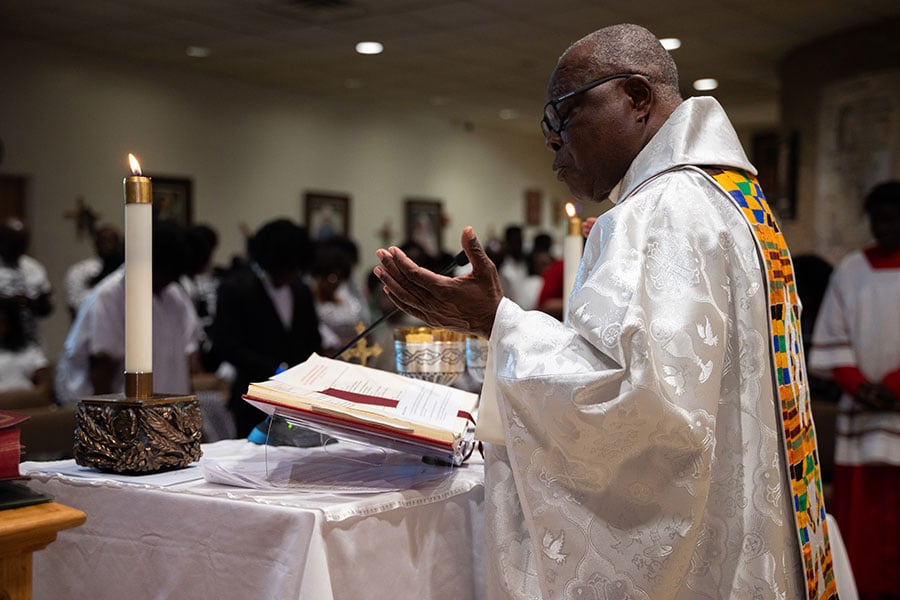
At the same time, parishes embrace the various cultures of its members through multicultural worship, multilingual services, and community outreach. In the Diocese of Fort Worth, quinceañeras, the Vietnamese Tet Lunar New Year holiday, Christmas Posadas, and the African naming ceremony for infants are now commonly celebrated.
Catholicism is not just for one ethnicity, economic class, or society. It is meant for all.
As the population of Catholics in North Texas grows beyond 1.2 million, the diocese continues to embrace the varied traditions, languages, and customs of immigrants calling the Lone Star State home.
Communities of people from Vietnam, Korea, Mexico, Central America, Eastern Europe, and Africa have become an integral part of many parishes, and many attend parishes established to enable worship according to the traditions of their heritage.
Out of Africa
Koranteng moved to the U.S. in 2008 and appreciates the Sunday 1 p.m. Mass celebrated at St. Joseph Church in her native tongue. The Ghanaians who settled in North Texas will have their own parish in Arlington early next year.
“When we come here, we want to continue that culture and have the Mass said in our own dialect,” expressed the administrative assistant who leads the children’s Rosary before the weekly liturgy. “We have a very vibrant community.”
Joseph Nketia joined St. Joseph Church in Arlington 20 years ago and is now president of the parish’s Ghana Catholic mission.
Other immigrants from his homeland like coming to the Ghana Mass every Sunday because they want to worship God in a way that is familiar.
“In Ghana, it’s a long Mass with a lot of music and dancing,” the parish leader said. “They want to experience the music part of it, but language is also important. If they don’t get that, they leave and go to other churches.”
Socializing after Mass builds the feeling of community.
“They want to share the experience of being in this country,” said Nketia, who noted Fort Worth Bishop Michael Olson has celebrated Mass with them several times as well as visited Ghana.
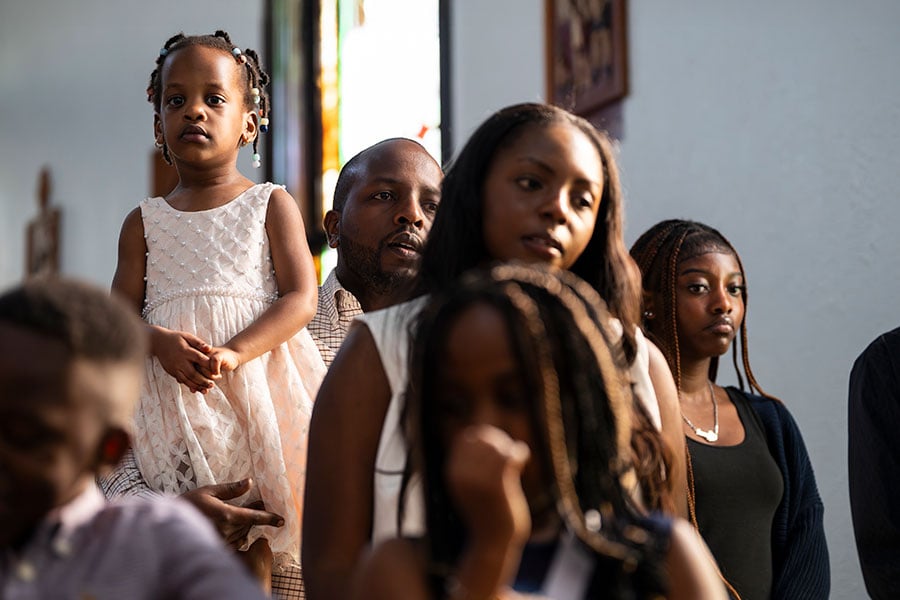
African immigrants from Rwanda and Nigeria are also growing in number in the diocese.
In April, Bishop Olson celebrated the first Mass for the expanding Rwandan community, recognizing its rich cultural heritage, history of suffering and healing, as well as a deep faith in God.
The special afternoon liturgy at Our Mother of Mercy Church in Fort Worth marked the beginning of a monthly Mass for natives of the east-central African nation. Father Peter Wiafe Akenteng, Our Mother of Mercy pastor, celebrates Mass with the Rwandans on the third Sunday of each month.
In 2023, the Nigerian community began celebrating a monthly Mass in Igbo at St. Maria Goretti Church in Arlington.
A welcoming parish home
Immigrants arriving in North Texas from Croatia find a welcoming home at St. Mary of the Assumption.
The Fort Worth parish on Magnolia Avenue hosts a 5:30 p.m. Saturday Mass in their native language about four times each year.
More than 80 percent of Croatia’s population identifies as Catholic, and their faith shapes the country’s culture and history. Croatian Christian heritage is 14 centuries old.
“We’ve had a Croatian Mass here going on 20 years,” explained Zoran Radan, who came to the U.S. in 2003 and oversees maintenance at the church. “It’s a different feeling when you can have Mass in your own language.”
The married father of two girls credits the late Father David Bristow for adding the special liturgy to the parish schedule.
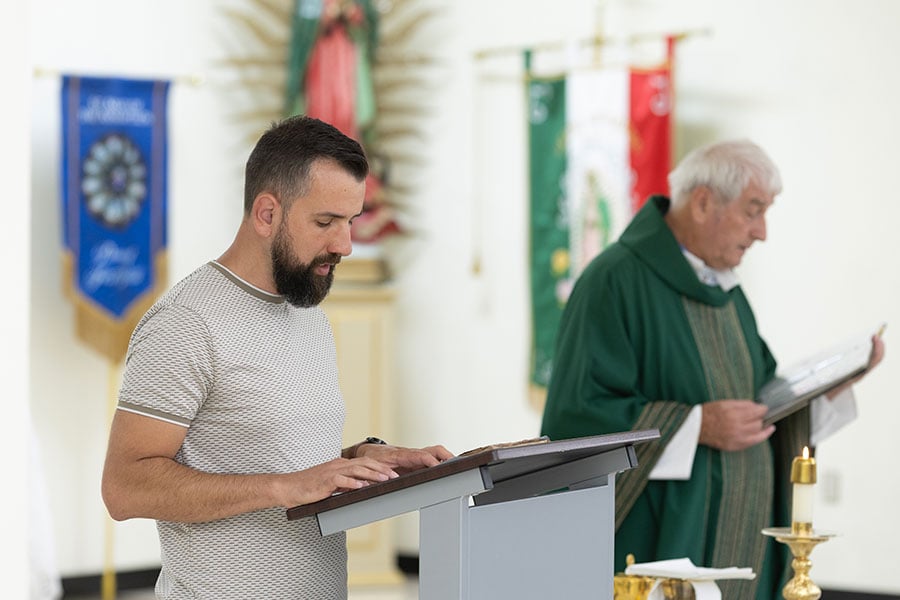
“He welcomed us with a big heart,” said the employee, remembering the pastor’s compassion for immigrants. “He understood that we had left everything behind in our country and took care of our community.”
Today, a priest from the Archdiocese of Los Angeles travels to Fort Worth to celebrate Mass at St. Mary for approximately 50 people. Father Martin Vivaca also visits other parishes in the south and southwest to provide the same outreach to Croatian-Americans. It’s a way of preserving their mother country’s rich traditions and family values for future generations.
Every Croatian Mass at St. Mary is followed by a meal featuring familiar Mediterranean and Eastern European dishes.
“Inviting people who recently moved to Texas to the Mass helps them make friendships and settle here,” said Radan, describing the fellowship that develops.
Preserving faith with tradition
At the four Vietnamese parishes in the diocese — Our Lady of Fatima, Christ the King, Vietnamese Martyrs, and Immaculate Conception of Mary — language and traditions of the homeland help raise children in the faith.
The Vietnamese Eucharistic Youth Movement at Our Lady of Fatima in Fort Worth teaches participants to be virtuous people and good Christians by modeling Jesus.
Brought to Vietnam by French missionaries in the early 20th century, the VEYM took hold in the U.S. with the arrival of Vietnamese refugees in 1975.
“The organization is very active with a lot of students,” said parish volunteer Christina Hoang, explaining the Sunday meetings help 7- to 17-year-olds understand the fundamentals of the Catholic faith.
Vietnamese Catholics also share a deeply rooted devotion to the Virgin Mary with their youngsters. May is traditionally known as Thang Hoa — the flower month — and is marked by processions, folk dances, and color-rich flowers symbolizing the virtues of Mary.
“Children perform a dance as they offer their flowers to Mary,” Hoang added, describing the 18th-century custom that remains a cornerstone of Vietnamese-Catholic identity.
Retaining ethnic religious customs is encouraged by the diocese.
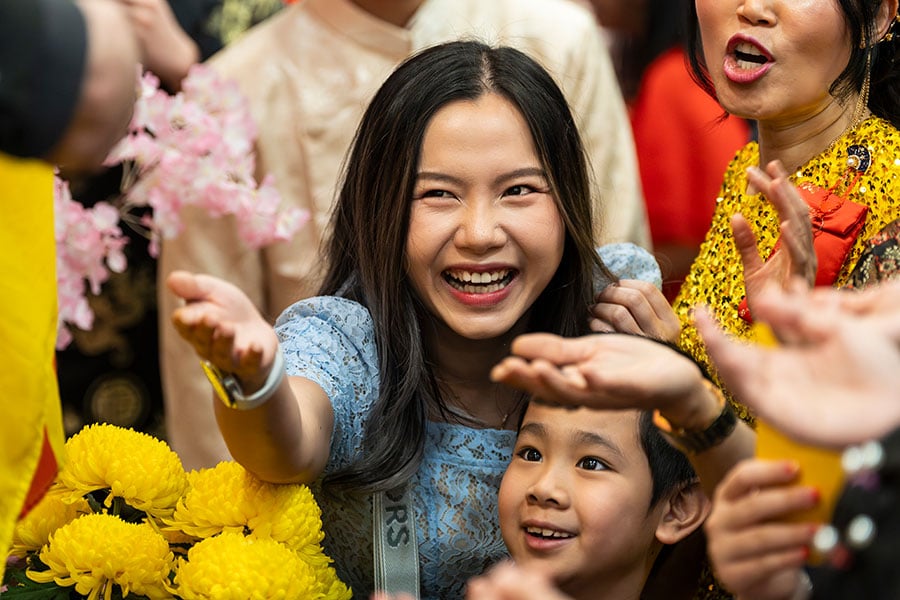
“Passing on our Vietnamese traditions to the youth, students, and little ones keeps the faith intact,” she said.
A mission to proclaim the Good News
Unknown to most people, the Catholic Church has 24 different, autonomous churches led by the elected pope.
The largest is the Western, the Roman Catholic Church, headquartered in Vatican City, but 23 other Catholic institutions, referred to as Eastern Churches, profess allegiance to the Bishop of Rome and accept his authority.
These bodies have a distinct history and heritage expressed by their own worship style, theology, cultural traditions, and hierarchy but never stray from the essentials of doctrine or dogmas defined by the Church.
Any Catholic that belongs to the Latin Church or one of the Eastern Churches may receive the sacraments and attend Mass at any church in full communion with the pope.
“Partaking of the Eucharist — partaking of the holy mysteries, the sacraments — applies both ways,” explained Father Kostiantyn Popov, pastor of St. Sophia Ukrainian Greek Catholic Church in The Colony. “Members can come to our church or the Roman Catholic Church. It’s all valid.”
Located near Holy Cross Roman Catholic Church in The Colony, St. Sophia often welcomes visitors to its services. Both parishes frequently interact with one another.
“They like our church. They like the worship, but they are hesitant,” the pastor said. “They don’t know if they can partake or not. Not every Catholic knows there is a communion with the Eastern Churches.”
When discussing the balance between the traditions of the East and West Catholic Churches, the married priest with two children references a metaphor used by the late Pope John Paul II: “The Church must breathe with her two lungs!”
“The Roman Church is one lung and the rest of the Catholic Churches are the other lung but together we build the one body of Christ,” he clarified. “The main thing is unity in the Eucharist and unity in Christ.”
Janet Bogdon and her husband, Richard, are charter members of St. Sophia Church, founded in 2000.
Raised a Roman Catholic, she married a Ukrainian-American and began attending the church which uses the Byzantine Liturgy of St. John Chrysostom. It is the primary and most frequently used Eucharistic service in the Eastern Orthodox and Byzantine traditions.
“We call it Liturgy and it is longer because we chant everything we do. There are no musical instruments,” said Bogdon, pointing out some differences from the Roman church. “And we don’t bless ourselves with holy water.”
Instead of statues, the altar is adorned with icons. One of the most revered holy images is Theotokos, Mary.
During most of the Divine Liturgy, worshippers stand rather than kneel.
“This is done to emphasize that God has risen,” explained the church secretary.
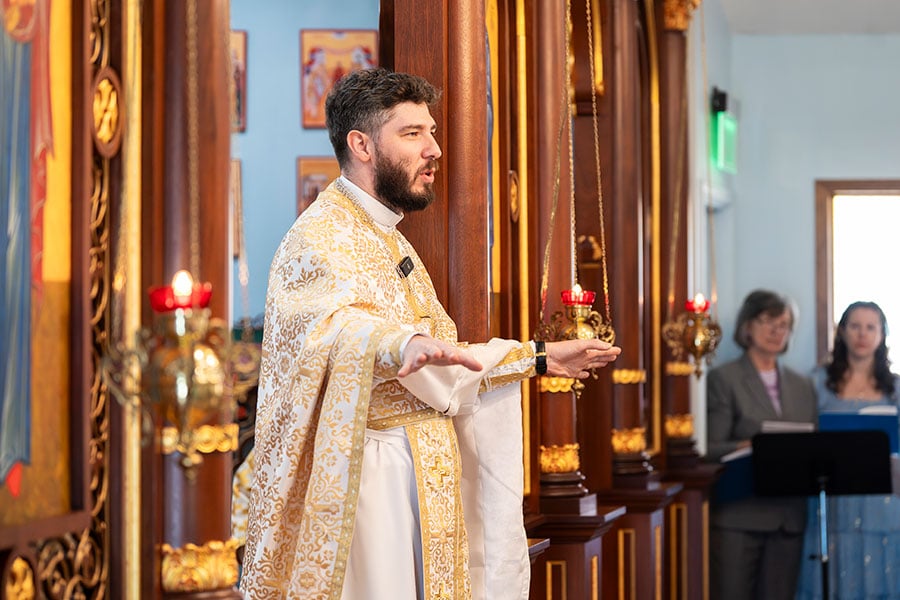
St. Sophia is a parish of the Ukrainian Catholic Eparchy of Chicago which is part of the Ukrainian Greek Catholic Church. With more than 5.5 million faithful, it is the largest of all 23 Eastern Catholic Churches, second only to the Roman Catholic Church.
When Russia invaded Ukraine in 2022, the local parish saw an influx of new members.
“We saw people not just fleeing war but relocating here and wanting the traditions of the Ukrainian church,” Fr. Popov added. “We wear national embroidered clothing for big holidays, sing Christmas carols for hours, have pysanky decorated Easter eggs and bless our Easter baskets, palm branches, and pussy willows. We bring a different level of celebration to the holidays.”
Glorifying God in a different way
In Lewisville, Our Lady of Lebanon Maronite Catholic Church demonstrates the universality of the Catholic Church, said Father Peter Raad, the former associate pastor. “God is one and He has called us all to His heart no matter what language we speak or whether we’re Greek, Jews, Gentiles, Black, white, male, or female. He made all of us as one.”
When you have a faith that interacts with ancient cultures and languages, each one is going to glorify God in a different way, Fr. Raad emphasized.
The Maronite Church can trace its roots to St. Peter, believed to have founded the Church of Antioch as its first bishop. Saints Paul and Barnabas were early teachers in Antioch where the people spoke Greek and were influenced by Judaism.
“By the time Peter and Paul made it to Rome, the Antioch Church was already evangelizing in India, China, Armenia, and Persia,” he added. “Each had a different history, geography, culture, and language.”
In the Maronite Church, confirmation, referred to as Chrismation, is received at the same time as baptism.The Body and Blood of Christ is administered on the tongue, only by a priest or deacon.
“Each Church was commissioned to teach the Good News about Jesus Christ who suffered for us, was crucified and rose from the dead,” the priest said. “The creed is universal. We believe the same things.”
In a day and age when people are defined by their differences, it’s important to remember that God calls us to be one, Fr. Raad is quick to assert.
“Whether we are followers of Peter, Andrew, or Bartholomew, it’s fitting to emphasize what is common — God loves us, He loves us into eternity and is Creator of all.”
Sharing the Gospel message
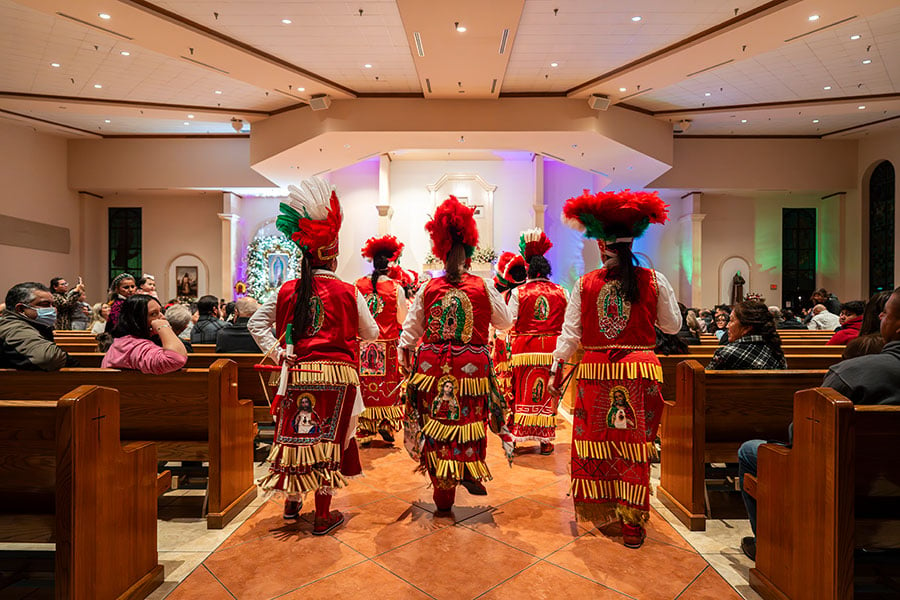
Observing Our Lady of Guadalupe’s feast day on Dec. 12 is a popular tradition that brings the Hispanic parish communities of Decatur, Jacksboro, Bridgeport, and Weatherford together inside St. Stephen Church in Weatherford.
The celebration includes performances by costumed matachines and dance groups, tamales, and prayers to the Virgin Mary.
“There’s a deep devotion for the love of Mary that brings people to hear Mass even if they only come to church two or three times a year,” observed Deacon Mauricio Hernández, who works with the Hispanic ministry at St. Stephen. “It’s a big deal for the Spanish-speaking community and now the Anglo community is being integrated.”
But there’s another deeply rooted Mexican custom witnessed by St. Stephen parishioners. During a Tres Años, (celebration for 3-year-olds) parents give thanks to God and the Virgin Mary for the gift of a child’s life.
Dating back hundreds of years when the infant mortality rate was high, the practice celebrated a 3-year-old being past the point of danger.
“Both the parents and child receive a blessing at the altar,” the deacon said, adding the custom parallels the presentation of the infant Jesus in the Temple. “It’s not a big celebration but often done at Sunday Mass in front of the community.”
Using a culture’s language, symbols, and rituals to share the Gospel message helps spread the faith and fosters meaningful participation in the liturgy.
For Dcn. Hernández, that universality of the Church conveys one thing.
“Everybody’s welcomed,” he said.
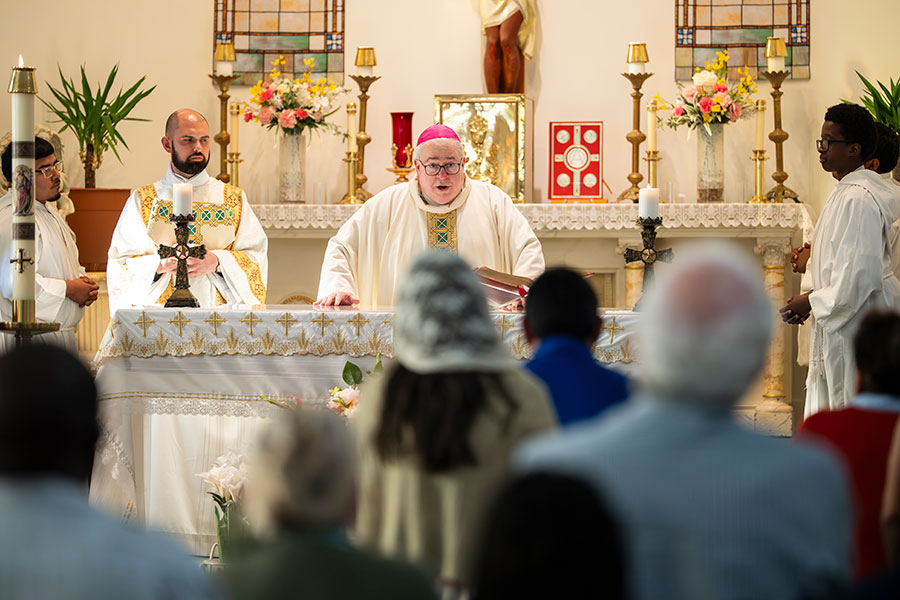
Bishop Michael Olson addresses the congregation during the first Rwandan Mass at Our Mother of Mercy Parish on April 19. (NTC/Juan Guajardo)