A pilgrimage to Mexico: Fr. Joseph Moreno experiences grace, understanding as he leads pilgrims to holy sites
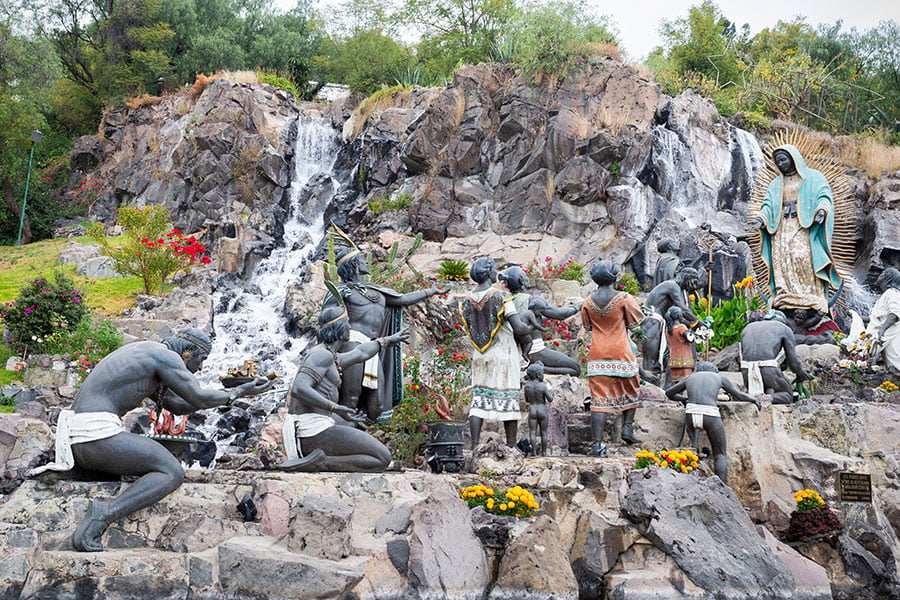
A view of the Cascadas de Guadalupe and "La Ofrenda" collection of statues located in the Jardin de Tepeyac in Mexico City. (iStock)
In the words of Pope Leo XIV, every Catholic should carve out time to take a pilgrimage as it has a “vital part to play in our life of faith.”
“It’s a reminder that the world is bigger than us and God is God; God wants to be seen. God wants to be experienced; He wants us to know Him, and we should do that by getting out into the world,” Father Joseph Moreno said, recalling the pope’s July 5, 2025, message.
The pastor of St. Michael Parish in Bedford recently put the pontificate’s message into action, having served as a spiritual director for a four-day pilgrimage to Mexico on Feb. 19-23.
While this marked Fr. Moreno’s fourth visit to Mexico, it was his first as a priest on pilgrimage.
“You can never delve all the depths of sacred Scripture. It’s the same when you go on pilgrimage. The Holy Spirit leads you somewhere a little different and a little deeper each time,” the priest said.
Brave faces of faith
One of the first stops of the pilgrimage included a trip to the Iglesia de la Sagrada Familia (Holy Family) in Colonia Roma, Mexico City. The church houses the relics of Blessed Miguel Pro, a martyred Mexican priest who defied the Mexican government and donned many disguises to celebrate Mass and serve the sacraments during the Cristero War.
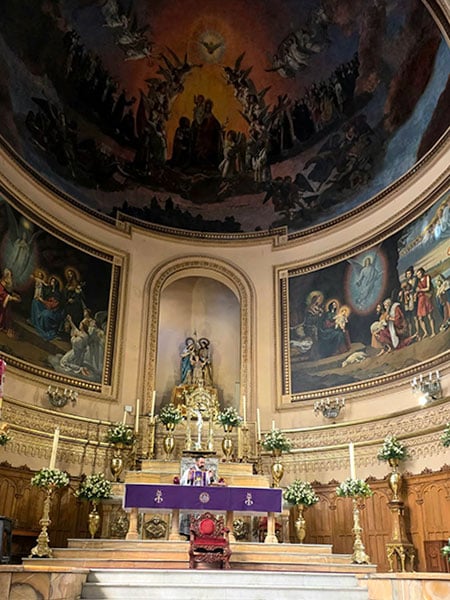
“As he was killed by the firing squad, he put his arms out, his Bible in one hand, his rosary in the other and shouted, ‘Viva Cristo Rey!’” Fr. Moreno explained. “It was absolutely amazing. I hadn’t seen this particular shrine before,” sharing his awe of the story behind the pictures of the blessed’s martyrdom in 1927.
That same day, his group visited the shrine and crypt of Blessed Concepción Cabrera, popularly known as “Conchita.”
“She was a lay person: a wife, a mother, a widow, a grandma, but she also founded five religious orders with her writings on the Holy Spirit,” Fr. Moreno said. The blessed was the first Mexican laywoman to be beatified and is known for her love for the Church and the extent of her writings.
“She wrote almost as much as Aquinas did,” Fr. Moreno remarked.
Shrine of Our Lady of Guadalupe
Of course, if one travels to Mexico on pilgrimage, visiting the Shrine of Our Lady of Guadalupe is necessary, being the most popular Catholic pilgrimage site in the world.
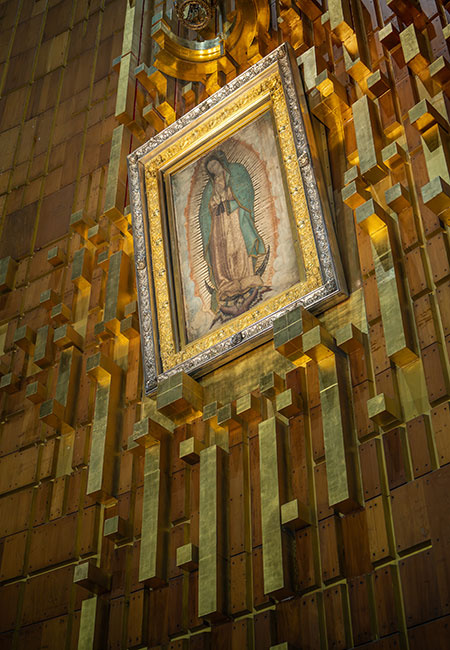
While the first-time visitors in his group learned about Juan Diego and the tilma from a local guide, Father Moreno found himself reflecting more deeply on the beauty of unity as he considered the Cascadas de Guadalupe (Guadalupan waterfalls) in the Jardín del Tepeyac, where “La Ofrenda,” (The Offering), a collection of 17 bronze statues depicting indigenous carrying offerings of food, artisan crafts, and animals to Our Lady of Guadalupe, symbolizes the union of the Spaniards and Aztec indigenous.
“They all mixed together into one pool at the bottom, showing, ‘This is who we are in Mexico. We are the descendants of the mix of all these,’” Fr. Moreno said.
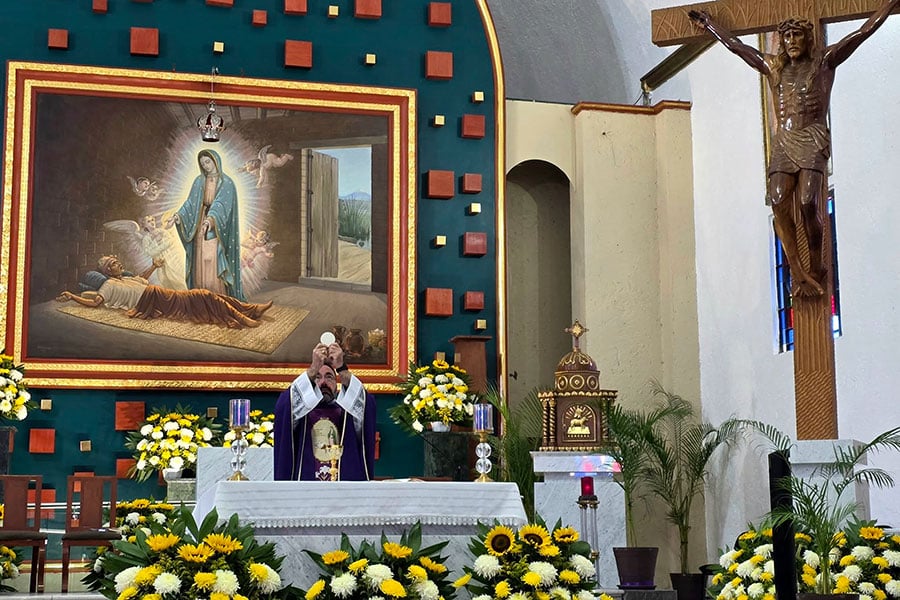
He also reflected on a new piece of the Guadalupan mystery near the end of their pilgrimage at the Sanctuary of the Fifth Guadalupan Apparition at Tulpetlac. The sanctuary marks the Blessed Mother’s healing of Juan Diego’s uncle, Juan Bernadino, in his hut. It was to Bernardino that she revealed her name as Santa María de Guadalupe or St. Mary of Guadalupe. On the sanctuary’s altar, there is a faucet that connects to a well located beneath the church, known as Juan Diego’s healing spring, where St. Mary of Guadalupe continues to grant graces.
“This was new to me entirely,” Fr. Moreno admitted. “We paused at the well and reflected on how Mary appears throughout history and brings healing and consolation.”
Reminiscing in Puebla
On Sunday, the pilgrimage group traveled about two and a half hours from Mexico City to the city of Puebla.
“It's the city where I was sent for six weeks to learn Spanish, and so I was acting like a little kid, just bouncing all over the place,” Fr. Moreno said. “My beloved Puebla.”
Thinking back to the group’s visit to St. Dominic Church “where there’s a chapel dedicated to Our Lady of the Rosary built back in 1690,” the priest marveled at the Baroque-styled build, the “amazing use of wood carving,” and the resplendent use of gold leaf.
“It’s just amazingly beautiful,” he said.
A culture of faith
A pilgrim is not a tourist, Fr. Moreno emphasized. His good friend Joan Watson recently authored a book, Making a Pilgrimage, that details entering the mindset of a pilgrim ready to receive God.
“A tourist goes to see what’s out there, see the sites, take a lot of pictures and selfies, buy lots of souvenirs, eat all the food. And a pilgrim can do some of that as well, but a pilgrim is seeking God, not a vacation,” the priest explained. “A pilgrimage is an encounter with God.”
The difference lies in the interior conversion a pilgrim seeks, “a growth in holiness,” Fr. Moreno said.
Which is easy to do in Mexico as “the presence of Mary permeates most of Mexican culture,” he added.
His group’s local guide told them, “‘All Mexicans are Guadalupanos. We all have some sort of devotion to Mary, and we all owe our existence to Mary,’” Fr. Moreno recalled.
This pilgrimage helped him understand the power of the Blessed Mother’s grace in the country.
“What is most striking to me is the Church had not been making a whole lot of progress in making converts. The Indians and the Spaniards were, for the most part, not getting along very well, not understanding each other. And then Mary appears.”
Despite the language differences, the Blessed Mother united the people.
“Mary, with her [image on the] tilma, used symbolism that the Indians understood, and they immediately started converting, even if they hadn’t heard about Jesus yet.”