
Advent Companions
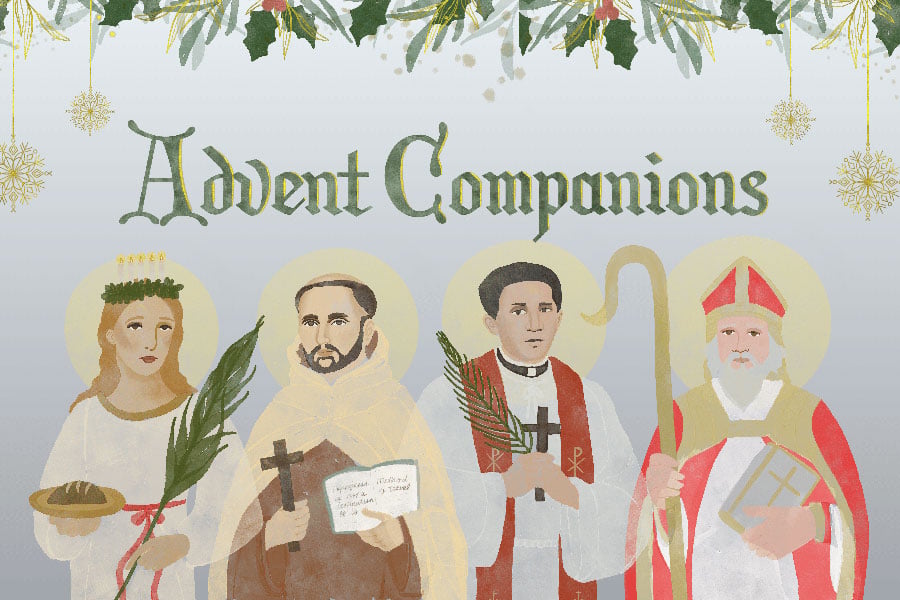
(L-R) St. Lucy, St. John of the Cross, St. Andrew Dung-Lac, and St. Nick. (NTC Artwork/ Maria Diaz)
The liturgical season of Advent is a four-week journey filled with hope, wonder, anticipation, and preparations, culminating with the joyful celebration of our Savior’s blessed nativity. At the same time, Advent offers a tremendous test of patience for children and adults alike. In Advent, one must wait, and sometimes the waiting is hard.
Company often helps lighten one’s load during difficult times. Throughout the year, the Catholic Church celebrates the lives of heavenly companions — saints — who eagerly await an invitation to accompany the faithful. Through their intercession, guidance, and the legacy of their earthly witness to holiness, the saints teach us how to love God and others as Jesus did.
This year, consider a new way to wait by inviting these saints, whose feast days we celebrate during Advent, into your heart and home. Be inspired by their example of Christian virtue and how their lives beautifully reflect Jesus’ light in the world. They long to accompany us throughout this sacred season as spiritual friends because they hope we someday experience what they now have: eternal joy in the presence of God.
Note: At start of each week in Advent, a new saint will be added!
St. John of the Cross: December 14
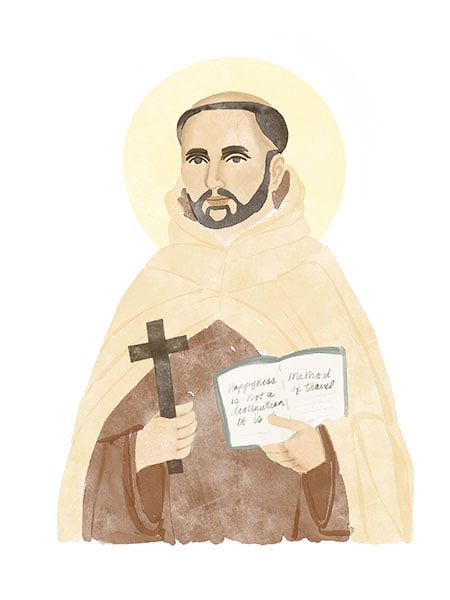
Born Juan de Yepes y Álvarez in 1545, St. John of the Cross was the son of poor parents from Castile, Spain. After studying at university, John decided to become a monk and lead a humble life, completely dependent on God. He was ordained in 1567 and met St. Teresa of Avila who asked John to help her reform the Carmelite order, including the male branch. They worked together and started the first house of the Discalced Carmelites. It was then that he adopted “of the Cross.”
Their efforts met violent resistance which led to Father John’s arrest, imprisonment, and abuse. During that time, he prayed and wrote poems in his mind about God’s love. Assisted by Teresa, Fr. John eventually escaped and returned to continue their work and record his poems.
A great theologian and Doctor of the Church, St. John of the Cross died on Dec. 14, 1591. He is the patron saint of mystics, contemplatives, and Spanish poets.
Advent Connection: St. John of the Cross spent many months unjustly locked away in dark, solitary confinement. It was in his loneliness and pain that he began to more deeply understand God, who ultimately turned St. John’s suffering into a gift for others through his poetry. Today, he is regarded as one of Spain’s most profound spiritual writers. Advent’s season of waiting is the perfect time to unite our own suffering with Jesus, who wants to help us grow closer to Him and bring hope to others through our unique gifts and talents.
Reflection: Read one of St. John’s most famous poems, “The Dark Night of the Soul,” and reflect on his spiritual transformation. What small sacrifices in our daily life — family, work, or personal discipline — can we offer to God, knowing that these small acts unite us with the cross of Christ and lead to our ultimate goal of eternal life?
Family Activity: Make a sacrifice of time each week in Advent for family prayer, Scripture reading, daily Mass, or going to confession. Since St. John was from the Carmelite order, enjoy a caramelized treat afterward, such as caramel popcorn, apples, or candies to represent the sweetness our souls feel when they are united to God.
St. Lucy: December 13
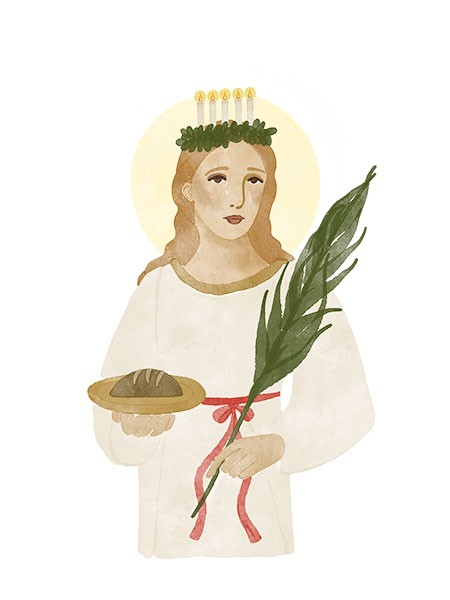
Lucy was born in 283 to noble Christian parents in Sicily. After her father died, Lucy vowed virginity and secretly promised herself to Jesus as His special bride.
When Lucy came of age, her mother attempted to arrange a marriage between Lucy and a pagan man. After a pilgrimage during which her ailing mother was healed and St. Agatha appeared to Lucy, she asked permission to refuse the marriage and to share their wealth with the poor. Her mother honored both requests.
In retaliation, her angry betrothed revealed Lucy’s Christianity to the Roman governor, who sentenced her to torture and death. Tradition says that she survived many attempts on her chastity and her life, and that Lucy’s eyes were removed by her persecutors, which is why she is often depicted holding a plate with two eyes on it.
St. Lucy was martyred by the sword on Dec. 13, 304, becoming a martyr at 21. She is the patron saint of light, the blind, and eye disorders. Her name, mentioned in the First Eucharistic Prayer, is one of seven female saints commemorated in the Eucharistic Prayers of the Mass and one of four who share the title of virgin-martyr.
Advent Connection: St. Lucy’s feast day is well situated in the midst of the darkest, coldest time of the year. During Advent, we await the celebration of the Incarnation — God made man in Jesus — and we look forward to Christ’s Second Coming when His eternal light will remove all darkness forever. We have a friend in St. Lucy whose example encourages us as we wait for this Christmas and for the Light of the World to return.
Reflection: Meditate on Scripture that compares light and darkness such as Isaiah 9:1, Isaiah 60:2, Luke 1:78-79, and John 1:5. How do these passages relate to Advent and Christmas? Is there any darkness in our hearts that needs to be brought into the light so we can walk free from guilt and sin this Advent?
Family Activity: To honor the patron saint of light, have dinner by candlelight on her feast day. Afterward, drive around to look at Christmas lights while listening to the song “Santa Lucia.” Share one idea about how to be Christ’s light in your school, workplace, parish, or community.
St. Nicholas: December 6
Nicholas was born in the southern part of modern-day Turkey near the end of the third century. Raised in a loving, affluent Christian family, he was orphaned at a young age. Upon receiving his inheritance, Nicholas gave his wealth to assist the needy, the sick, and the poor.
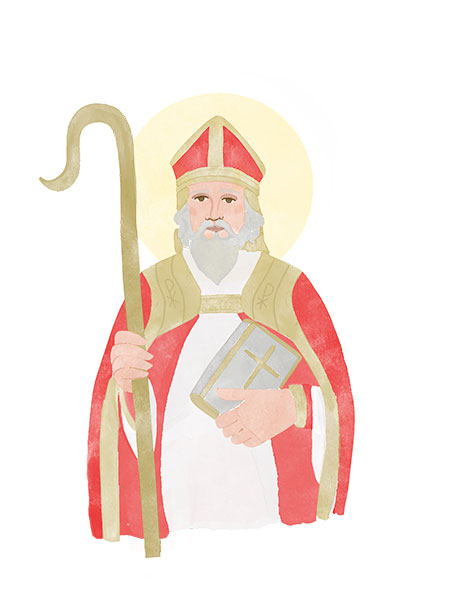
Years later, he was ordained a priest and appointed abbot of a monastery. Nicholas was then elected bishop of Myra and served the people well until he was exiled and imprisoned under the emperor Diocletian. After being freed, he attended the Council of Nicea in 325 and was one of the Council Fathers that wrote the same Creed we recite during Mass today.
Many stories have been handed down about St. Nicholas, all demonstrating a life spent in generous service to the poor and the vulnerable. Most familiar is one about a poor family whose three daughters faced a life of slavery because their father could not afford a suitable dowry for them to marry. St. Nicholas rescued the sisters by secretly tossing three bags of coins into their home. That story birthed a tradition that Catholic children around the world still celebrate: to set out socks or shoes before bedtime, hoping they will be filled with goodies the next morning.
St. Nicholas died in Myra on Dec. 6, 343, and is the patron saint of children, archers, sailors, and merchants. He is often shown bearing three moneybags or, more commonly since the late 19th century, portrayed as Santa Claus.
Advent Connection: Pope Benedict XVI once said that St. Nicholas’ saintly miracle “was one of constant kindness in everyday life.” His example encourages us to be a miracle to others by generously giving our time and friendship as well as material goods. Advent is an opportunity to reflect on when God was most generous with us: the birth of His only Son, Jesus.
Reflection: How can we imitate St. Nicholas’ example of quiet, sacrificial giving by bringing hope to those in need rather than focusing on material gifts?
Family Activity: In the spirit of St. Nicholas, bring the gift of Jesus to others by loving as He loved. Remembering the three bags of coins, consider doing three good deeds during Advent. For example: Visit a neighbor who may be lonely or residents at a local nursing home who seldom receive guests. Or secretly leave treats and an encouraging note for a co-worker, teacher, classmate, or priest.