All abuzz in Arlington - Most Blessed Sacrament's Caring for God’s Creation Ministry
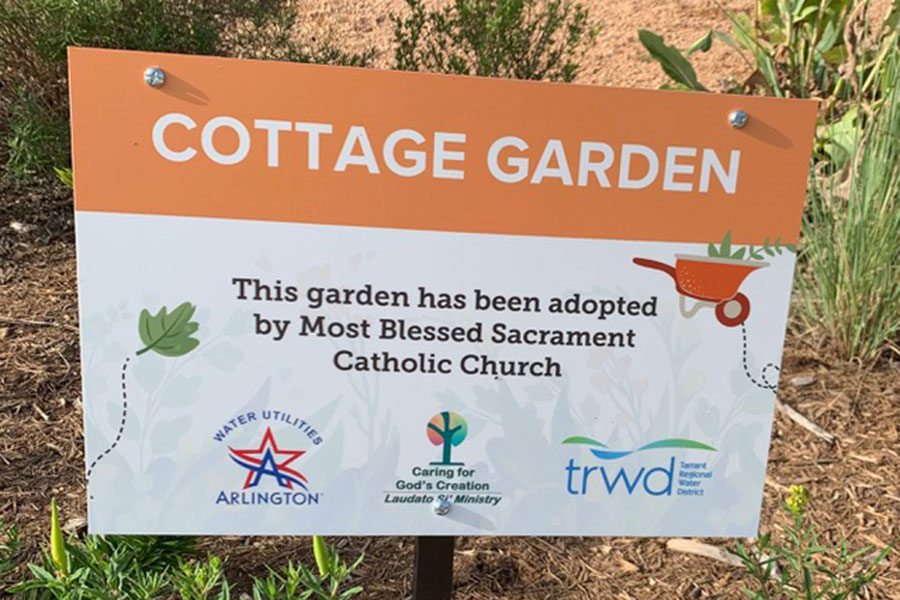
The Cottage Garden at the Lake Arlington Native Plant and Pollinator Garden has been adopted by Most Blessed Sacrament Parish in Arlington. (courtesy photo/Barbara Hinds)
EDITOR’S NOTE: This article was originally published in the Spring 2025 issue of the Catholic Rural Life magazine.
ARLINGTON — Insect pollinators are hard workers in the animal kingdom. Their efforts benefit us every day, but we typically pay little attention to them. Three quarters of our world’s most common food crops, such as apples, peaches, berries, melons, tomatoes, squash, almonds, coffee, and cocoa, require insects for cross pollination and fruit production. One of every three bites of food we eat is a result of a pollinator! Fields of livestock crops, for example clover and alfalfa, are also pollinated by insects.
Living in urban areas limits our agricultural pursuits, but we can cultivate plants that support pollinators, and thus also maintain the food chain for humans and livestock. Pollinator gardens can be grown in our backyards or in patio pots and window boxes. With this in mind, the Caring for God’s Creation Ministry at Most Blessed Sacrament Parish in Arlington decided to create pollinator gardens, planted with native plants, as a focus project of the ministry.
Most Blessed Sacrament is a large parish with ministries to support the parish, the community, and the underprivileged. We were lacking a ministry, however, that focused on the tenets of Pope Francis’ encyclical Laudato Si’: On Care for Our Common Home. With our pastor’s blessing, we responded to the Holy Father’s call to action, established the ministry, and enrolled in the Vatican’s Laudato Si’ Action Platform on May 24, 2023.
As we developed our vision, mission, goals, and action items, we realized there was so much to do! Where should we start?
To introduce the new Caring for God’s Creation Ministry, we sponsored a plant giveaway at the parish picnic in June 2023. We offered purple coneflowers that pollinators love, and prickly pear cactus, the state plant of Texas. The potted plants came with planting and care instructions to get them properly started in home gardens. Our goal was to educate parishioners about native plants, which can thrive without much “city water” in our often hot, dry climate. Native plants are also good pollinator plants, providing nectar for insects as well as hummingbirds.
Everyone likes a “freebie,” so we had another giveaway several months later. This time, we gave away packets of zinnia seeds and coneflower seeds that had been harvested by one of our members from her garden. These are favorites of pollinators. The packets had planting and care instructions to help ensure growing success.
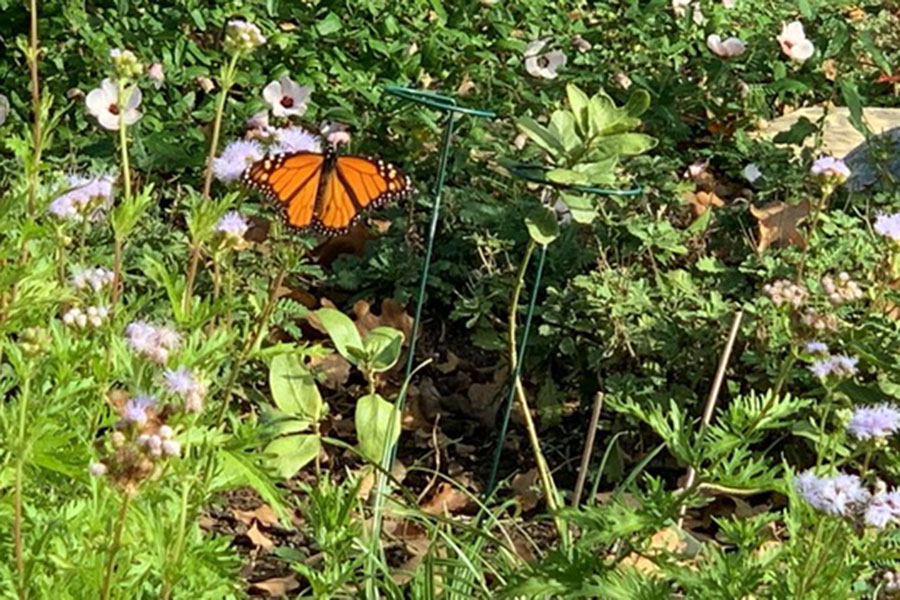
Other action items for our ministry involve gardening. Most Blessed Sacrament has an impressive entry driveway divided by a very large planting bed. A brick sign with the name of the church is in the center. Over the last 43 years, many different shrubs and flowers, requiring lots of water and attention, have come and gone from the bed. We proposed replacing all but a few hardy shrubs with native pollinator plants. A ministry member prepared a landscape blueprint and it was approved. Another member collaborated with the landscape company that tends the church grounds and convinced them of the benefits and beauty of the plan. Soon it became a lovely reality, just in time for Easter Sunday 2024. We hope the new plantings inspire parishioners, as well as people living in the neighborhood, to create similar sustainable gardens in their yards. One of our members converted half of their front yard to native pollinator plants in 2024!
Two of our local entities, Arlington Water Utilities and Tarrant Regional Water District, are working with conservation and community groups to restore native prairie and wildflowers on 2.75 acres of land near Lake Arlington. The Lake Arlington Native Plant and Pollinator Garden features five demonstration garden beds with native plants. Caring for God’s Creation Ministry participated in some of their workdays, and soon we were asked to assume the care of the “Cottage Garden” bed. Of course, we said yes! With tutelage from the experts at the Water District, several members have spent countless hours making the garden attractive as well as educational for the community.
The beautiful monarch butterfly is the state insect of Texas. It is in peril due to loss of habitat and loss of the milkweed plants needed for laying eggs and for caterpillar food. A major migratory path for the monarch goes through Texas. Caring for God’s Creation is educating parishioners about planting native milkweed to support the monarch. In addition, one of our members is creating an educational pamphlet about native and pollinator plants for the home gardener. It will include pictures and descriptions of the best plants to grow, a sample layout for a garden, and instructions for plant care.
Not all of Caring for God’s Creation activity involves dirt and plants. We are working to reduce the use of disposable plates and cutlery at parish events and methodically installing LED lights throughout the church and family life center. Last September, we spent one Sunday speaking to the religious education children about St. Francis of Assisi and the importance of caring for creation. We’re also posting notices in bulletins and on the church’s website, educating parishioners on sustainable living topics such as recycling, reduced use of plastic and Styrofoam, reduced food waste, enjoying a sustainable Christmas, and many other sound ecological behaviors.
Caring for God’s Creation Ministry is gratified to actively and prayerfully participate in the vital work Pope Francis asked that we all do. St. Francis of Assisi, the patron saint of ecology, “reminds us that our common home is like a sister with whom we share our life, and a beautiful mother who opens her arms to embrace us” (LS 1). We marvel in the beauty and the complexity of God’s creation and hope our efforts will bring renewal to it.
By Barbara Hinds, a parishioner at Most Blessed Sacrament in Arlington.