April 27, 2025 - One Bread, One Body
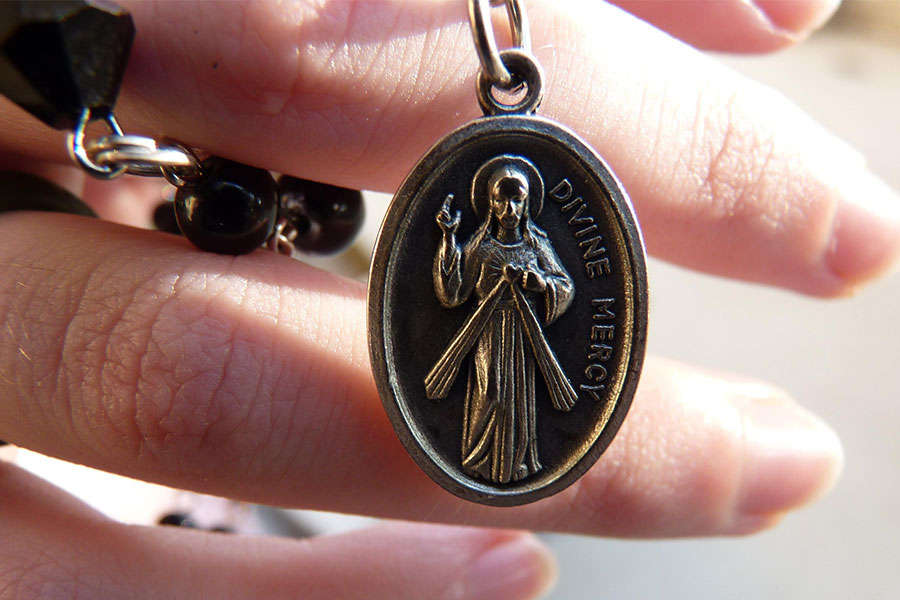
April 27, Divine Mercy Sunday
Cycle C Readings:
1) Acts 5:12-16
Psalm 118:2-4, 13-15, 22-24
2) Revelation 1:9-13, 17-19
John 20:19-31
Passing on Mercy
“Let those who fear the Lord say, ‘His mercy endures forever.’ ” —Psalm 118:4
Fr. Al Lauer, founder and longtime author of One Bread, One Body, would often on these pages define mercy as treating someone better than they deserve. On the first Easter evening, Jesus treated His apostles with great mercy. Though they had fled from Him when He was arrested, Jesus did not lay a guilt trip on them. Instead, His first words to them were, “Peace be with you” (Jn 20:19).
It would be understandable if Jesus was reluctant to entrust His disciples with any responsibility. Nonetheless, Jesus still sent them out (Jn 20:21), entrusting them with His power, though they were still fearful (Jn 20:19). He gave them the Holy Spirit (Jn 20:22). He gave St. Thomas a second chance to undo his earlier doubts (Jn 20:27); later, He gave St. Peter a second chance to undo his earlier denials (Jn 21:15).
How “rich in mercy” Jesus is! (Eph 2:4) Jesus gives us, His disciples, incredible mercy. Now He has entrusted us with the opportunity to pass on His mercy to others. Who in your life needs a second chance after letting you down miserably? Can you pass on the mercy of God to this person and treat him or her better than they deserve? On this Divine Mercy Sunday, be merciful, as the Lord is merciful (see Lk 6:36, RSV-CE).
Prayer: Jesus, I trust in You. Mercy of God, I trust in You.
Promise: “There is nothing to fear.” —Rv 1:17
Praise: Praise the risen Jesus, Who in His great mercy revealed His heart for all to see!
Rescript: "In accord with the Code of Canon Law, I hereby grant the Imprimatur ("Permission to Publish") for One Bread, One Body covering the period from April 1, 2025, through May 31, 2025. †Most Reverend Steve J. Angi, Chancellor, Vicar General of the Archdiocese of Cincinnati, Cincinnati, Ohio September 4, 2024."
The Nihil Obstat ("Permission to Publish") is a declaration that a book or pamphlet is considered to be free of doctrinal or moral error. It is not implied that those who have granted the Nihil Obstat agree with the contents, opinions, or statements expressed.