
Bishop Olson answers questions from SEEK 2026 diocesan participants

A student asks Bishop Michael Olson a question during a Q&A with SEEK 2026, Fort Worth attendees at the Diocesan Gathering on Jan. 4, 2026 at the Gaylord Texan in Grapevine. (NTC/Susan Moses)
GRAPEVINE — At the diocesan gathering during SEEK 2026 in Grapevine on Jan. 4, Bishop Michael Olson reminded more than 300 Catholic faithful that true unity is found only in Christ and urged students and parishioners to witness this unity through mercy, forgiveness, and clarity in faith, while caring for the poor and those on the margins.
After his remarks, he invited attendees to ask questions.
EDITOR’S NOTE: The questions and responses have been edited for clarity and brevity.
Do you have any advice for those entering the workforce?
Bishop Olson: Rule one: go to Mass, keep up the sacramental life, and try to get involved. Lector, service, outreach to the poor — find something, because ministry also unites us, and it helps us to hear more clearly the voice of the Lord.
Will there be more young adult group events this year on behalf of the Diocese of Fort Worth? And do you believe that San Antonio [SEEK 2027 Texas site] will be able to live up to the hype of this year’s conference?
Bishop Olson: We do have Young Adult [events] quarterly, moving around the diocese, so we'll keep that up. And if you would suggest something, I'd say work with your campus minister on that and we'll do some ideas. I think it's a good idea, especially if it involves outreach to the poor in some way.
As for the second question, will San Antonio ... No. <laugh> They should have built the Alamo in Fort Worth.
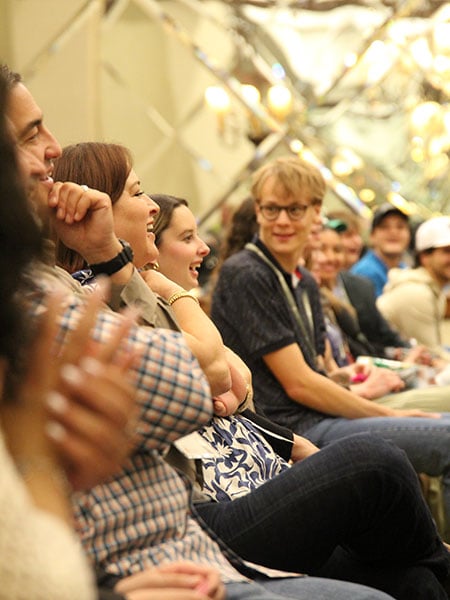
Can we take a brief pause to thank our campus ministers?
[Brief applause and recognition for campus ministers, Nathan Mena of St. Brendan Catholic Center and Tarleton State University; Debbie Veitenheimer of Midwestern State University Catholic community; Jeff Hedglen of the University of Texas at Arlington; Sam Macaraeg of St. John Paul II University; Catherine Ochoa and Father Jonathan Wallis, chaplain, of Texas Christian University.]
Bishop Olson: Your ministers work really well and hard. They're also working together, and that's been something important that has helped us prepare to host something like this.
Also please reach out to the junior colleges, too. It’s very important.
The largest population of the religious demographic in our junior colleges are Catholics, about 50 percent. A couple of years ago in Tarrant County College, they started a Catholic club, and they met for prayer and fellowship.
So be creative about how to take the Gospel to other people.
And I'll just say this: being obnoxious doesn't help spread the Gospel. Being aggressive or adverse; it doesn't help. Share joy, especially.
What small steps do you take to love, or be better at loving, people every day?
Bishop Olson: You really have to pray at the start of the day, even if it's just five minutes.
I think you should include some sort of informal aspect of prayer. So, you can pray the Liturgy of the Hours, pray the Rosary — that's important — but you have to talk directly to God.
Even if it’s, “Honestly, I'm going to have to sit through that class today. That professor is annoying. Please bless him in the way You want to bless him, not the way I think he needs to be blessed.”
<laughs>
Be that honest, you know. Somebody shared this with me years ago when I was much younger. They said, "To live is to annoy, and to live is to be annoyed."
That's just part of how we grow. In a sense, when we're annoyed, we can say, "Oh, thank God I'm alive."
Of course, we must be careful not to turn that annoyance into adverse behavior, but I felt that understanding was very helpful.
As young people, how can we spread the Gospel without being discounted?
Bishop Olson: Part of spreading the Gospel includes being discounted. It just goes with it.
Look at the life of Jesus. His own neighbors thought He was a little crazy.
They didn't listen to Him, so I think that's part of discipleship. The worst thing to do is try to fight for credibility. You just have to be credible. And that goes for any age. I'm not a young person, and I get discounted every day, so I think it's just part of the Gospel.
Will there be more opportunities for young women to discern a vocation, or is there someone who they can reach out to in our diocese?
Bishop Olson: Father Brett Metzler [diocesan director of vocations], would you like to say anything about that?
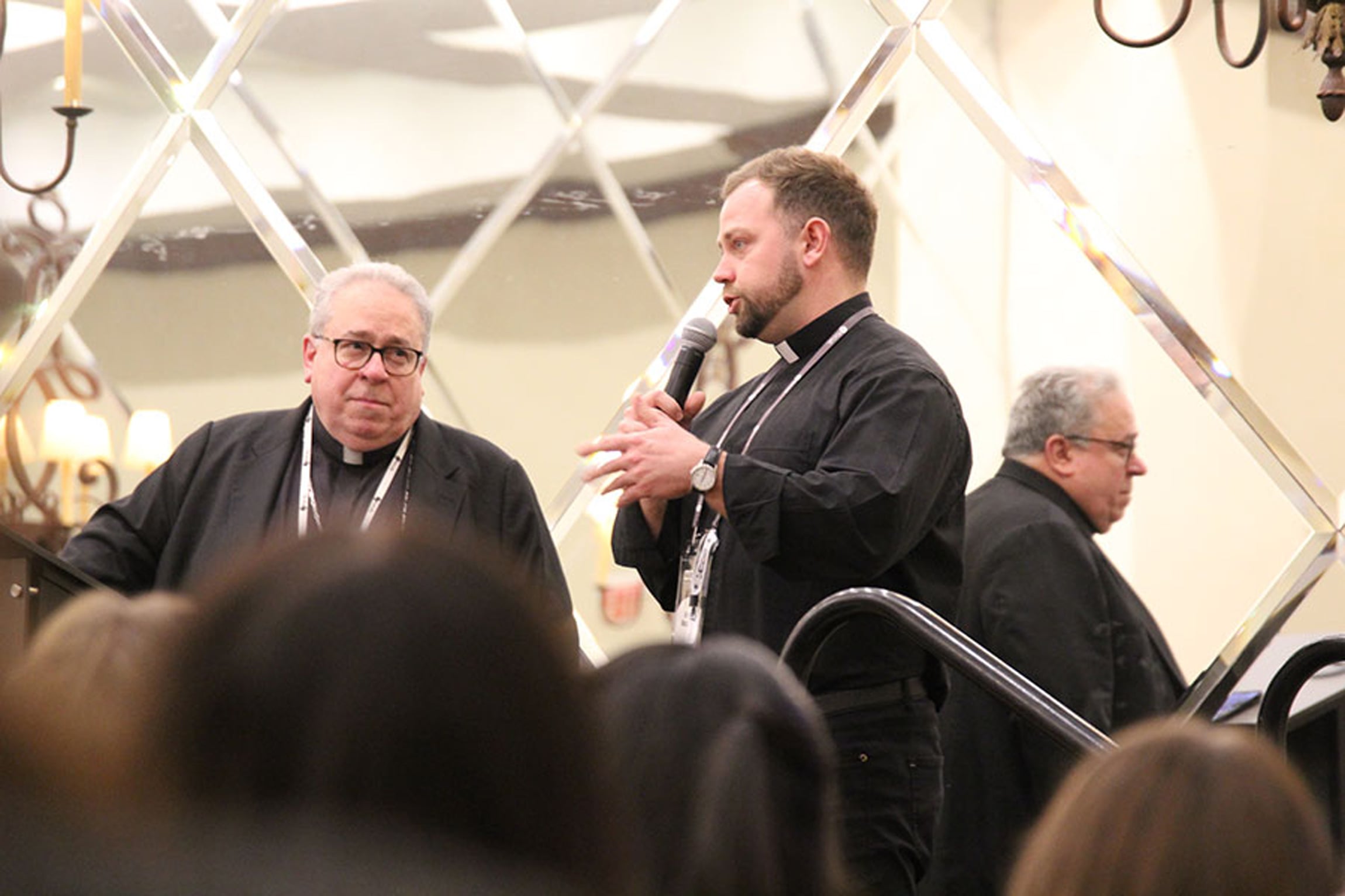
Fr. Metzler: What you're supposed to do is have a daily prayer life in which you listen to God, and then you kind of do what you want to do as long as that's good. So, for all of you, just have a daily prayer life. Go to Mass, do a holy hour, go to confession, and if you're a young woman who is doing that, and you experience — consistently over time — a draw to be a religious sister, that's the sign that you might be called.
If it’s in that context, send me an email, come talk to me. I can meet with you, and I'll get you in touch with other religious sisters.
We've got a whole network of various religious sister vocation directors throughout the country. I’ll probably also have you talk to our consecrated virgin, Mary Del Olmo. She’s particularly skilled in talking about this, but, yes, we have lots of resources for both young men and women who are in the process of discernment.
Bishop Olson: Thank you, Father. I might also add that you should talk to women religious. Women religious communities are marked by a charism which shows itself in a particular ministry, usually, such as teaching, nursing, or contemplative life.
Talk to a sister. In our diocese we have the Dominican Sisters of Mary Immaculate Province. They teach in our schools. There is also a contemplative monastery that just opened with Carmelite sisters up near Muenster, so pray for them. There's also the Lovers of the Holy Cross, and others, including those who are able to take younger women into formation. Look for happiness, and look for a charism of sisters that are dedicated to what the Lord is asking them to do.
Prayer and service is what cultivates the ability to hear the vocation clearly and the willingness to respond to it.
I’m from Good Shepherd Parish in Colleyville. FOCUS has announced a new branch of the mission which is for parishes. Is that something that in the future could we have in our diocese?
Bishop Olson: Yes, I'm open to that. If you are in consultation with your pastor and there is a clear delineation of what's needed and what are the objectives or goals to be met, they’re absolutely welcome in the diocese.
What is something that we can do to make sure that students continue their faith?
Bishop Olson: For those in the transition stage, getting involved and belonging and ministry is the best way because parishes are so large today that it's easy to become lost in that.
From the crowd: I’m James from [Young Catholic Professionals] up in St. Jerome in Bowie. I help with YCP Fort Worth, which has a very vibrant group of Catholic professionals that's really getting revitalized.
Bishop Olson: Even as introverts, find something you feel good about, and get connected that way.
What would you recommend to someone who has Christian friends, non-Catholics, who have expressed interest in learning more about the Catholic faith? What would you recommend sharing to start them on that journey?
Bishop Olson: If they're interested, OCIA is very important, just as an inquiry class. Some of the parishes have inquiry classes. I know our campus ministries do.
And it would be even better if you can go with them. I think that's more important — go with them. And also, besides introducing people to Mass, go with them to a ministry or a class, or something else. Invite them to participate in that way.
From the crowd: John F. Kennedy once said, "Don't ask what the nation can do for you, but ask what you can do for your nation." And there's probably a lot of young kids that had never heard that before, and I think it's holds true for our diocese. Don't ask necessarily what our diocese can do for you, ask what you can do for our diocese: Knights of Columbus, women's guild, men's groups. Find it, get involved. We are a large diocese and money is spread thin.
Bishop Olson: I would say even those are excellent secondary steps and I would take us back one step.
Make the prayer of Jesus that I read today [John 17:16-21], make that intentionally your prayer.
Make that your prayer with Jesus. In other words, that all may be one, and then do what He asks you to do.
Do whatever He tells you, but to do that, you must listen in prayer. And what He asks is always going to involve a sense of “Step forward and take courage.” That it's not convenient and it's not easy.
But it's challenging, and it's also enticing. So, do whatever He tells you, and that's how you will do what the Church needs.
I'm a high school student. For people who struggle listening to God and stillness because they can't be still, what would you recommend to grow in that ability?
Bishop Olson: So, like spiritual ADHD, right? Find a stillness in nature, such as on a walk. I think what helps spiritual ADHD is you're still quiet, you're paying attention to Him in activity. I think that's very helpful personally.
Do you have a personal devotion to any saints, and are there any saints that you would recommend for us to research?
Bishop Olson: I like St. Therese, the Little Flower, and St. Anthony. Since I've become a bishop, I also pray to St. Bartholomew; I figured I had to find an apostle. Those are three for me.
Find someone who you would like to be like and not someone who you think is like you.
I go to a lot of confirmations, right? When I look at the saint's name, sometimes I’m presented with a St. Hubert, perhaps chosen because he’s the patron saint of hunters, or St. Cecilia as a patron saint of musicians.
There's something good to that — provided you want to be like them, and, in other words, more like Jesus. You want them to help you to be like Jesus and not, ‘Oh, they're just like me, right?’ You want a saint that will help you not to be like you, but to be your truest self, which is to be like Christ.
Saints, they're not mascots. They can say some pretty challenging things to us that encourage us but also challenge us to change. So, find a saint that you can talk to.
For example, I find it very difficult to talk with St. Jerome. <laugh> Very difficult. I thought, well, I'll read what he says but keep a safe distance because you never know when he might go off. <laugh>
I have many friends who are of different faiths, like Hinduism and Islam, and I have a roommate who is atheist and is interested in asking me questions about my faith. How can I spread the word and preach about my faith without making it seem like I'm shoving it down their throat.
I think just by living your life with respect for them, respecting the integrity of their conscience, and by respecting the integrity of your own conscience, letting the Holy Spirit do the Holy Spirit's work — that's the best way.
There's really more that unites us than divides us, and more in common than we'd like to admit sometimes.
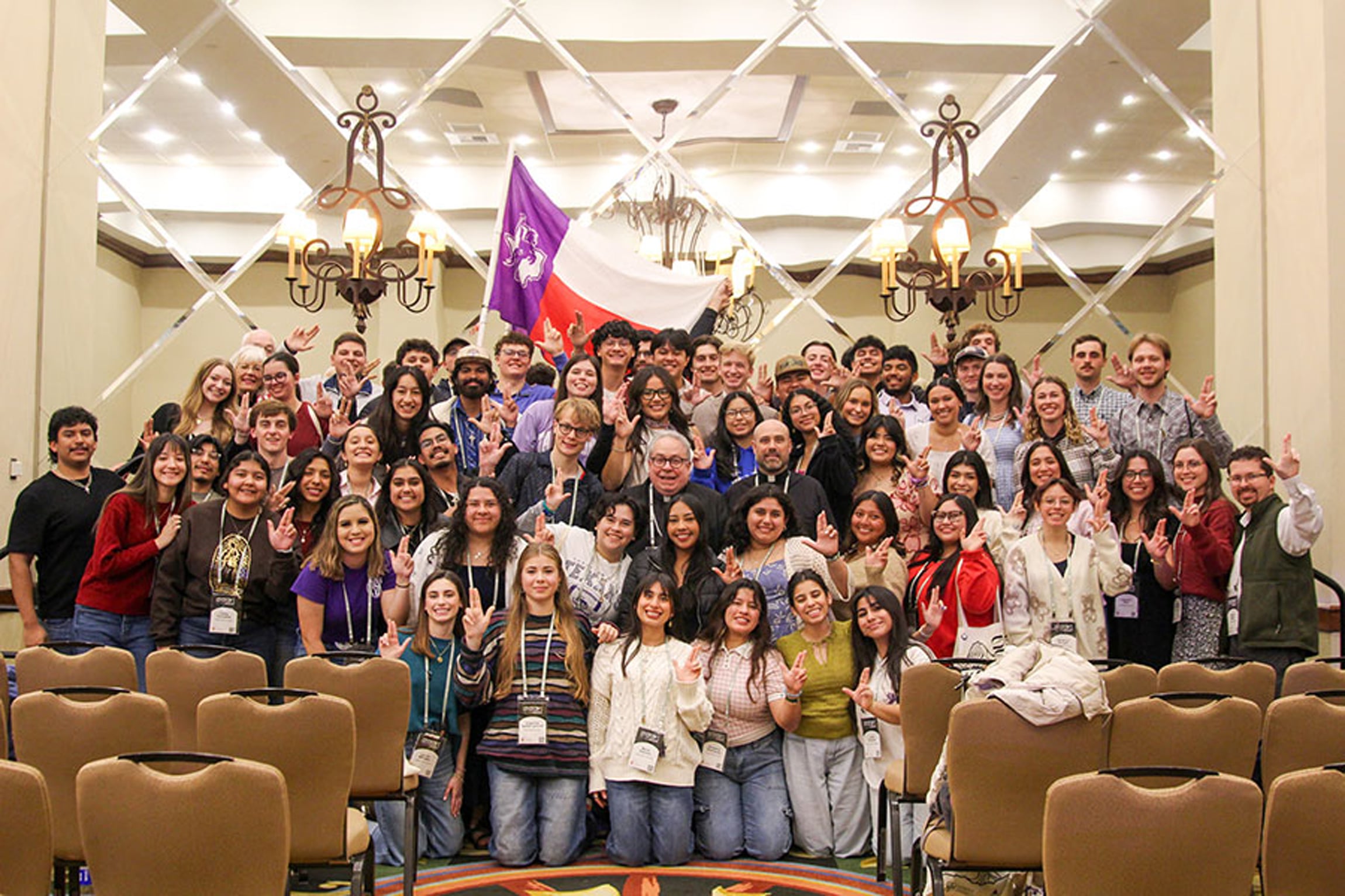
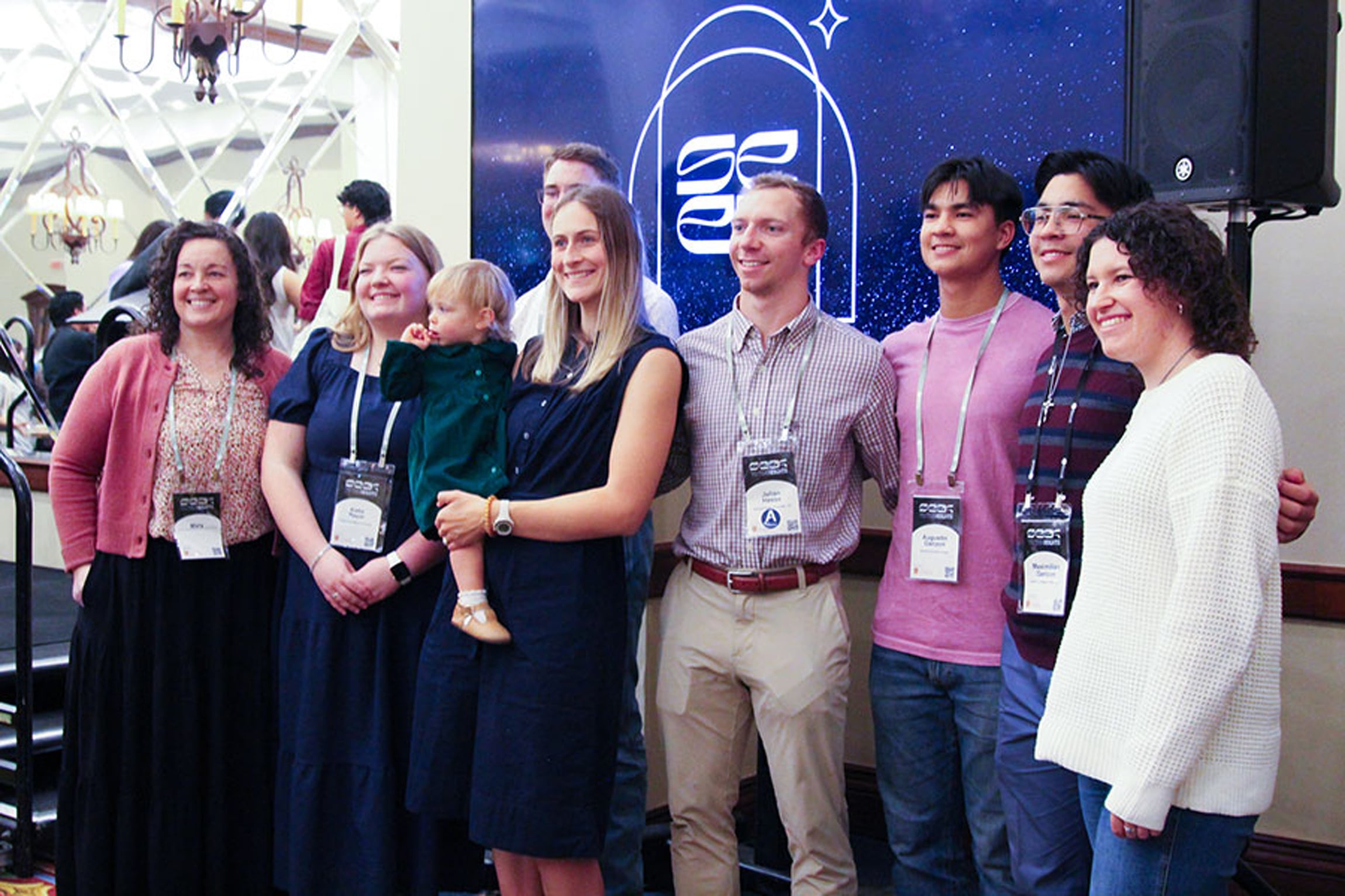
Tarleton State University Catholic campus ministry students pose with Bishop Olson, Father Ed Hopkins, chaplain and pastor of St. Brendan Parish in Stephenville, and Campus Minister Nathan Mena on Jan. 4, 2026 during the Diocesan Gathering at SEEK 2026 at the Gaylord Texan in Grapevine. (NTC/Susan Moses)