
For love that lasts, put God first
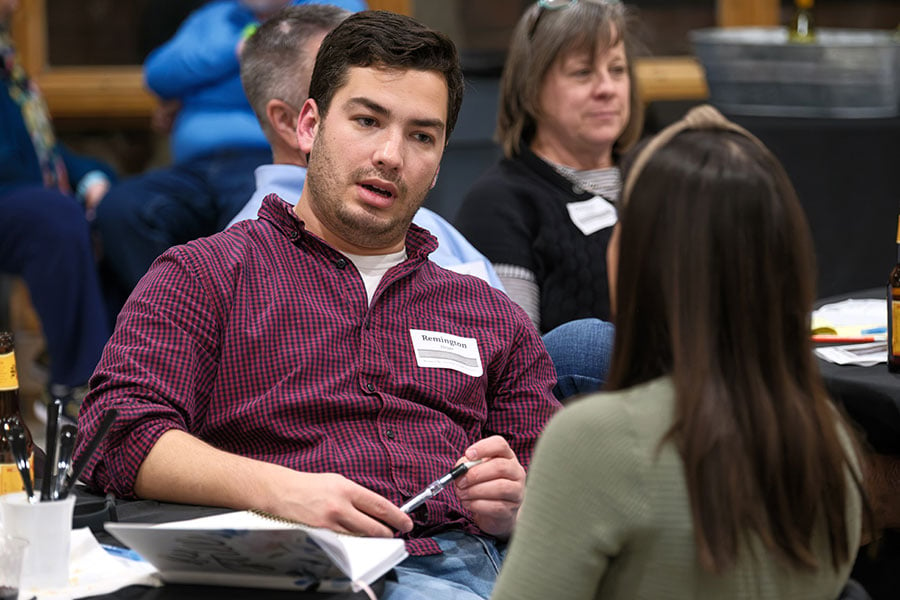
Remington Hoyer and Alison Prahl participate in Marriage on Tap, a program to build Christ-centered marriages, at Good Shepherd Catholic Church in Colleyville on Saturday, January 31, 2026. (NTC/Kevin Bartram)
Long-time married couples are often asked about their secret to a successful and happy marriage. Answers probably vary, but the Catholic Church’s response is short and sweet: Put Christ at its center.
The sacrament of marriage is a lifelong, sacred covenant between a man and a woman that is meant to mirror the relationship between Jesus Christ and His Church. Just as Jesus perfectly displayed sacrificial love for mankind’s salvation, marriage should also witness to the free, complete, permanent, and exclusive sacrificial gift of self between spouses.
Deacon Jim Bindel, who oversees marriage preparation at Our Lady Queen of Peace Parish in Wichita Falls, said there is a right ordering and an important connection between God, prayer, and nuptial love. “You have to love God first. If you love God first, you will love your spouse more than you ever thought you could,” he said. “The more you pray, the more you understand that.”
In addition to being a witness of God’s love for the Church, Dcn. Bindel asserted that marital vocations have an eternal component. “This commitment is a call to holiness and to participating in God’s will and plan for all of humanity,” he said. “It is part of our spiritual journey where, when man and woman become one, the goal is to get each other to heaven.”
Echoing that idea was nationally acclaimed speakers and authors Dr. Andrew and Sarah Swafford who spoke at a Marriage on Tap event held at Good Shepherd Parish in Colleyville on Jan. 31.
Dr. Swafford described marriage as a training ground for the ultimate good, which is heaven. “Time flies, eternity awaits,” he said. “Every person who ever lived still does somewhere.”
The Swaffords shared ideas about how to keep Christ at the center of one’s marriage and said that it starts with pursuing virtue and purging sin. “Self-mastery makes possible the self-gift of love,” said Dr. Swafford. He pointed to the Beatitudes as a vehicle for taking personal inventory and discovering areas of spiritual weakness. In addressing these, we unite more closely to Jesus by increasing virtue in our lives.
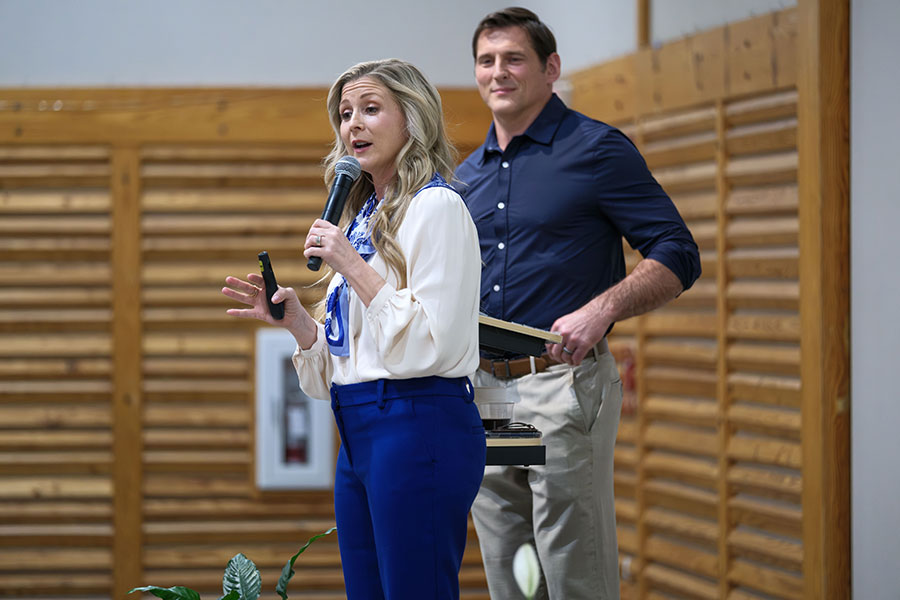
The Swaffords shared that an important part of healing from past sins is to “surrender the debt” by forgiving others and ourselves. Experiencing God’s mercy and sharing that gift with those who have hurt us has a direct impact on family life. “The greatest gift you can give your spouse and children is the gift of your own healing,” Sarah affirmed.
Courtney Duffy, who attended the Marriage on Tap event with her husband of almost 32 years, agreed that each spouse must individually pursue their own healing and their personal relationship with God. “We are all broken, and we bring our brokenness to Jesus for healing,” she said. “I cannot heal my spouse, but I can provide a loving place for that journey.”
The Swaffords reminded attendees to bring excellence to their marriages and families. “Instead of giving the world our best, we need to give the ones in our household our best,” said Dr. Swafford. “There’s always going to be rupture [in relationships]. It’s all about how you repair.”
They explained how identifying common patterns that tear down oneness — such as invalidation, escalation, and negative interpretation — is a positive step toward repair. Learning how to spot the triggers or lies in a relationship can help couples understand what those patterns are and why they happen, both of which are necessary to adequately heal marital weak spots.
“We invite Jesus into our marriage when we acknowledge our shortcomings and pursue healing,” said Kate Casey, who attended the event with her husband of 30 years. “We also lean into our faith when we practice patience and forgiveness with each other and ourselves.”
The Swaffords emphasized the need for married couples to journey through marriage and family life with other like-minded couples. They spoke about pursuing faith-based marital friendships using a Polish word that St. Pope John Paul II lived out as a single man seeking community during the Communist invasion of Poland: srodowisko [pronounced sro-doh-VISko]. They explained srodowisko as a “zone of freedom” for “friendships based on faith.”
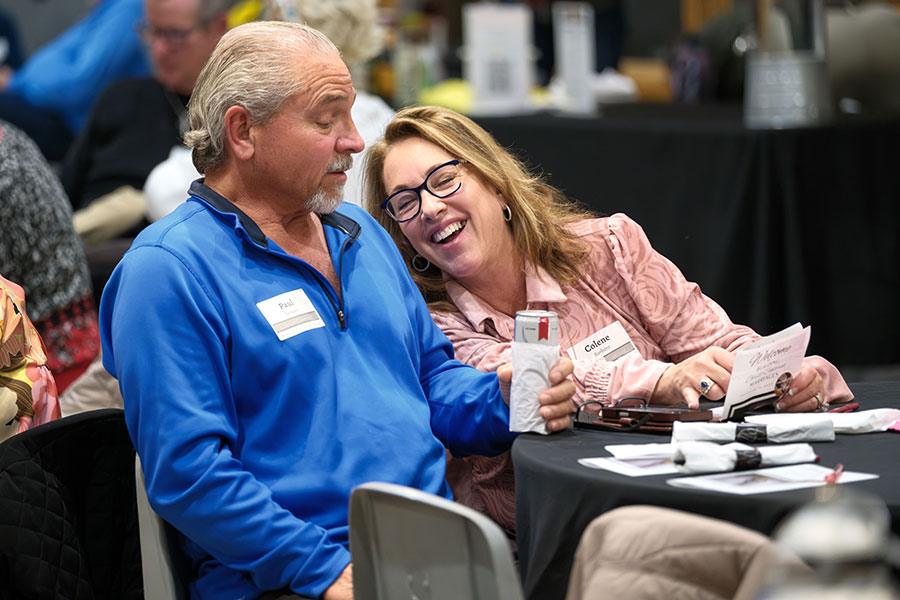
“You cannot do this alone,” said Sarah. “We really need each other because it’s really hard.” She shared that the best decision they ever made was to invite other married couples to their home on a monthly basis, which they call “First Saturdays.” For years, the Swaffords have gathered with the same six couples and their children to pray a decade of the Rosary, sing praise songs, share a meal, and have honest conversation.
“[The kids] see other families pray and then they go play while couples share their ‘high’ and ‘low’ from that month. The magic is in that,” Sarah said. “You have to work hard to have a village today. Find a srodowisko you can share highs and lows with. Start with just one other couple.”
The Caseys have also benefitted from a similar experience in their marriage. “Jim and I are members of a Small Church Community with six other couples. The group has helped us grow in our faith, and we enjoy the love and friendship we have found with the other couples,” said Casey. “We are all in the same stage of life so that helps us understand and support each other. Our [community] has helped us grow in our prayer life as individuals and as a couple.”
Dcn. Bindel said it is important for couples to surround themselves with like-minded people who have similar values so that they do not become “influenced by things outside of our faith that tug at us and pull us away.” Married couples should “get involved in parish life so that you know you are not alone,” he said. “You have a parish family to support and take care of you.”
Dcn. Bindel also advised that couples should “stay as best you can with Catholic teaching” when considering marriage retreats, workshops, and online apps to use together. For information about local marriage enrichment programs, he said the diocesan website is a good resource: fwdioc.org/marriage-enrichment.