
Kimbell Art Museum brings treasures of the Holy Sepulcher to Fort Worth
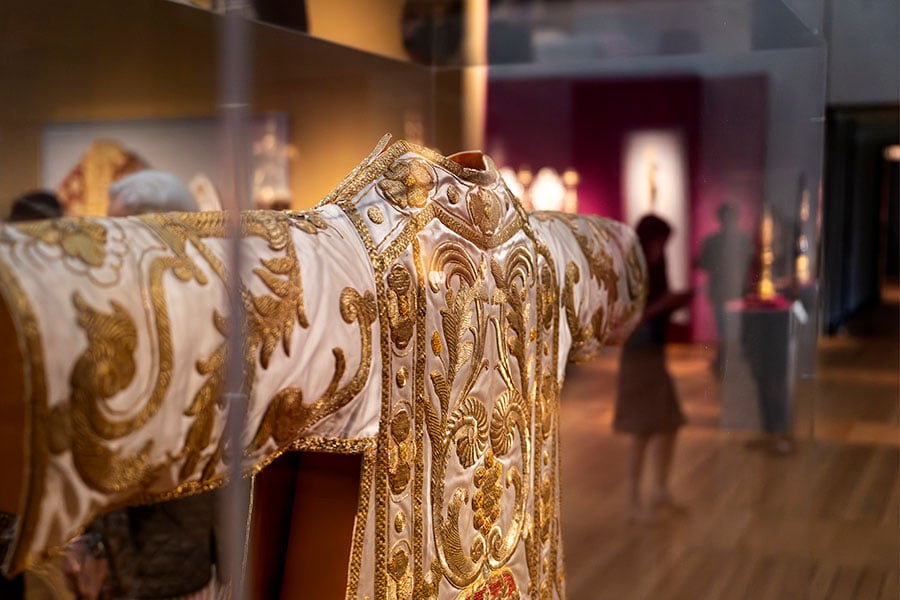
A view of embroidered vestments at the Kimbell's "The Holy Sepulcher" exhibit on March 12, 2026. (NTC/Juan Guajardo)
FORT WORTH — The finest treasures, commissioned by European royalty and carried by pilgrims to the Church of the Holy Sepulcher, have made another voyage hundreds of years after they first arrived in Jerusalem — to the Kimbell Art Museum in Fort Worth.
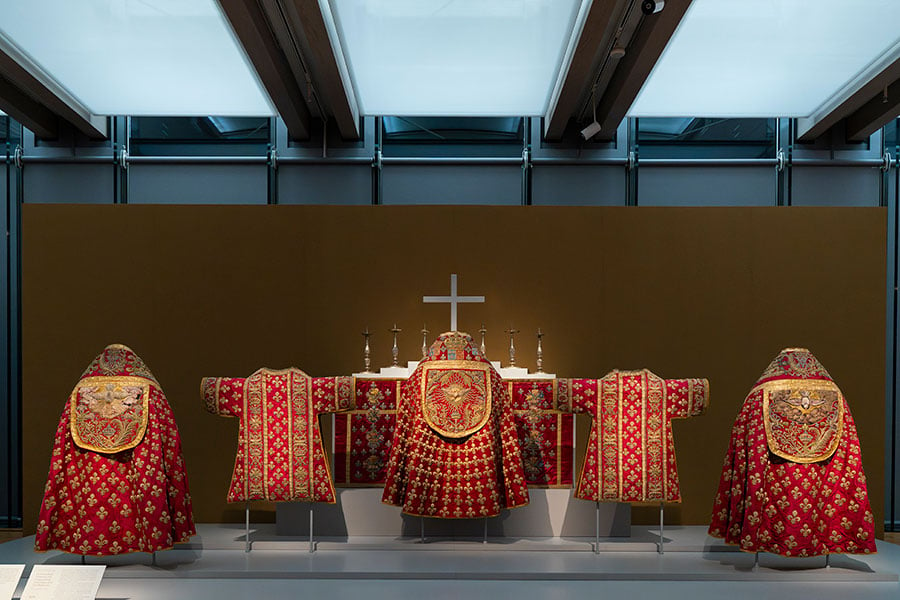
More than 60 objects in gold, silver, and precious gems are displayed, representing the finest works of 17th and 18th century artisans.
Traveling to only two sites in North America, these spectacular vestments and dazzling sacred vessels are on display through June 28.
Lasting gifts
Xavier Salomon, who spent years organizing the exhibition, explained that these religious objects were gifts to the Holy Sepulcher from Catholic monarchs in Spain, France, Portugal, the Holy Roman Empire, and the Italian states.
Often, he said, similar artifacts used by European royalty were melted to finance wars or lost to revolution, but these objects are “unique survivors,” having been protected by Franciscan friars and used in worship for centuries.
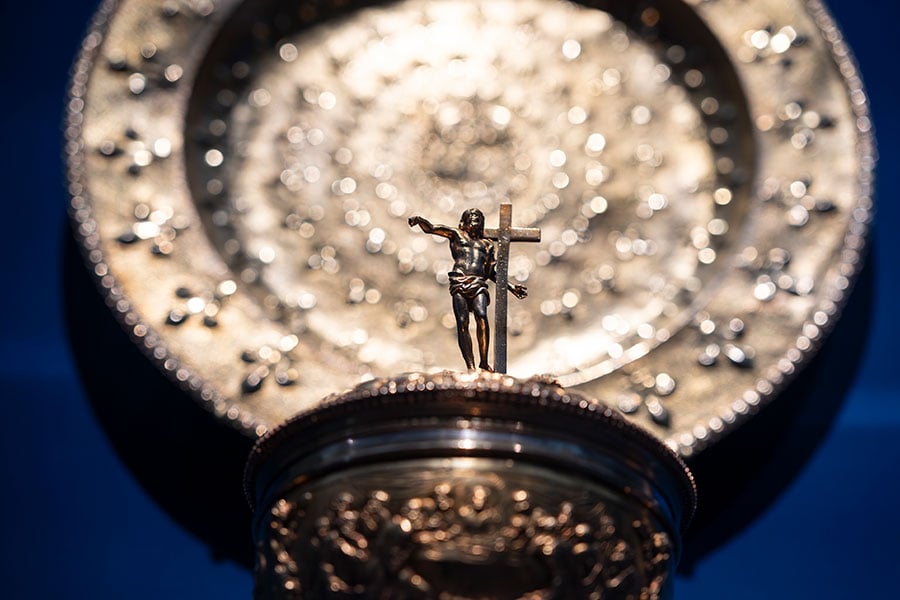
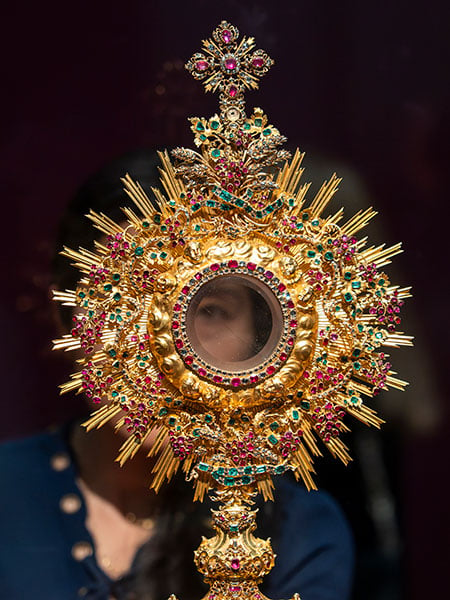
Ornate initials and details such as the French fleur-de-lis, Spanish castles and lions, and the Hapsburg imperial eagles identify the donor and country of origin. Scenes and symbols of Christ’s life add imagery to the function of the pieces, which include reliquaries, processional crosses, candlesticks, chalices, monstrances, lamps, and vestments.
Beauty reveals truth
The craftsmanship and beauty of the historical objects speak to a greater truth for today’s faithful, suggested Friar Stéphane Milovitch, OFM, director of the Cultural Heritage Office of the Custody of the Holy Land and chairman of the Board of Directors of the Terra Sancta Museum in Jerusalem.
“With this exhibition, you can see that man tries to give the best of his capacity for God. In this century, sometimes we worship God — we pray and it’s good — but we don’t invest all our capacity. And it is a lesson of the past to see how people invested the best of their capacity. … We understand that God was important for them. If not, they would not have done that.”
Although the vestments and liturgical objects are truly works of art, the purpose of their creation was to point to the glory of God.
Local look
Having the exhibition on display in Fort Worth is a rare opportunity to see the exquisite artistry, Salomon and Friar Stéphane agreed. The Franciscan friar said, “Coming here to this beautiful museum is a way also to go to the Holy Sepulcher and to visit the holy shrines.”
And, he added, a visit serves as a reminder to pray for peace in Jerusalem.
The Church of the Holy Sepulcher in Jerusalem is Christianity’s holiest site, believed to be the location of Jesus’ death, burial, and resurrection.
The works, in the U.S. for the first time, are on loan from the Terra Sancta Museum in Jerusalem, a new museum which will provide a permanent home for the collection.
Tickets for the special exhibition may be purchased at kimbellart.org or at the Kimbell’s Piano Pavilion Box Office. Half-price admission is available all day on Tuesdays plus Friday evenings.