
More parishes offer sites for the final resting place of loved ones’ ashes
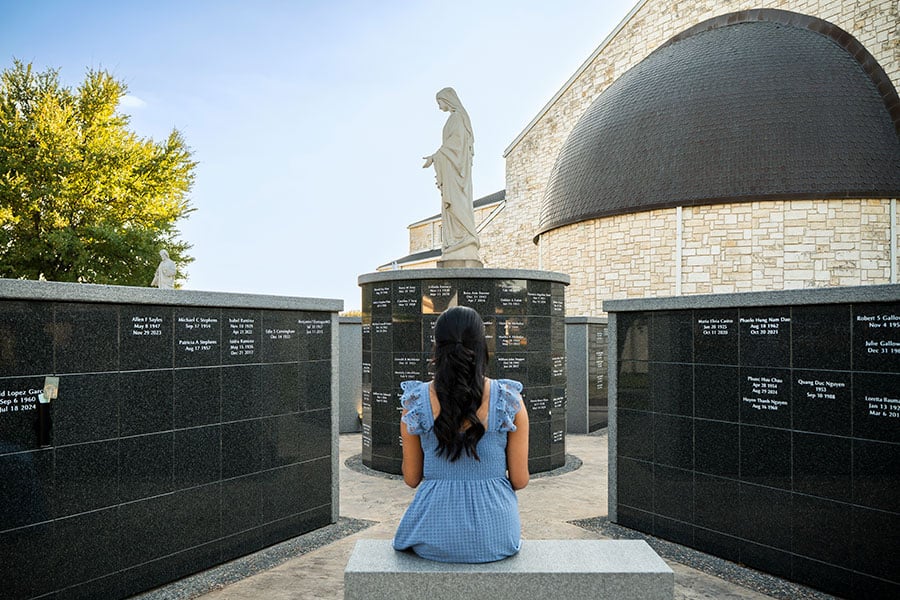
A woman prays before the columbarium on the grounds of St. Elizabeth Ann Seton Church in Keller. (NTC photo illustration/Juan Guajardo)
When Billy and Liliana Anderson were faced with the devastating task of planning their son’s funeral, the grieving parents knew where they wanted to shelter his remains.
The longtime members of Most Blessed Sacrament in Arlington chose to place the ashes of the 30-year-old in the parish’s newly built columbarium.
Derived from the Latin word columba meaning dove or pigeon, the term “columbarium” once referred to the nesting boxes found in ancient Roman dovecotes.
Today, the freestanding memorials with stacked niches are designed to hold urns with cremated remains.
“We go to church every Sunday and can visit our son on the way in and out,” explained Billy Anderson, who finds the prayer garden with a columbarium and Stations of the Cross a peaceful setting. “You could spend all day there in prayer. We consider it holy ground.”
The couple’s own funeral arrangements involve cremation rather than burial, and they plan to purchase a space near their son.
A columbarium, adjacent to the parish they’ve belonged to since 2007, is a beautiful alternative for families, according to Liliana Anderson.
“Nothing helps my grieving process, but it’s so serene and reverent out there,” the heartbroken mother pointed out. “It doesn’t matter who you see at the columbarium. We’re all experiencing the same thing. We can comfort one another.”
Permitted with restrictions
The popularity of columbaria grew following the Second Vatican Council. In 1963, Pope Paul VI lifted the ban on cremation for Catholics, recognizing the act didn’t affect the soul or prevent God’s power of resurrection.
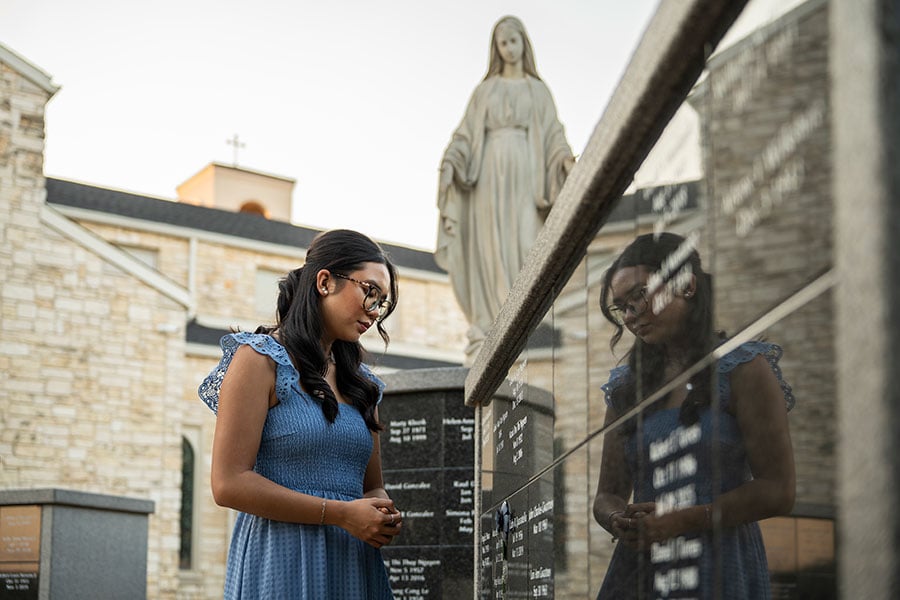
Unlike other religions however, Catholics are not permitted to spread, scatter, or separate cremated remains in any way. Only burial in the ground or columbarium is allowed.
According to the U.S. Conference of Catholic Bishops, “The cremated remains of a body should be treated with the same respect given to the human body from which they come. This includes the use of a worthy vessel to contain the ashes, the manner in which they are carried, and the care and attention to appropriate placement and transport, and the final disposition.”
Although the Catholic Church prefers traditional burial because it more clearly expresses faith and hope in the resurrection of the body, an increasing number of parishioners find cremation meets their family’s needs and personal preferences.
A wonderful gift
Eight parishes in the diocese have built a columbarium on church property and more are looking into possible construction, said Kevin O’Brien, diocesan director for parish/school services and cemeteries/columbaria. Erected on a concrete foundation, the steel structures are encased in marble, stone, or granite and feature inbuilt spaces or niches.
“In our diocese, the niches are one cubic foot so you can put two urns in them,” he said, noting other denominations, like the Methodists and Presbyterians, are also building columbaria. “It’s a small footprint structure that can hold a lot of remains. Columbaria are not new but their use in the diocese is.”
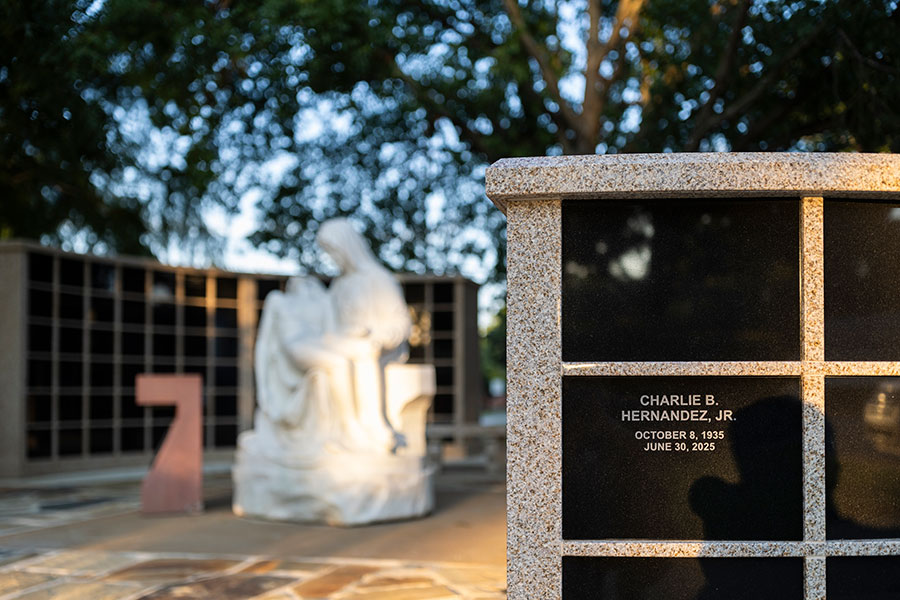
St. Elizabeth Ann Seton in Keller; Good Shepherd in Colleyville; St. Philip the Apostle in Flower Mound; St. Maria Goretti and Most Blessed Sacrament in Arlington; Immaculate Conception in Denton; Sacred Heart in Wichita Falls; and Sacred Heart in Seymour currently offer inurnment in a columbarium for parishioners or practicing Catholics.
“People find a columbarium is more economically feasible than body burial and are easily accessible on church property,” O’Brien continued. “On All Souls Day a lot of parishes will have a procession out to it to pray for the dead.”
In some ways, it’s a nod to earlier times when churches had their own cemeteries. But the director was quick to emphasize that a columbarium is not a cemetery.
“We’re not allowed to build a cemetery within city limits per Texas law,” O’Brien stressed.
Culturally, Americans don’t spend as much time in cemeteries as mourners do in other parts of the world. The availability of a columbarium near the church allows, and even encourages, people to visit a loved one’s final resting place.
“It’s a wonderful gift to the faithful to be able to offer something like this,” he added. “It helps people cope with grief to have a family member close to where they attend Mass every week. Our funeral rites are about helping a family to grieve and let go of their loved one until the resurrection.”
Creating a sacred space
The price of purchasing a niche at a columbarium in the diocese ranges from $2,000 to $3,800 depending on the parish. Some local funeral homes with a columbarium charge up to $10,000 for a niche, according to Kathy McCoy, the business manager at St. Maria Goretti Church in Arlington.
Purchasing a spot “is a benefit of being an active member of our church,” explained the administrator, who has sold 130 of the 464 available niches to date.
In April, Father Samuel Maul, the pastor, blessed the new columbarium located on the southeast corner of the parish. The blessing followed careful planning and construction to create a sacred space where the faith community can remember and honor its deceased loved ones.
Money generated by the columbarium is placed in a separate savings account to maintain lights, landscaping, and engraved nameplates at the site. In addition to the huge financial difference between cemetery and columbarium costs, “people like the idea of being buried on holy ground and on church property,” McCoy asserted. “And it’s easy to visit the grave site.”
St. Elizabeth Ann Seton opened its well-planned columbarium in 2013 after prodigious research, said Suzanne Lynch, a parish employee who manages the site. Two aesthetically pleasing monuments — titled Our Lady of Grace and St. Joseph — have a combined 968 spaces. Approximately 434 are sold.
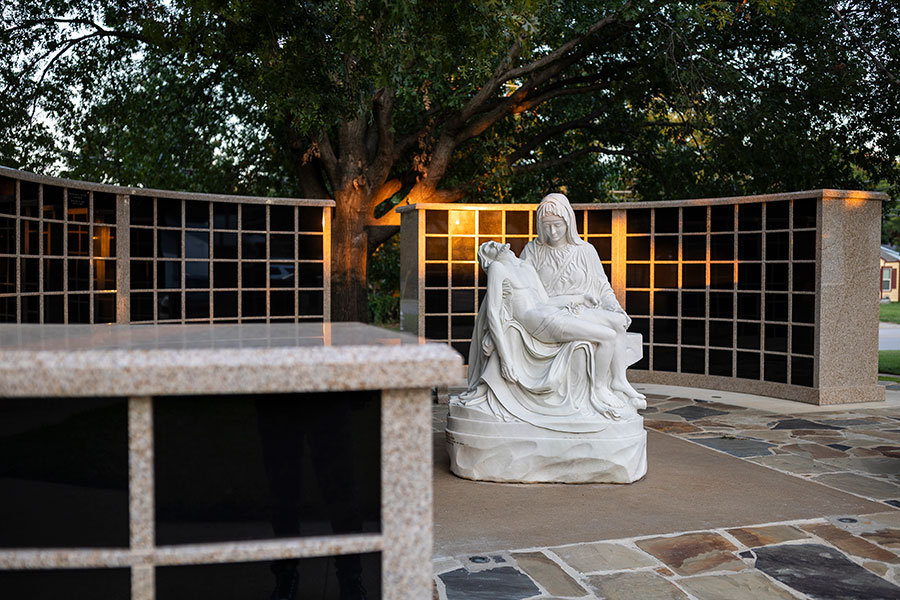
“Parishioners come to Mass here, love the church, and want their loved ones in a Catholic place,” she said, describing a possible motivation for choosing the columbarium. “We’ve installed new lights out there and it’s not gated so people can visit 24/7.”
An easy choice
For Debbie Braymer, St. Elizabeth Ann Seton Church always felt like home. A member since 1997, the New York native and her husband, Michael, were early supporters of the growing parish and helped start its school. When he died in 2022, placing his cremated remains in the parish’s columbarium was an easy choice.
“It was the best thing we could do,” said Braymer, who made the decision with her son. “I can go there any time I want. Every weekend, I go to church and have that option.”
Growing up on the east coast as an Italian Catholic, the 72-year-old remembers family visits to cemeteries were frequent and a chore. It always felt cold and finding the grave site was sometimes difficult.
“I didn’t want that,” Braymer said, explaining her parish’s columbarium is well-done, reverential, and provides a place for meditation. “I want to visit and feel safe when I visit. It’s a blessing.”