Inspired by the readings for each Sunday in Lent, Your Humble Scribe selected six movies for families to consider for Sunday afternoon viewing and discussion. Readers may find some of my selections … um … surprising, if not entirely unknown.
Fourth Sunday of Lent
On the Fourth Sunday of Lent, Laetare Sunday, the liturgical color of vestments can be Old or Dusty Rose. Not the Hot Pink some vestment manufacturers have decided to foist on the clergy.
The Gospel selection details Our Lord’s parable of the prodigal son, the ungrateful kid who demands his share of his father’s estate but is sincerely moved to repentance after squandering his wealth on wine, women, and song (Luke 15:1-3, 11-32).
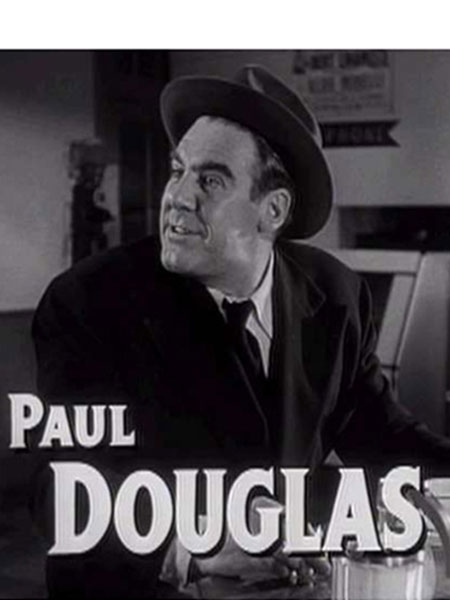
Paul Douglas. (itoldya archives)
Since 2025 is a Holy Year, the otherwise forgotten MGM movie, When in Rome (1952), came to mind. This unpretentious, gentle comedy presents an amiable con man (Paul Douglas) escaping the US on a cruise to Rome during the Holy Year of 1950. To avoid the police in Italy, he steals the collar and cassock of a newly ordained priest (Van Johnson). The young cleric must not only find the man who stole his clothing but must now try to save his soul and bring him back onboard the Barque of Peter in this immensely likeable film. YouTube has two newsreels from showing Rome and Venerable Pius XII during the 1950 Holy Year, part 1 and part 2.
The movie ends with the triumphant acclamation our elementary school choir learned in 1959 when St. John XXIII was elected pope: Christus vincit! Christus regnat! Christus imperat! (“Christ conquers! Christ reigns! Christ commands!”).
Suggested Discussion Topic: The prodigal son is one of Christ’s most well-known parables. Its heart is about ingratitude. Discuss how ingratitude can poison relationships and how love and respect can heal family problems.
Fifth Sunday of Lent
The Fifth Sunday of Lent, previously called Passion Sunday, ushered in Passiontide, the final two weeks of Lent. During this period, parishes are encouraged to cover crucifixes and statues in violet shrouds, a reflection of the Church’s deepening sorrow as the liturgical memory of the Crucifixion draws near.
In the first reading, God tells Isaiah: “[T]he things of long ago consider not; see, I am doing something new! Now it springs forth, do you not perceive it? In the desert I make a way, in the wasteland, rivers” (Isaiah 43:17, 18).
Dean Stockwell reads off Colleen Townsend's shoulder in Los Angeles in 1949. (itoldya archives)
A. J. Cronin, a popular mid-20th century novelist almost joined the priesthood. Like Arthur Conan Doyle, he was a Scottish doctor turned author who lost his faith as a young man. Unlike Doyle, he found it again.
Cronin followed the author’s basic rule: write about what you know best. So he wrote about doctors and Scots who found it difficult to be Catholic. His characters are memorable; his narratives often shine with great power and beauty. Many of Cronin’s novels were made into well-received films.
MGM turned his novel, "The Green Years," into a thoughtful and popular movie in 1946. Little Robert Shannon (Dean Stockwell/Tom Drake), a 7-year-old orphan in Ireland, is sent to live with his Presbyterian grandparents (Hume Cronyn, Selena Royle) in Scotland, dubious about taking in the boy who stead-fastly remains Catholic.
Robert’s comically irascible great-grandfather (Charles Coburn, stealing every scene he’s in) becomes the boy’s champion.
Despite initially being bullied in school, the schoolmaster discovers Shannon to have a natural genius for science. He helps sharpen the boy’s intellect throughout his schooling so he might attain a scholarship for university medical studies.
Richard Haydn, usually playing a comic figure, is impressive as the friendly, supportive schoolmaster; Beverly Tyler is enchanting as Alison, Shannon’s sweetheart. Her rendition of Handel’s “I Know My Redeemer Liveth” is positively thrilling.
To better enjoy his work, this site provides a fine biography of A. J. Cronin. At its heart, "The Green Years" shows children being trained for excellence. The various interweaving subplots in this engaging but nearly forgotten film should provide a good deal of family conversation.
Suggested Discussion Topic: Loss of faith is a great problem among Catholics these days. It has many sources: lack of prayer life within families, poorly taught catechism classes, social media, celebrities’ hedonistic lifestyles, and vile entertainment sources. Discuss how these can all combine to convince a young Catholic that Jesus is a myth and that heaven is empty if, indeed, it exists at all.
Sixth Sunday of Lent
The Sixth Sunday of Lent, for centuries known simply as Palm Sunday, is now saddled with the awkward title, “Palm Sunday of the Lord’s Passion.” The liturgy begins with a commemoration of Jesus’ triumphant entry into Jerusalem and blessed palm leaves are given the faithful to be venerated as sacramentals reminding us of Christ the King. The readings culminate with St. Luke’s harrowing account of the Passion and death Christ endured for our redemption.
The reader may wonder, at first, why Your Humble Scribe has chosen a comedy for Palm Sunday reflection. It is a comedy in the mode, adopted by Dante for his epic poem, "The Divine Comedy". The 4th-century Latin grammarian Donatus explained, “Opening in distress, comedies end in peace.” The Passion narrative, therefore, is a comedy: beginning in heartbreak, it concludes in joy.
Sullivan’s Travels (1941) is such a comedy. Studio bosses want director John L. Sullivan to make something commercial, a proven moneymaker like his earlier efforts, Hey, Hey in the Hay Loft or Ants in Your Plants of 1939. Sullivan prefers to film a Depression-themed, politico-sociological novel, "O Brother, Where Art Thou": “I want this picture to be a commentary on modern conditions — stark realism, the problems that confront the average man.”
Movie poster for "Sullivan's Travels" (1941). (Public Domain/Picryl)
Realizing he knows nothing of such problems, Sullivan goes out to confront the world as a hobo with nothing but a dime so he can at least buy coffee and a donut. He meets a young woman, a failed acting aspirant, on her way back home. She learns who Sullivan is, convinces him that he needs a guide and, together, go off to experience life among the lowly.
Not meaning to stress the concept, but Sullivan is something of a Christ-figure in his desire to know the humble mass of mankind and then make his movie to bring their story to the rest of privileged humanity. Since this film was written and directed by the brilliant Preston Sturges, the story proceeds with its own cockeyed logic and an unusual twist before the film concludes.
In homage to Sturges, Joel and Ethan Coen used his faux book title, "O Brother Where Art Thou" in 2000 for their own Depression-themed film starring George Clooney. In 1990, the Library of Congress selected Sullivan's Travels for preservation in the United States National Film Registry.
Suggested Discussion Topic: Seeking to impose the external aspects of philanthropy on others is a problem which afflicts people who have nothing better to do. It is the reason why laws supporting population control, transgenderism, environmentalism, and other such causes always carry unintended consequences. Discuss how such causes are meaningless when God is eliminated from consideration.
Sean M. Wright, an award-winning journalist and an Emmy-nominated television writer, is a Master Catechist for the Archdiocese of Los Angeles. He is a member of Our Lady of Perpetual Help parish in Santa Clarita, CA and responds to comments sent him at [email protected]. Find more of his columns here.
Laetare Sunday, Sundays of Lent, Catholic faith, classical films, trending-english

[1].jpg)