Reverence and respect: reflections on the International Conference on Catholic Indigenous
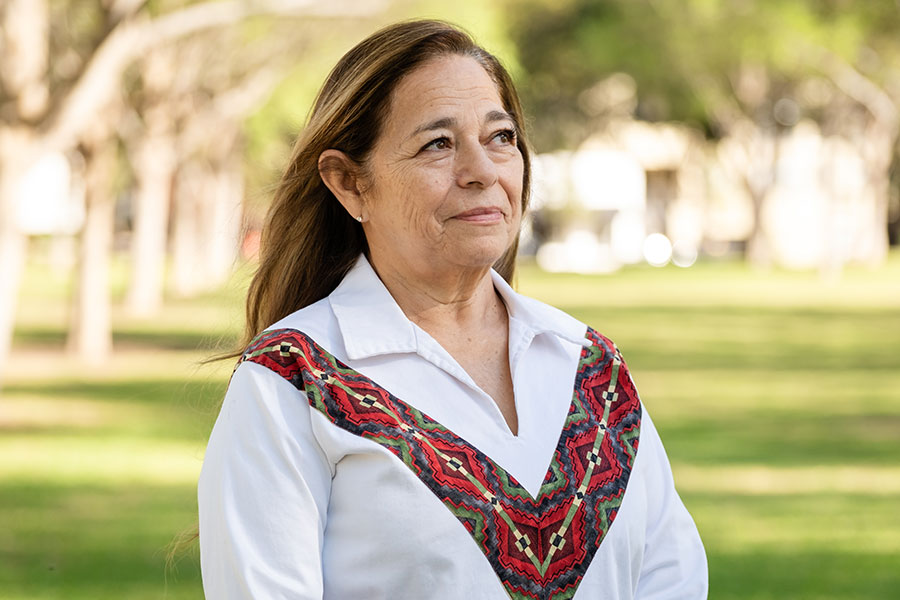
Norma Váldez, who recently represented the U.S. at the International Conference on Catholic Indigenous in New Zealand, stands outside the Kimbell Art Museum in Fort Worth. (NTC/Matt Redden)
Five countries came together for the International Conference on Catholic Indigenous, creating a unique space for the exchange of culture, shared histories, languages, spirituality, and the enduring strength of Indigenous Catholic faith. Representatives from Australia, Canada, New Zealand, the United States, and the Vatican gathered to reflect on their common experiences, including the legacy of historical trauma, while also celebrating the richness and resilience of their Indigenous traditions within our Catholic Church.
The humility and love present throughout the gathering were deeply moving. It was evident not only in the words that were spoken, but also in the spirit shared among all who were present. There was a sense that this unity and compassion flowed from God Himself, drawing us together as brothers and sisters in Christ.
Although each of our communities carries its own history and experiences of trauma, we were reminded that we do not carry these burdens alone. In prayer, conversation, daily Mass, and fellowship, we felt the love of God among us and the strength He provides to continue living out and proclaiming His word.
Together, the gathering highlighted the importance of dialogue, mutual support, and shared faith among Indigenous Catholic communities.
Warm welcome
On our first day in New Zealand, we were introduced to the Māori language and began building friendships with brothers and sisters from many different countries. We also learned about Māori culture, their history, the trauma of colonization, and the treaties that shaped their nation. Alongside these realities, we were given a deeper understanding of the Catholic faith as it has taken root among the Māori people.
What struck me most was the depth and perseverance of their Catholic faith. Despite the hardships and disruptions brought on by colonization, many Māori communities remained eager to learn about and embrace the Gospel.
We were bused to the Ngāti Whātua Ōrākei Marae, a cultural hub located on the grounds of the University of Auckland in the heart of beautiful downtown Auckland. There we were received with a pōwhiri, the traditional Māori ceremony of welcome. This formal greeting marked our entrance not only into the physical space of the Marae but also into a moment of cultural encounter, hospitality, and mutual respect.
Following this beautiful cultural welcome, we sat in a circle for introductions. What stood out most during this time of sharing was, once again, the close relationship between Māori culture and the Catholic faith. For many of the Māori present, their cultural identity and their Catholic beliefs were not separate realities but deeply intertwined. Their stories reflected a living faith that has taken root within their traditions, revealing how the Gospel has been embraced and expressed within the richness of Māori culture.
Visitors share stories
On the second day, the Australian delegation gave a presentation on their culture, the history of treaties with Indigenous peoples, and the role of faith within the Catholic Church in their communities. They also shared about the significant work being done within their education system to preserve and strengthen Indigenous culture.
The Australian presenters demonstrated a strong awareness of their history and a clear commitment to moving forward with God at the center of their lives and communities.
Their efforts prompted reflection among members of the U.S. delegation. As we listened, we began discussing among ourselves how similar approaches might be fostered within the American education system. In particular, we considered ways to better honor and protect Indigenous cultures while remaining firmly rooted in Catholic identity.
In my presentation on Catholic Indigenous communities in the United States, I offered a historical overview of the Tekakwitha National Conference, tracing its development from its founding in 1939 to its continued mission today.
I also addressed the intergenerational trauma experienced by our Nations, reflecting on the deep-rooted anger that persists across generations. In particular, I examined the emerging understanding of epigenetics and its impact on our youth, highlighting how historical injustices continue to shape both the spiritual and emotional well-being of younger generations.
Lessons learned
Day three, Most Rev. Richard Smith, Archbishop of Vancouver, offered a moving reflection on the visit of Pope Francis to Canada, when the Holy Father came to offer an apology for the suffering associated with the Indigenous residential school system.
Archbishop Smith spoke thoughtfully about the significance of this moment for both the Church and Indigenous communities. He reflected on the humility and pastoral concern with which Pope Francis addressed the painful legacy of the schools, seeking a path toward healing and reconciliation, even as the Holy Father himself was experiencing declining health in the months that followed.
Another point that stood out to me was the important work carried out by the USCCB, and the support it provides to the Church across the country. Much of this work often goes unnoticed. In the United States, there are 575 federally recognized Native Nations, each with its own rich culture, history, and traditions.
Recognizing this reality, the bishops have developed a pastoral resource specifically focused on ministry with Indigenous peoples. Titled “Keeping Christ’s Sacred Promise: A Pastoral Framework for Indigenous Ministry,” the document seeks to guide the Church in accompanying and supporting Native American communities in faith.
The task before us now is to help ensure that this framework reaches both clergy and the faithful in the pews. Most Rev. Chad W. Zielinski, Bishop of the Diocese of New Ulm, Minnesota, and former chairman of the Subcommittee on Native American Affairs, has noted, “This document is written not just for the benefit of Catholic Native American communities but for the benefit of the entire Church in the U.S.”
Norma Váldez, a former youth minister at St. Peter the Apostle Church in White Settlement and community engagement manager at Catholic Relief Services, recently represented the U.S. at the International Conference on Catholic Indigenous in New Zealand in March. Váldez, a member of the Pueblo del Sur Nation, serves as interim director of the Tekakwitha Conference National Center and is completing a Ph.D. in psychology. Here she shares her experiences with the conference and common challenges in Indigenous Catholic cultures.