
St. Maximilian Kolbe movie portrays triumph of love over evil
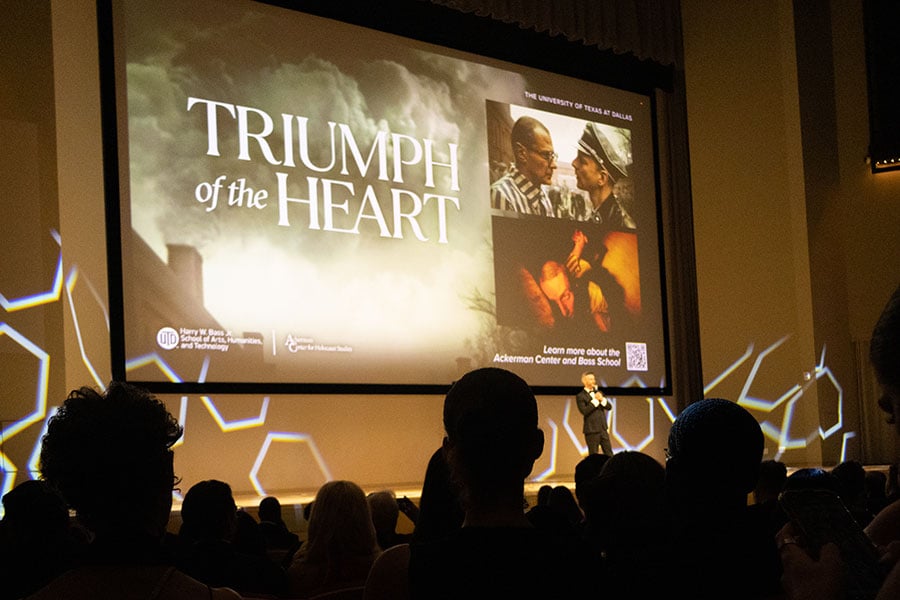
Ryan Penney of EWTN introduces "Triumph of the Heart" during the film's Sept. 8 premiere at the University of Texas at Dallas.
My friend was in a car wreck on her way to meet me at the Sept. 8 film premiere of “Triumph of the Heart.”
I received the call as I arrived at the venue on the campus of University of Texas at Dallas, where beautifully dressed individuals were milling around the red carpet, with Katie McGrady at its helm, conversing with great animation with the actors and friends and family of the D’Ambrosios.
When I approached the scene of the accident, about five minutes away, my friend’s car was being towed, totaled from being sandwiched between an SUV and a truck. She stood at the intersection, dressed to the nines, with a phone to her ear, speaking with insurance, and a bag of her belongings in hand.
Thanks be to God, no one sustained major injuries. She was shaken and bruised yet determined to attend the premiere. Having returned from a pilgrimage to Poland and Auschwitz in late July, she wouldn’t pass on the opportunity to watch the St. Maximilian Kolbe film.
As we found our seats in the large university auditorium, it felt somewhat surreal. The contrast was jarring, from departing a scene with ambulance sirens and the harsh collision and traffic to now being seated in a large auditorium, buzzing with muted excitement and polished contentment. But we settled in and braced ourselves for the lessons of faith the saint’s life could bring to light.
In interviews leading up to this premiere, the film’s writer, director, and producer Anthony D’Ambrosio had mentioned that this, his first full-length project, was a masterpiece, made possible only by God’s providence. He discussed the tight budget, the challenges with filming on location in Poland, and his own struggles with illness. Throughout it all, St. Maximilian Kolbe’s intercession and the Blessed Mother’s care helped the Lord provide him, his film crew, cast, and producers with the grace needed to complete an incredible product.
I considered this as we watched because, overall, the film experience was uncomfortable. Uncomfortable to miss some lines of dialogue due to the heavy accents of the European cast. Uncomfortable to be driven into a timeline where we begin with the lineup of the ten men to be punished by starvation, fully aware that they would not leave the concentration camp cell alive. Uncomfortable to flashback to happier times and then return to the unforgiving reality of the cell. Uncomfortable darkness in the violence and terror of the Holocaust, so artfully depicted.
Uncomfortable and yet so vitally important.
The authentic performances, the chilling cinematography, the terrible beauty of the set design all went to highlight the true sacrifice revolving around St. Maximilian Kolbe’s actions, persistence, and witness — and the transformation of souls due to his presence and warmth of belief. Just as it is not easy to capture a saint’s sacrifice with art, it is not easy to receive. Yet, there was not a dry eye or apathetic heart in the large auditorium of about 1,200 guests.
It was clear in this portrayal that the production had been an endeavor of grit and grace. D’Ambrosio has mentioned how each day of filming, the entire cast and film crew, including the cameramen, would be included in the meditation and preparation for the actors’ performances. It clearly made all the difference. There was an incredible cohesion between the beautiful score, the incredible cinematography, the striking pacing, and the heartbreaking, truly touching performances.
At the pinnacle of the climax, we encounter the image of the Black Madonna, together with Christ’s presence, and an ever-moving serpent, that becomes still through intercession. The image has stayed with me, a message of triumph in the face of disaster.
As the movie closed to thunderous applause, D’Ambrosio told the crowd of the coincidence of the night’s premiere occurring on the Nativity of the Blessed Virgin Mary. “That was a completely serendipitous thing. I burst into tears the moment someone told me that was the case,” D’Ambrosio said.
He closed the night with a request for all to join him in singing the Salve Regina.
“For those of you who are not a part of our Catholic faith tradition here, this is a tradition that we have — to believe that the Mother of our God is also our mother. We find great, great comfort in that fact and that belief in that devotion,” D’Ambrosio said. “I just want to invite all of us, all of you who would like to and are comfortable, to sing a quick Marian song together.”
It echoed more deeply than the earlier standing ovation.
As I drove my friend back home, she remarked on the power of the film, how it had diminished the panic of her accident and helped her surrender her worries to God. With a renewed devotion to the saint, we felt calm in the face of the troubles of tomorrow with the triumph of God’s blessing no matter the outcome.
----
“Triumph of the Heart” will be available for all audiences to watch on Sept. 12, the feast day of the Most Holy Name of the Blessed Virgin Mary.
I pray that you sense her presence and God’s hand, and St. Maximilian’s intentions resonate as clearly in your hearts as it did when we watched.
It’s a film for the history buffs, for the naysayers, for those who are holding doubts in their faith, going through a dark period in their life, or those who dread suffering. St. Maximilian Kolbe will embrace you, forgive you, and intercede for you.