
Texas judicial vicars hold annual conference at Montserrat Jesuit Retreat House
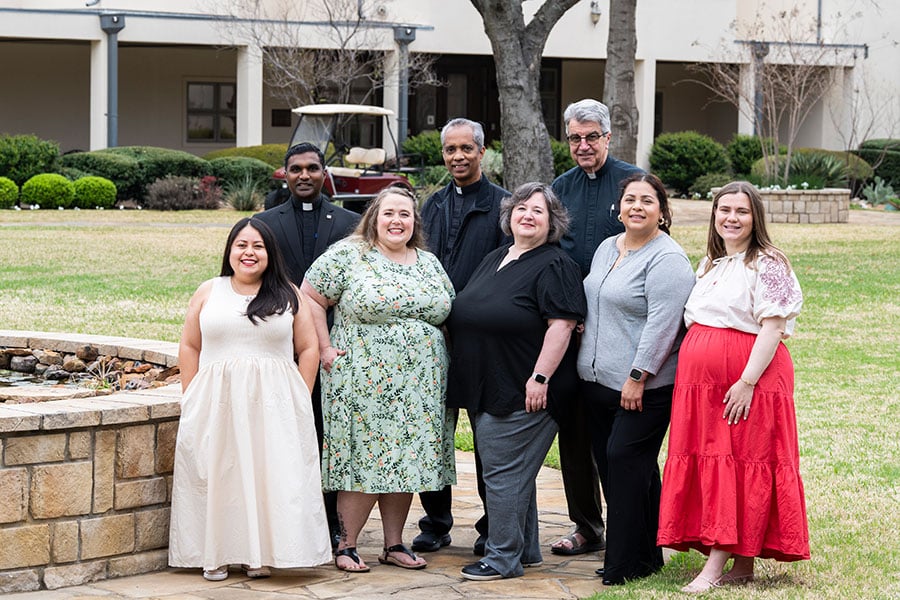
From left, back row: Father Sam Antony, SAC, JCD; Father Joy Joseph, TOR, JCL; and Father Tim Thompson, JCL. From left, front row: Marisol Castrellon, chief notary; Cheyenne Marrinan, director of the tribunal; Elizabeth Scagel, ecclesiastical notary; Dagcy Castañeda, ecclesiastical notary.; and Eva Friddell, ecclesiastical notary. (NTC/Juan Guajardo)
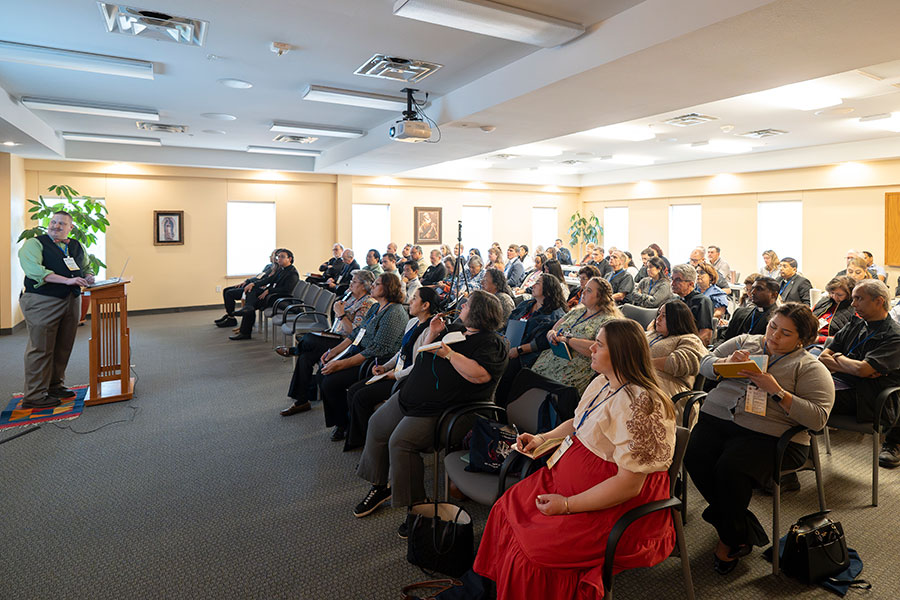
LAKE DALLAS — The 50th annual Texas Catholic Judicial Vicar Conference was held March 10-11 at Montserrat Jesuit Retreat House in Lake Dallas.
This is the first time the annual conference was held in the Diocese of Fort Worth, said Cheyenne Marrinan, director of the tribunal. The proximity allowed the judicial vicar, Father Tim Thompson, JCL, pastor of All Saints Parish in Fort Worth; tribunal judges Father Joy Joseph, TOR, JCL, pastor of Holy Cross Parish in The Colony; and Father Sam Antony, SAC, JCD, pastor of tri-parish community of St. Paul in Electra, Christ the King in Iowa Park, and St. Jude Thaddeus in Burkburnett; and the full tribunal staff to attend.
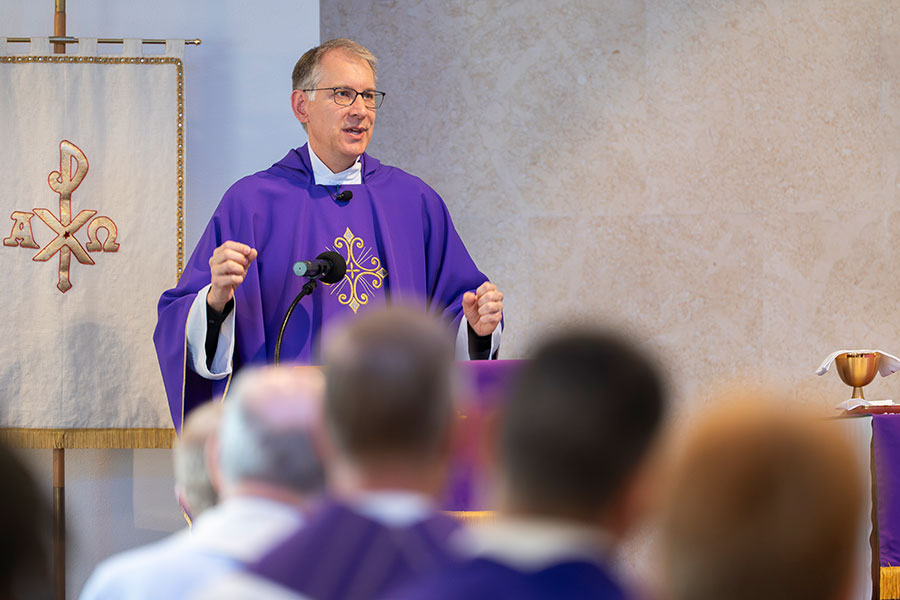
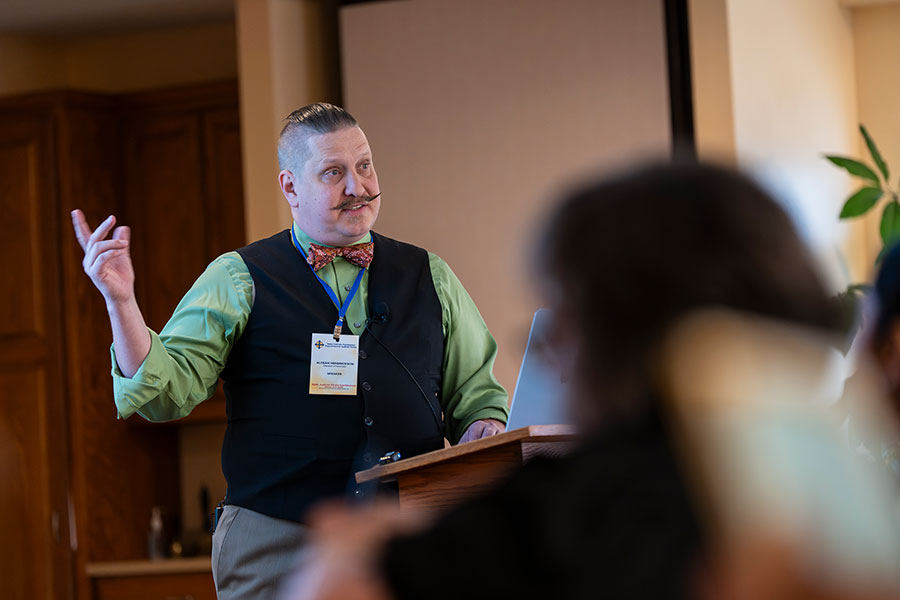
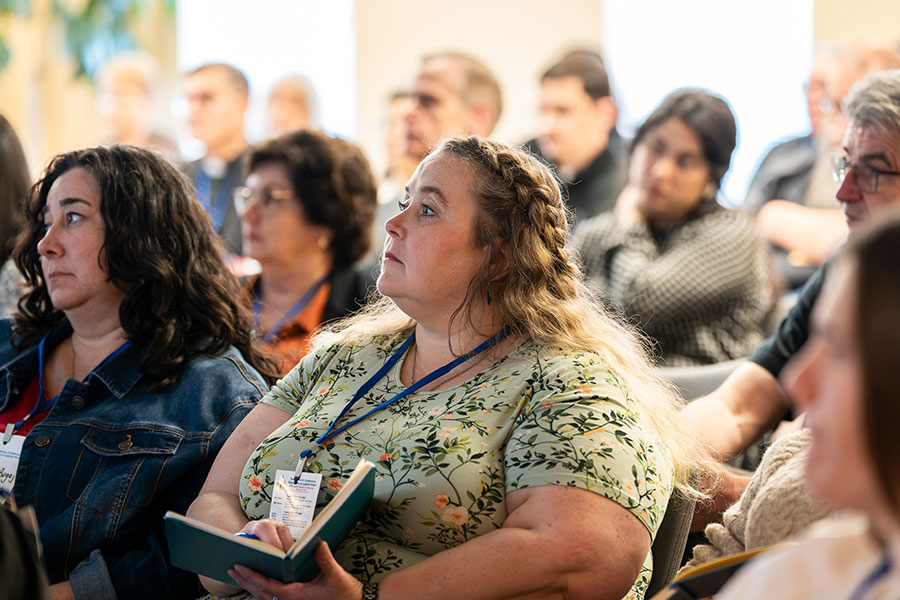
The conference covered aspects of the nullity process and the care of tribunal employees.
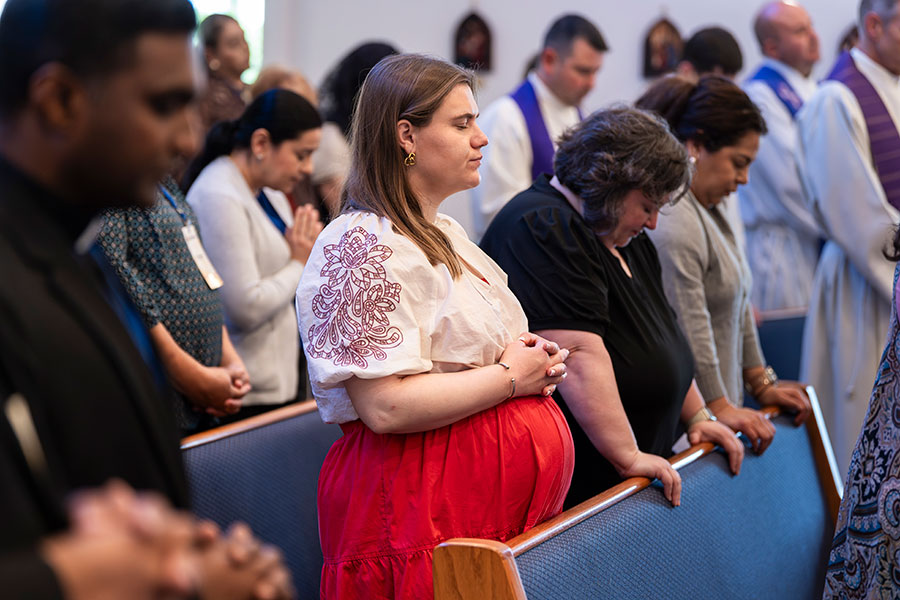
Father Jonathan Wallis, vicar general, welcomed the attendees to the Diocese of Fort Worth as he celebrated Mass at the conference. He prayed for their work as instruments of God’s mercy and forgiveness.
Marrinan and Marisol Castrellon, chief notary, spoke with the North Texas Catholic about the tribunal of the Diocese of Fort Worth and the conference.
(Editor’s note: This interview has been edited for brevity and clarity.)
NTC: What is a tribunal?
Tribunal: Each diocese in the Catholic Church has a tribunal, which interprets and applies the laws of the Church. Most of the tribunal’s work is adjudicating the marital status of any divorced person who has requested a declaration of nullity.
NTC: In what ways is the tribunal active in the Diocese of Fort Worth?
Tribunal: We receive between 100-170 petitions of nullity each year, plus the tribunal handles the approval of marriages — people in our diocese getting married in our diocese; people in our diocese getting married somewhere else.
We process the nihil obstat, indicating there is nothing standing in the way of a valid Catholic marriage. We did over a thousand marriages last year.
The tribunal also processes convalidations and sanations, two methods for Catholics who have married civilly to have their marriage validated by the Catholic Church.
NTC: What are the roles within the tribunal?
Tribunal: Starting at the parish level is the advocate. An advocate is usually a volunteer who is trained to understand the paperwork of the nullity process and helps those with a case. Advocates are really our lifeline between the tribunal and the applicant.
Most parishes have at least one advocate, and we have about 140 volunteer advocates in the Diocese of Fort Worth.
Then, working at the tribunal office are ecclesiastical notaries, which would compare to a paralegal. They make certain all steps are followed, documentation is complete, conduct interviews, and answer questions.
Judges, who have degrees in canon law, examine the case and make a decision. The Diocese of Fort Worth has three judges, who are priests.
Finally we have the judicial vicar, a priest with a degree in canon law who has been appointed by the bishop to oversee the tribunal and serve as a presiding judge. He makes certain that the diocesan tribunal is the appropriate place to hear the case due to the geographical boundaries, and he assigns the case to a specific judge.
NTC: Is there means to appeal a decision?
Tribunal: The Diocese of Fort Worth is what is called a “Court of First Instance.” Decisions can be appealed to our “Court of Second Instance,” which is the Archdiocese of San Antonio in our case, and then finally to the Roman Rota.
NTC: The conference had a presentation on the care of tribunal employees. Why?
Tribunal: Tribunal employees read nullity applications that detail what people think of the worst time in their life. They put down a lot of trauma: things that happened prior to their marriage, things that happened during their marriage. We read cases every day that bring us to tears.
Also, those with cases can get frustrated about the pace of the process. The number one complaint that I receive is that it’s not going as fast as they want. They respond, “You’re preventing me from coming into the Church” or “You’re preventing me from my sacraments.”
But we’re just the neutral court; we’re doing what the court requires. There are guidelines given to us on the timing of the process. And we can’t skip steps.
People also don’t understand that the three priests appointed to the tribunal are doing it in addition to their duties at their parishes, so being patient and understanding of the load they carry is appreciated.
At the end of the day, the judge has to discern whether there is enough information to say that this marriage is invalid. What most people in the pews don’t realize is the judges have to come to moral certitude — it’s not a quick or automatic decision. The Church has to tell the truth.
NTC: It sounds like a difficult job. Are there rewarding aspects of working for the tribunal?
Tribunal: When you see people return to being in good standing with the Church and return to the sacraments.
We were invited to a wedding from a case that we handled. At that wedding we were also able to witness the new spouse getting confirmation and first Communion. All of the things came together, and it was just really beautiful to get to see the other side.
We’ve gotten pictures of someone in tears as she was finally able to receive Communion after 21 years.
A lady called just recently and said, “I get to be a godmother!” She was so excited.
NTC: In what ways can the tribunal be considered a ministry?
Tribunal: The work of the tribunal can restore people to the sacraments.
We’ve had people who have participated in the nullity process, and they’ve come out on the other side and realized what a healing ministry that was. Throughout the process they examined their marriage and they take ownership of their role in the relationship.
Several have come back and become advocates, or parents have observed their son or daughter going through a nullity petition and they have become advocates.
NTC: What were some benefits of the conference?
Tribunal: Besides the information shared at the presentations, it’s helpful to meet the tribunals from across Texas. We interact with them frequently; for example, getting testimony from a witness who lives in their diocese, or helping another diocese who is unfamiliar with how to do something.
We’ve helped with cases in Brazil, in Puerto Rico, in Germany, and in different dioceses in Mexico too.
NTC: What else should we know about the tribunal or the conference?
Tribunal: Our pope has a canon law degree! Pope Leo XIV earned a Doctor of Canon Law (JCD) degree in 1987 from the Pontifical University of St. Thomas Aquinas in Rome, and he served as judicial vicar of the Archdiocese of Trujillo, Peru, for almost a decade.