
The journey to the Church
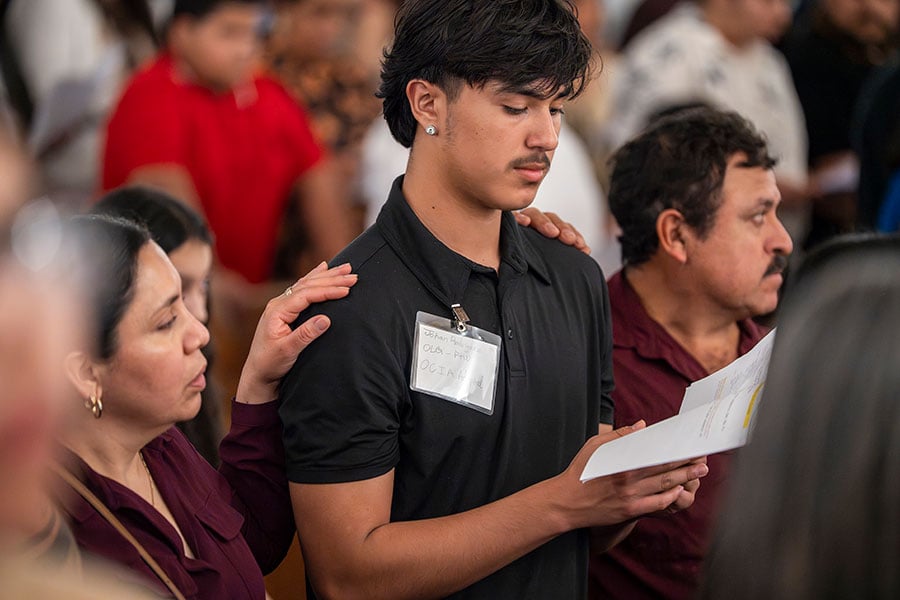
Sponsors place their hands on candidates and catechumens during the Rite of Election at St. Patrick Cathedral on February 19, 2026. (NTC/Juan Guajardo)
For us cradle Catholics, the process of entering the Catholic Church may seem a little mysterious or confusing.
At the Easter Vigil Mass, 1,716 new Catholics entered the local Church after participating in the Order of Christian Initiation of Adults.
According to Laura Nelson, diocesan director of faith formation, the classes are constructed using the Church’s catechumenal model, which “recognizes the need for the human to go gradually and in stages in their journey to become a disciple of Christ.”
Depending on the parish community, OCIA classes can vary in length and format of teaching, but “it’s important that they always proclaim the Gospel, always discuss salvation history, and go through Scripture. They must go through the Creed and teach the Creed in the catechumenate.” Along with learning the Catechism of the Catholic Church and understanding the liturgy and sacraments, candidates must understand prayer and what a moral life entails, Nelson explained.
Initiation marks the beginning of a Catholic’s lifetime of learning, she emphasized. “Finishing that journey is the beginning of another journey, a lifelong journey of continuing to learn who God is; unlearning what the world is telling us about God and the lies we tell ourselves about God; and coming to know ourselves as He sees us and trying to see Him genuinely for who He is.
“So that’s what OCIA is,” Nelson explained. “It’s a journey of faith that starts with the Holy Spirit capturing their heart, and we are the instruments of that to our best ability.”
The four stages of initiation
OCIA begins with a period of evangelization, where catechumen and candidates (those who have been baptized but not received further sacraments) receive initial conversion and come to recognize God’s love.
The second stage focuses on educating the catechumen and candidates on Church doctrine. This period, known as the catechumenate, allows students to understand what they are saying yes to and what the Gospel really means.
The doctrine shows the faithful who God is, how we interact with Him, how we can grow to love Him, and communicate that love appropriately.
“The Gospel is simple because it is God’s love for us and our opportunities to love Him back,” Nelson said. “But simple isn’t always easy. And for humans, in our broken and sinful state, our incarnational state really needs it spelled out. The catechumenate is the place where we spell out what that love means, what the implication of that love is, and that is done through the doctrine of the Church.”
With a newfound understanding of what it means to be in love with God and how that’s expressed in the Church, candidates begin the third stage, the period of purification and enlightenment, “where they ponder and reflect how their life and their disposition is in line or not in line with what they’ve just heard and received.”
The third stage is a time to consider one’s blessings and God’s grace, a time of “coming to know ourselves more so that we can come to the table of the Lord in honesty and humility.”
Having accepted the good and bad in equal measure, candidates and catechumen, soon to be Elect (upon signing the Book of Election), prepare to receive the sacraments of initiation, baptism, and confirmation.
The following 50 days, from Easter to Pentecost, make up the fourth and final OCIA stage, mystagogy. The new Catholics unpack all of the graces they’ve received in the sacraments and begin to live the life of faith as a Catholic. Many parishes continue to meet monthly with the neophytes after this period to help integrate them into parish and sacramental life.