
Year of St. Francis
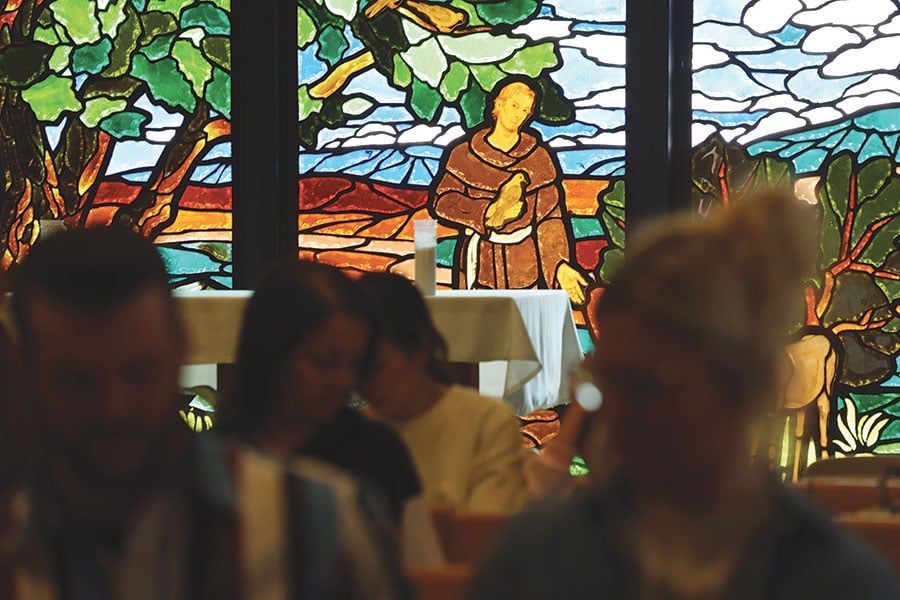
Parishioners attend Mass before a stained-glass image of St. Francis of Assisi located in St. Francis of Assisi Church in Grapevine. (NTC/ Richard Rodriguez)
Although he died Oct. 3, 1226, St. Francis of Assisi’s life, works, and example resound still throughout modern day. Which is why Pope Leo XIV proclaimed 2026 as a special jubilee year with associated plenary indulgences in honor of the 800th anniversary of St. Francis’ death.
“In this age, marked by so many seemingly interminable wars, by internal and social divisions that create mistrust and fear, he continues to speak,” Pope Leo said of St. Francis. “Not because he offers technical solutions, but because his life points to the authentic source of peace.”
St. Francis’ vision of peace, Pope Leo reminds, encompasses not only relations between people but also the entirety of nature and creation.
Born about 1181 to a prosperous family, St. Francis went on to found the Franciscan religious order. Associated with patronage of animals and the environment, St. Francis stressed the virtues of poverty, chastity, and obedience. Pope Gregory IX canonized St. Francis on July 16, 1228.
In proclaiming celebration of the 800th anniversary, Pope Leo said he hopes St. Francis’ “message of peace may find profound echo in the Church and society today.”
Though eight centuries separated, our times are not that different than St. Francis’, Pope Leo added.
“His teachings are perhaps even more valid and understandable today,” Pope Leo said. “When Christian charity languishes, ignorance spreads like bad habits, and those who extol harmony among peoples do so more out of selfishness than out of a sincere Christian spirit; when the virtual takes precedence over the real, social discord and violence are part of everyday life, and peace becomes more unsure and distant every day.”
Closer to home, several Diocese of Fort Worth parishes are marking the jubilee year.
“Of course, he’s the patron of our parish,” Father Sojan George of Grapevine’s St. Francis of Assisi Parish said. “He represents a very simple and joyful way of living the Gospel through trusting God completely in a very humble way and through caring for all of God’s creation.”
Such appeals to his parishioners, Fr. George said, while at the same time inviting all to discover St. Francis anew.
“Our parishioners are drawn to his simplicity and his love for the poor and the environment,” Fr. George said. “For them and everyone else, St. Francis’ life reminds us that it’s not that complicated. It’s about living the Gospel in a real and concrete way.”
Father Daniel Pattee, TOR, of Fort Worth’s St. Andrew Parish agreed.
“St. Francis is the primary way I have for interpreting the Gospel of Christ,” Fr. Pattee said. “His unique experience of the Gospel placed three mysteries of faith front and center: the crib, the cross, and the Eucharist. Each of these takes on meaning in light of St. Francis’ understanding and experience of the poor and humble Christ.”
Fr. Pattee spoke too of St. Francis’ continued relevance.
“St. Francis is a saint for our times due to having discovered the true meaning of freedom,” Fr. Pattee said. “Which came only through his relationship with Christ. St. Francis was all about Christ, and there was no man who ever lived freer than him at the end of his life. Which is why so many saints, even our Church today, so admire and love him.”
Fr. Pattee recommended several books on St. Francis, particularly “St. Francis of Assisi: A Biography” by Johannes Jorgenson.
Father Jose Francis, TOR, of Denton’s St. John Paul II Parish shared St. Francis’ impact on his life.
“To me, St. Francis is one who lived the Gospel in refreshing simplicity,” Fr. Francis said. “I strive to follow his footsteps as he followed the footsteps of Jesus so deeply in his poverty and humility.”
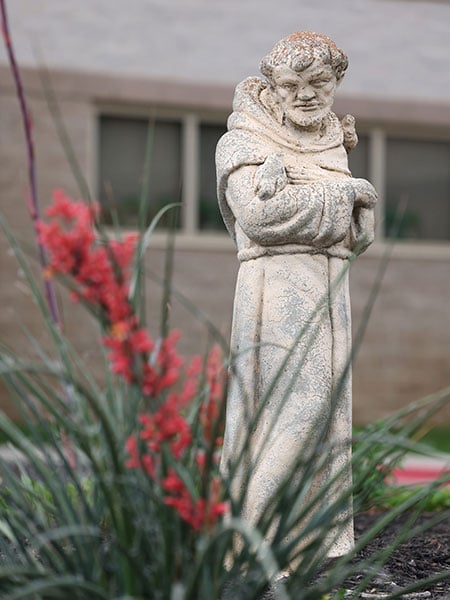
His parishioners, Fr. Francis said, recognize St. Francis as a “lover of nature and patron of ecology.” Fr. Francis commented on the joy his parishioners receive from the blessing of pets on St. Francis’ feast day and the fact that statues of the saint occupy many of their yards or gardens.
All three priests spoke of activities in the planning to mark the jubilee year at their respective parishes.
Fr. Pattee outlined the guidelines for receiving a plenary indulgence for oneself or the souls of the dead for the faithful at St. Andrew Parish. They include visiting any church or place of worship anywhere in the world named after St. Francis or connected to him in any way. Also, making a sacramental confession eight days before or after visiting the church then attending Mass and receiving Holy Communion on the same day as the church visit. Then lastly, reciting the Apostles’ Creed, the Lord’s Prayer, the Hail Mary, and the Glory Be for the intentions of the Holy Father.
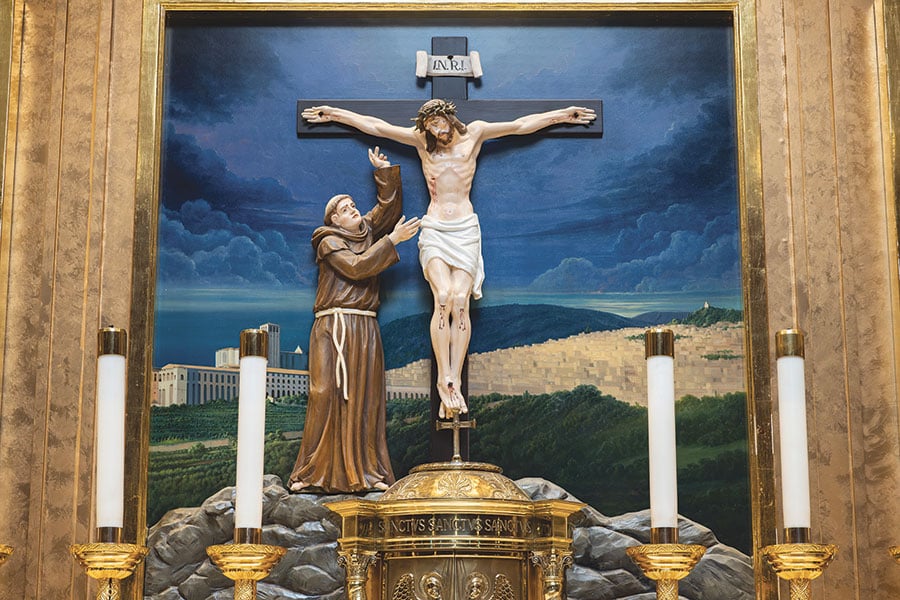
Several churches, groups, and individuals have made plans or inquired about pilgrimages to his parish for just such purpose, Fr. George said. He described the altar and murals in his parish which depict the church’s namesake saint.
Fr. Francis added, “I think the spirit of St. Francis can be rediscovered in our time, especially his love for the Church and the Eucharist, his relationship of mercy for the poor, his fraternal spirit without power, and his approach to nonviolence and peace.”