A simple man of faith: Pope Francis' enduring legacy

Moments after Jorge Mario Bergoglio was elected the 266th leader of the Roman Catholic Church on March 13, 2013, fellow Cardinal Claudio Hummes from Brazil leaned over to comfort his friend and then urged, “Don’t forget the poor.”
Taking those words to heart, the new pontiff chose a name that honored St. Francis of Assisi, “the man of poverty, the man of peace, the man who loves and protects creation,” he later explained to a gathering of journalists who came to the Vatican for the conclave and papal election.
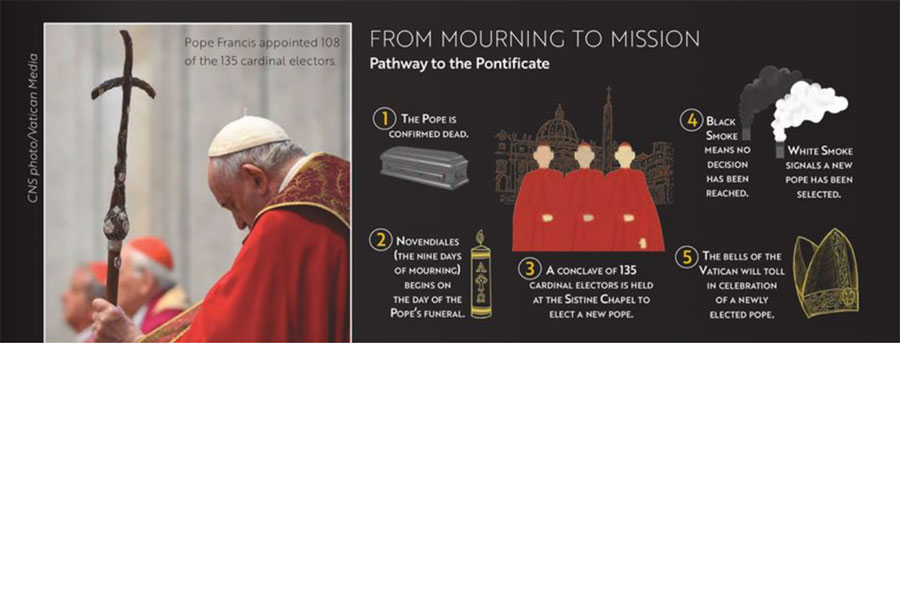
Pope Francis, who died April 21 at the age of 88 from a cerebral stroke and heart failure, is being remembered by the world’s 1.3 billion Catholics as a man who exemplified the patron saint’s radical devotion to Christ, God’s creation, and the poor and marginalized.
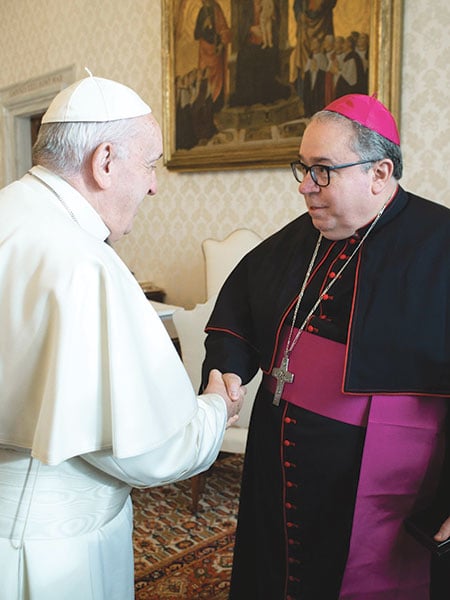
In a statement to parishioners, Bishop Michael Olson called Pope Francis “a simple man of faith in the Resurrection” whose last public words, “Happy Easter,” were spoken with great effort and suffering before a crowd of supporters in St. Peter’s Square on Easter Sunday. The late pope recently spent five weeks in the hospital for treatment of life-threatening double pneumonia.
“His entire pontificate, from his first decision at the age of 76 to be called ‘Francis’ after St. Francis of Assisi, was dedicated to mindfulness for the poor, those most overlooked, our responsibility to be stewards of the ecology, and the struggle to be conformed to Christ crucified,” the bishop commented. “Let us pray for his soul with grateful hearts for what he endeavored to teach us.”
Serving people where they are
The first Jesuit elected to the papacy, Pope Francis embraced Ignatian spirituality and the core belief that the salvation of souls is the ultimate goal with other endeavors and activities serving this purpose. He believed in ministering to people “where they are.”
“Sometimes you have to go into the messiness of people’s lives,” said Father John Robert Skeldon. “It was something all the modern popes advocated, but Pope Francis highlighted it.”
The rector of St. Patrick Cathedral likened Pope Francis’ support and service to migrants, the unchurched, or those living in poverty to the early history of the parish he serves in downtown Fort Worth.
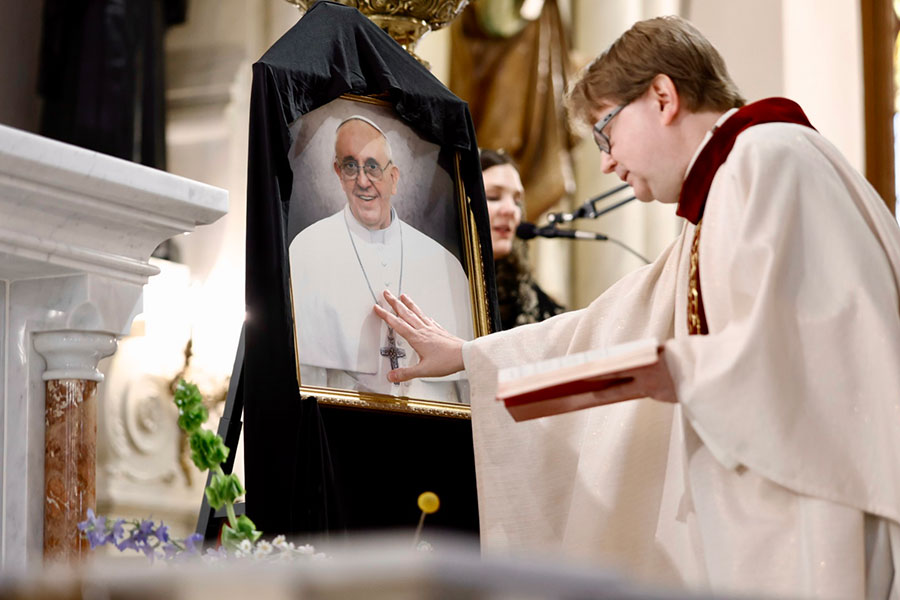
“When it was founded, it was not located in the posh, ‘powers that be’ part of Fort Worth in the late 19th century,” Fr. Skeldon observed. “It was relegated to Hell’s Half Acre where the prostitutes, whorehouses, saloons, and immigrants were, and that’s where Christ’s Church should be. Christ Himself was a friend to tax collectors, prostitutes, and sinners and — to the dismay of many — even ate with them.”
Early in his papacy, Pope Francis stressed the need for priests to be close to the people they serve. Pastors, the pontiff said, should be “shepherds with the smell of the sheep,” so they could understand the flocks’ needs and life challenges.
“I think his own health issues gave him a heart for those who suffer,” the rector said.
As a teenager, Jorge Bergoglio battled a lung infection that led to the removal of part of his right lung at age 21. This surgery left him with ongoing lung conditions and made him more prone to influenza, bronchitis, and pneumonia later in life. Pope Francis also dealt with painful sciatica in his legs and lower back.
“From the Ignatian idea of discernment, Pope Francis allowed his pain to be transformative so he could enter into the suffering of others, those on the margins, those who don’t fit neatly into categories,” Fr. Skeldon added.
A pope of ‘firsts’
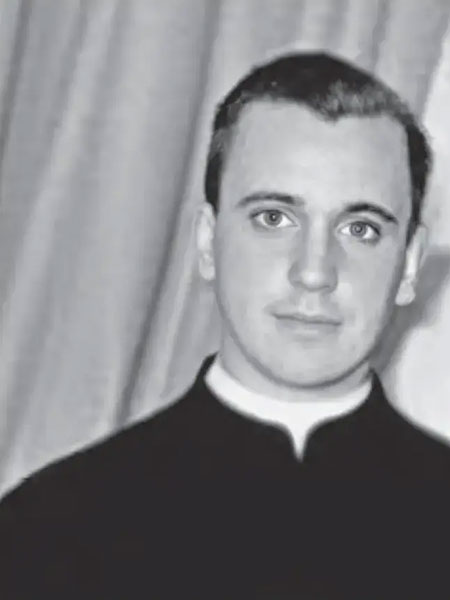
Born to Italian immigrants Mario and Regina Bergoglio on December 17, 1936, in Buenos Aires, Argentina, Jorge Bergoglio grew up the eldest of five children in a home steeped in faith and old-world traditions. He graduated from a technical school as a chemical technician before entering the Diocesan Seminary of Villa Devoto.
In March 1958, the young chemist entered the novitiate of the Society of Jesus and was ordained to the priesthood in 1969. Fr. Bergoglio began serving as Jesuit provincial of Argentina in 1973 and later was named titular bishop of Auca and auxiliary bishop of Buenos Aires on May 20, 1992.
He became archbishop of Buenos Aires in 1998 and three years later was elevated to cardinal by Pope John Paul II.
When Pope Benedict XVI was chosen to succeed Pope John Paul II in 2005, Bergoglio reportedly received the second-most votes cast in the papal conclave.
After the resignation of Pope Benedict in 2013, the Argentinian cardinal was elected pope at the age of 76. He was the first citizen from the Americas, the first Latin American, and the first Jesuit priest to sit in the chair of St. Peter.
Always a Jesuit
Jesuits around the world were stunned when a member of their own congregation, Jorge Bergoglio, cardinal of Buenos Aires, was elected pope on March 13, 2013. In the order’s 473-year history, no Jesuit was ever chosen for the office.
“Not many people knew much about him, but we were elated to have a Jesuit elected pope,” remembered Father Tony Rauschuber, director of the Montserrat Jesuit Retreat House in Lake Dallas. “We never in our wildest dreams thought it would happen. There had never been one, and we didn’t think there would ever be one.”
Jesuits traditionally vow not to seek higher offices within the Church. They also take a vow of poverty — not just personal poverty, exemplified by Pope Francis’ choice to reside in the Casa Santa Marta guest house rather than the Apostolic Palace — but a commitment to those living in poverty.
“A simple lifestyle is a Jesuit ideal and that’s why Pope Francis lived in the papal apartment instead of the main residence where other popes have lived,” Fr. Rauschuber remarked. “Another Jesuit ideal is closeness to the poor and marginalized.”
Laudato Si: “On Care of Our Common Home,” the second encyclical of Pope Francis, is more evidence of his Jesuit heritage. The document is an appeal from the Holy Father to safeguard the future of the planet.
“One spiritual contribution or focus for him would be preaching mercy and having a ministry of reconciliation with each other, the environment, and all people,” the director pointed out.