
Tales from the Holy Land, Part 1: Entrepreneurs face challenges
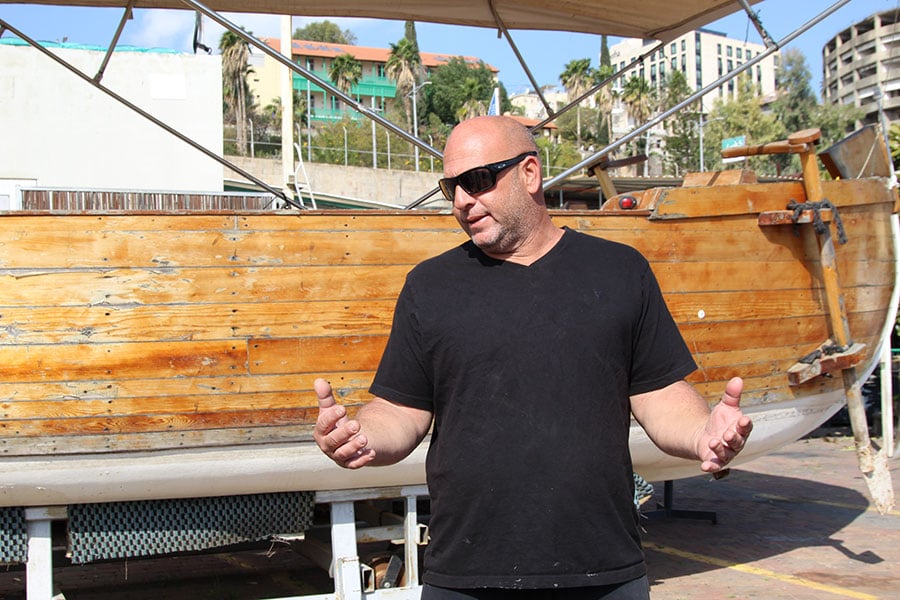
Ido Granot stands in front of a boat he's renovating in Tiberias, Israel, on March 5, 2025. (NTC/Susan Moses)
How do you eat an elephant? One bite at a time.
I’m keeping that classic (and corny) joke in mind as I attempt to share with you some experiences and observations from an eight-day whirlwind of a tour in Israel, hosted by the Israeli Ministry of Tourism. Four of us were shepherded to more than 20 holy sites around the Sea of Galilee and Jerusalem.
In this first of several articles, allow me to introduce you to two Israeli entrepreneurs forced to reinvent their approach to business after Hamas attacked Israel on Oct. 7, 2023.
Navigating rough waters
Although the Sea of Galilee — what the locals call Lake Kinneret — is choppy, Ido Granot confidently handles the wooden rudder of the small boat he built. Despite the progress of the last 2,000 years, he constructed the boat to match the specifications of a first-century fishing boat discovered nearby in 1986 when a drought revealed it in the mud of the lake.
His only modification, he explained, is the small electric motor in the back. In the first century, oars would have propelled the 12-passenger craft.
He aptly compared the boat to a “walnut shell bobbing in the water,” and no matter which direction we face on the short excursion, the boat heaves with each wave.
Although he hasn’t taken the boat to the Mediterranean Sea, Granot speculated the Sea of Galilee may be harder to navigate due to the frequency of the waves, “which come closer together” than ocean waves, he said.
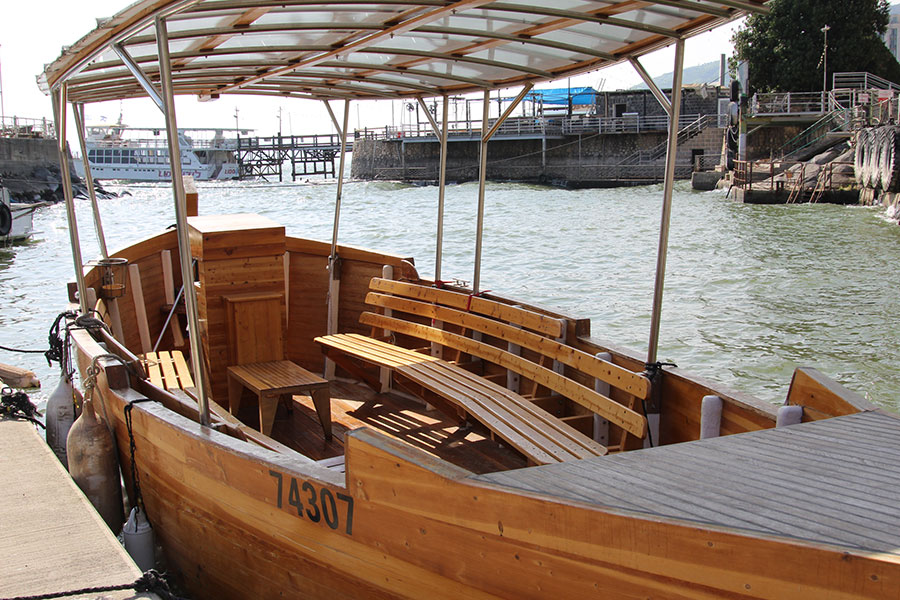
Granot is the third generation to run the enterprise founded by his grandfather — two restaurants and a boating business in Tiberias, just steps from the shore.
Before Oct. 7, 2023, Granot and his staff would provide lake excursions on large party boats to about 2,000 people each day. He recalled, “In the old days, I counted 31 buses in the parking lot.”
Now, he said, “the cards reshuffled,” and he’s piloting maybe 1,000 passengers in a month.
Not one to dwell on his current hardships, he’s taken advantage of the business slowdown to build four boats, and he’s working on a fifth. He’s the only builder of the first-century replica fishing boats, so when tourism rebounds, he’ll be prepared to offer Christian tourists an authentic experience of being on the Sea of Galilee in a boat similar to one Jesus and His disciples used.
Fishing nets are not included, but based on my experience, the waves are a given.
Low sales, high spirits
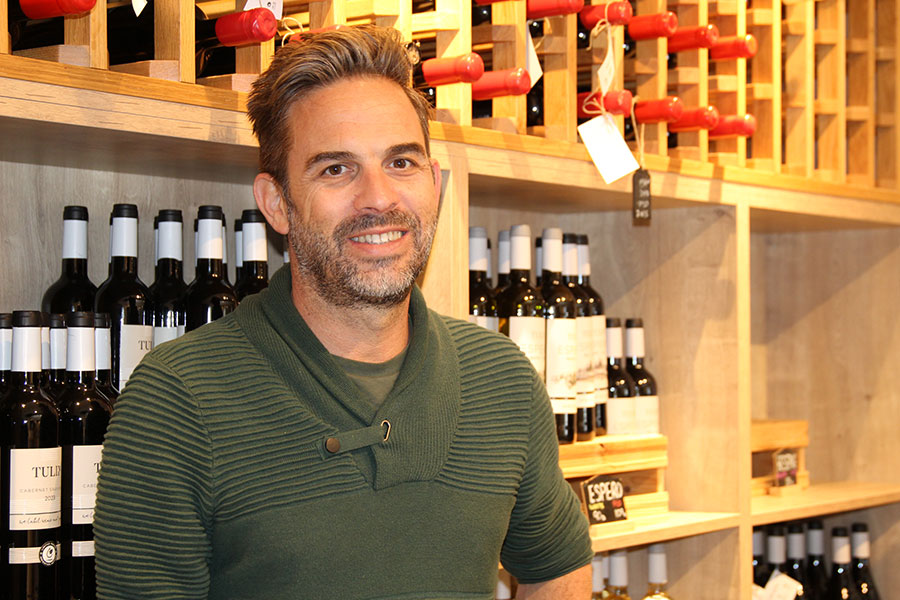
With sales at his boutique winery down 80%, you’d expect owner and founder Roy Itzhaki to be discouraged. Instead, the owner and founder of Tulip Winery is smiling and optimistic.
Perhaps it’s because he’s sustained by his morning ritual. From 7:30 to 8 each morning, he greets his staff as they arrive. He takes special delight interacting with the 45 employees with special needs who live in a community near his winery, located about an hour’s drive north of Tel Aviv.
Itzhaki founded Tulip Winery in 2003 after serving six years as an air traffic controller in the Israeli Defense Force.
What he lacked in winemaking expertise he made up with a strong determination. He dreamed of creating fine wines while providing purposeful employment for special needs individuals — to make something good while doing some good.
Over 20 years, his aspirations ripened like grapes on a vine, and the winery gained an international reputation while producing 300,000 bottles of wine each year.
The Oct. 7, 2023 attack sent the country into shock. The next day, in solidarity with Hamas, the Lebanese militant group Hezbollah fired rockets and artillery from Lebanon into Israel.
The fence of one of Itzhaki’s vineyards is the border between Israel and Lebanon.
“No one was drinking wine,” he said. “There were no tourists, no restaurant business, and no one was buying wine to drink at home.”

The next year was tough, he described, but it crystallized his priorities. He explained to his wife that his concerns needed to be the war, his business, and the family. In that order.
Itzhaki donated thousands of bottles of wine to families of those killed in the war and those fighting in the war. Like much of the country, he volunteered with supplies and logistics.
He also returned to the Israeli Defense Force for another 300 days as an air traffic controller.
Reflecting on recent events, he said, “Understand the spirit of the Israeli people. We’ve gone through hell, but we’re resilient. We’re looking to the future.”
That’s worth a toast.