The "Saintly Seven": A look at seven African American candidates for sainthood, pt. 2
While there are many Black saints, there are no African Americans counted among them. However any one of the "Saintly Seven" — Vens. Pierre Toussaint, Henriette Delille, Augustus Tolton and Mary Lange, and Servants of God Julia Greeley, Thea Bowman and Martin Maria de Porres Ward — could become the first African American saint. Continue learning more about the "Saintly Seven" in the second installment of this series.
Venerable Mary Lange (1794-1882)
Elizabeth Lange was born around 1794 in Santiago de Cuba and, like Pierre Toussaint, also immigrated to the United States, settling in Baltimore. Lange saw the need to provide education for Black children, opening a school in her own home. Like Mother Henriette and Fr. Tolton, no religious community would accept her because she was Black.
With the help of Father James Joubert, Elizabeth Lange established the Oblate Sisters of Providence in 1829 — the first religious community to accept Black women in the United States — and took the religious name of Mary.
Cowles, the Cassata teacher, explained, “She was able to act as kind of a cultural bridge because she had that experience being a part of the larger Atlantic Creole Community and she saw the need within Baltimore, which is where a lot of the French-speaking refugees out of Haiti ended up along the east coast.”
.jpg)
Mother Mary Lange served as the first superior general for the order and lived to see its silver jubilee. She died in 1882. The Archdiocese of Baltimore opened her cause in 1991, and Pope Francis declared her “Venerable” June 22, 2023.
“A lot of my students are surprised that there’s saints that look like them. Representation matters. We need to have more public discussions of the incredible diversity within the Church,” Cowles said.
“When I talk about some of these saints and some of these blesseds and some of these venerables, they’re really surprised: ‘I didn’t think that a saint would look like me, or would have struggles like I’ve had, or have the challenges in life that I’ve experienced.’ And that’s a very powerful thing. It’s a connection for them that maybe they didn’t have.”
Servant of God Julia Greeley (1833/48-1918)
Julia Greeley was also born enslaved in Missouri sometime between 1833 and 1848 — there are no clear records. As a child, a cruel slave master blinded her in her right eye in a lash meant for her mother. After the Civil War, Greeley eventually settled in Denver where she was employed by Julia Dickerson Gilpin, future wife of the territorial governor.
In Denver she developed a devotion to the Sacred Heart of Jesus, leading her to become Catholic in 1880.
She collected food, clothes, coal, or other necessities for people in need, and she pulled those supplies in a red wagon throughout the city during the day. Then, she spent her evenings delivering them to families in need, regardless of race, sometimes anonymously, to spare some white families the embarrassment of receiving charity from a Black woman.
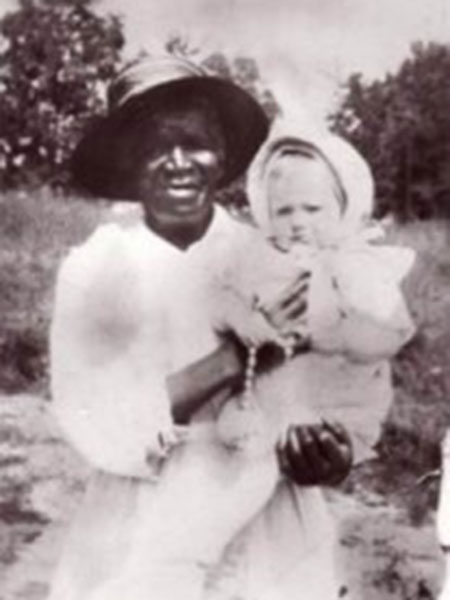
“Even though she wasn’t a religious sister — and she was very poor herself — she would go around Denver, and she would collect things to then give to others,” said Kaye Crawford, the founder of BlackCatholicHistory.com, which develops supplemental curricula about Black Catholics to be used in Catholic schools. “She would even be very sensitive about their egos that, as a white family, taking the assistance from a formerly enslaved Black woman would be embarrassing.”
At Our Mother of Mercy in Fort Worth, Marie Barks said she looks to Greeley’s example when serving with the Society of St. Vincent de Paul.
“We help people that are having hard times with their rent and their utilities. To me, that’s Miss Greeley,” Barks said.
Greeley became known as “Denver’s Angel of Mercy.” She visited firehouses throughout the city every month, spreading devotion and literature about the Sacred Heart, and held a deep devotion to the Eucharist, receiving Holy Communion every day, and to the Blessed Virgin. She also became a Secular Franciscan in 1901.
It wasn’t until Greeley died that her impact was recognized. Hundreds of people — Black and white – who had received her charity filed past her coffin. The Archdiocese of Denver opened her cause Aug. 6, 2016, making her a “Servant of God.”
“It goes back to what Catholic identity looks like across the board. It doesn’t matter your age — Julia Greeley was older. So, if you are a single person, and you are older, there are still opportunities to serve,” Crawford said. “There are so many ways to reflect Catholic identity.”
Servant of God Thea Bowman (1937-1990)
Bertha Elizabeth Bowman was born in Canton, Mississippi, in 1937 to a Methodist family. She attended Holy Child Jesus Catholic School, where she was taught by the Franciscan Sisters of Perpetual Adoration. She became Catholic at age 9 and joined the Franciscan Sisters at age 15, becoming the first African American sister among their ranks. She took the name of “Mary Thea” both in honor of her father, Theon, and because she was of God.
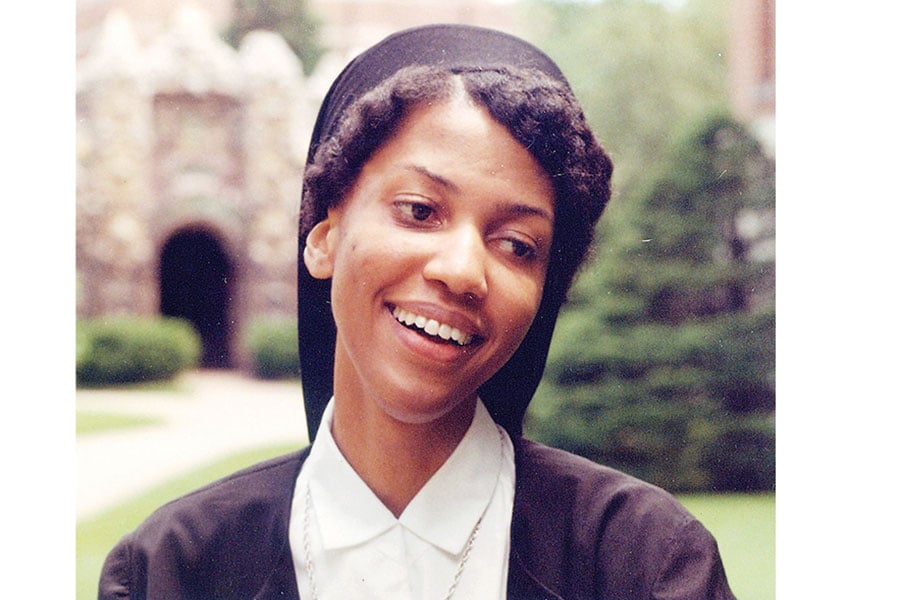
“She had some of the sisters who really accepted her, others who did not,” said Crawford. “She comes back to be a sister in Mississippi where when the two white sisters were driving down the street right through town, Sister Thea would have to be down on the floor so that they wouldn’t be stopped.”
Sister Thea saw herself as fully Black and fully Catholic and sought to incorporate Black spirituality into a Catholic context.
“I bring my whole history, my traditions, my experience, my culture, my African-American song and dance and gesture and movement and teaching and preaching and healing and responsibility — as gifts to the Church,” she famously told the U.S. Conference of Catholic Bishops during their June 1989 meeting.
“She wanted the history of the African Americans in the Church to be noted, to know that our history is relevant to the Catholic Church because this who we are,” Barks said, noting that the Gospel music used in Black Christian worship has its origins in the slave spirituals. “These songs encouraged us to survive and to trust in God.”
According to the Franciscan Sisters’ archives, Sister Thea visited the North Texas area twice: July 20-22, 1985, and again Oct. 23-25, 1987. Bernardine Sullivan, another Our Mother of Mercy parishioner, described the sainthood candidate as “dynamic” and “energetic.”
“She was definitely a person you would think about for sainthood. She just had a dynamic spirit about her,” Sullivan said, adding that Sister Thea helped her embrace her culture.
“Even though we were Catholic, born Catholic, cradle Catholic, we still had the Black culture. It just wasn’t in our church, but it was in all the Protestant churches and all the people around us. We were all aware of it,” she said. “It wasn’t in our worship, but we knew all the songs they sang. We knew them all. It was part of our culture.”
Sister Thea died of cancer in March 30, 1990 at 52. The Diocese of Jackson opened her cause May 15, 2018, making her a “Servant of God.”
Servant of God Martin Maria de Porres Ward (1918-1999)
Matthias Ward was born in a bi-racial family in 1918 in Boston. Like Sister Thea, he grew up Methodist but after attending Mass with a friend, he converted to Catholicism at 18.
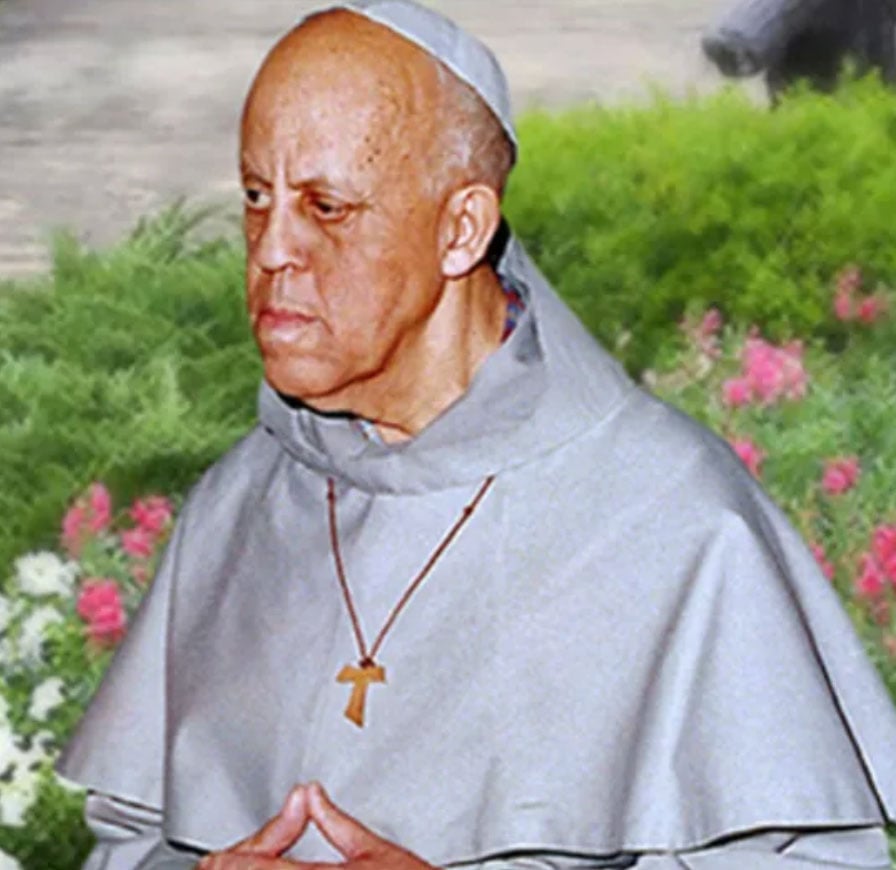
Discerning a call to the priesthood, he reached out to the Conventual Franciscans.
While the application didn’t ask for a nationality, he felt compelled to inform the vocations director that he was “colored” so to spare any embarrassment for the order. The vocations director promised to find a place for him.
He was ordained in 1955 and took the religious name Martin Maria de Porres for the Blessed Mother and for St. Martin de Porres, the first Black saint from the Americas. From there, he served in the missions in Brazil where he served the majority of his life.
“He used to joke about this. He would say, ‘In the United States, I have a passport, and then on the passport, it says I’m Black. In Brazil, I have a passport that says I’m white, because in Brazil, if you have a drop of white blood, you are white,’” recalled Conventual Franciscan Father Julian Zambanini, OFM Conv., who knew Father Ward and now serves as vice-postulator for the cause. “So that explains the whole reason why in the end, he ended up in in Brazil because he could work down there.”
He served in several areas throughout the country as a pastor, chaplain, educator, and vocations director, while clumsily learning Portuguese.
“He loved it, and the people loved him. He loved it so much he wanted to make sure he never died up here because he wanted to be buried in Brazil,” Fr. Zambanini said.
Fr. Zambanini recalled visiting the seminary in Andrelândia, Brazil, where Fr. Ward served as a spiritual director. He recalled the sainthood candidate as kind and jovial.
“No matter what color your skin is, you are still a child of God. He was able to live that and be an example of that there, whereas here in the States, he was also accepted in our province, but most of the orders were not accepting Blacks,” Fr. Zambanini said.
“Of the negative sides of what was going on in the United States at the time, we also see the positive side of a person who has this kind of life, who loves people, who presents himself, and that’s the work of God,” he added.
Fr. Ward died June 22, 1999. The Conventual Franciscans in Andrelândia received permission from the bishop of the Diocese of São João del Rei, Brazil, on June 24, 2020, making him a “Servant of God.” Unlike the other candidates, Fr. Ward’s cause is primarily being overseen outside of the United States.
Biographical information for this article was taken from the U.S. Conference of Catholic Bishops “Saintly Seven” page, the National Black Catholic Congress’ “Noteworthy Black Catholics” page and from the websites for the causes for canonization of each of these candidates.