Who is my neighbor?
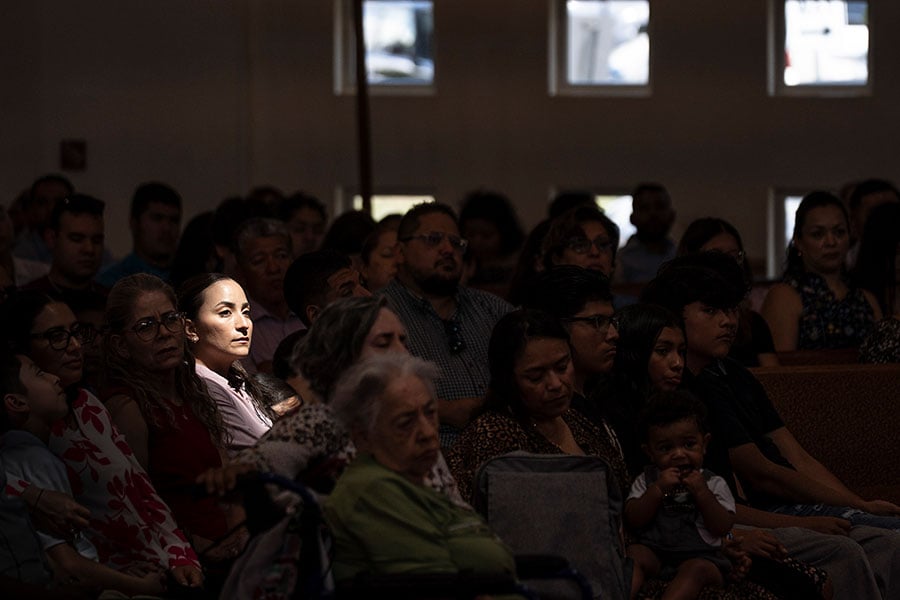
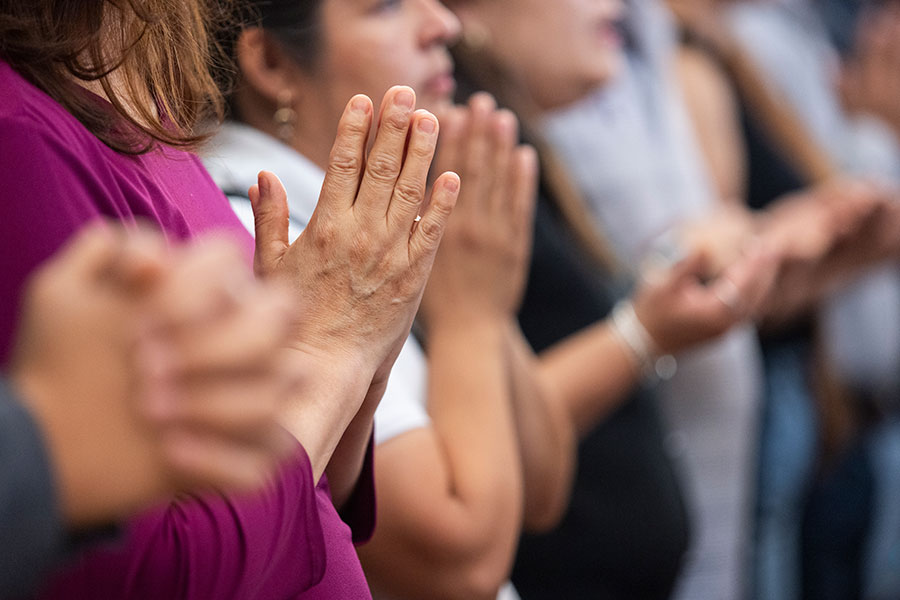
Worshipers listen to the homily during Mass on June 23 at Holy Name of Jesus Church in Fort Worth (NTC/Juan Guajardo).
It’s hard to put an accurate number on how the stricter enforcement of immigration law is affecting parishes and schools in the Diocese of Fort Worth, but it is possible to know some local individuals impacted — both documented and undocumented.
And maybe, for Catholics, that’s more helpful, because we’re called to love our neighbors.
But before we get too far into this snapshot of how immigration enforcement is affecting the Diocese of Fort Worth, we remember the “both/and” approach to immigration emphasized by Bishop Michael Olson in his Jan. 24, 2025, statement to the diocese, in solidarity with the Texas Catholic Conference of Bishops.
First, Bishop Olson reiterated the right and responsibility of each country to maintain a safe border and an orderly immigration process that respects the laws of each country.
Also, he continued, “Our government must promulgate laws that include both a secure border and a humane immigration policy that respects the integrity and unity of families.”
Finally, the bishop concluded, “Please be kind to each other and avoid incendiary language and actions that will not help us to act justly or mercifully.”
An important appeal, given the heated rhetoric around the topic.
Fear and umbrage
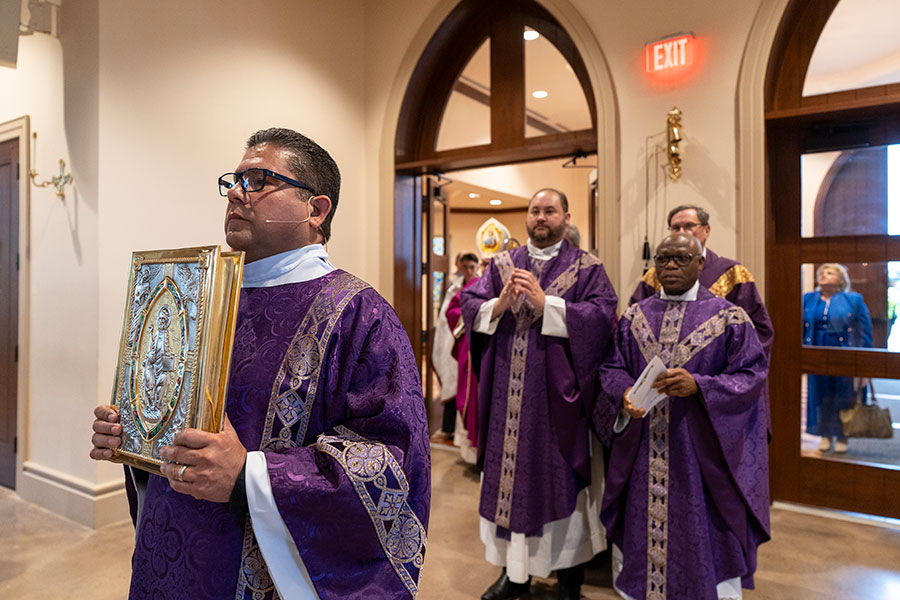
When policy changes were implemented following the inauguration of the new administration in January, Deacon Rigoberto Leyva, diocesan director of Hispanic Ministry, noticed fear kept some people from attending church on Sunday.
Panic and anxiety are amplified by rumors and social media. Dcn. Leyva, who serves at St. Peter the Apostle Parish in White Settlement, observed that an offhand comment from a political leader gets magnified, and social media “publishes it right away and everyone’s talking about it. We put fear on our own people.”
However, Dcn. Leyva recognized that in subsequent months, “Little by little, they start coming back to church, but they still have that fear, that uncertainty, of what’s going to happen.”
Undocumented residents are returning to public life prepared, Dcn. Leyva noted, with legal custody arrangements for children and additional names on property or financial accounts “just in case something happened. That’s what they’ve been doing. They’re more prepared for whatever happens.”
In addition to a general unease, immigrants bear the sting of being labeled a criminal.
Dcn. Leyva can relate. A citizen since 2001, he crossed the border illegally at 19 and worked as a roofer to help his mother buy a house in Mexico.
He said, “I was illegal at one time. I always tried to do good. I was going to church, but I was in that category of criminal.
“There are some bad apples. I do not deny that. But most or the majority of the illegals here come with something in their head: ‘I want a better life for my family.’ That’s all they want.
“This is the American dream, to better yourself and to contribute to the community. Many of our people, many — and I know them — that’s exactly what they do. They are contributing to this country,” he continued.

Unnecessary roughness
Felipe fled his native El Salvador to escape its civil war when he was a teenager. After working many years as a legal permanent resident, he eventually became a U.S. citizen.
Now 71, he earns a living as a landscaper in Tarrant County.
On a Saturday afternoon in July, Felipe got out of his pickup truck to enter a store. Recovering from foot surgery, the slight man wore an orthopedic boot as he limped toward the door.
Suddenly, three Immigration and Customs Enforcement agents came from behind, knocked him to the ground, and put him in handcuffs, scraping his knees in the process.
They confiscated his wallet and phone but refused to look at his driver license or passport card as they put him in a van with others, headed to Prairieland Detention Center in Alvarado.
At 10 p.m., they returned his wallet to him, without his phone, and told him he was free to leave. He limped along dark, unfamiliar roads until he found an open convenience store where he borrowed a phone to call his family for a ride.
A few months have passed, and Felipe is still a little shaken by the experience, especially last month when a police officer pulled him over. The officer looked at his driver license, threw it back at him, and drove away, he said.
“I’m not angry; I’m not hateful. I’m a peaceful guy, you know. They are doing their job, but they don’t have to do it like that,” he said.
A Catholic, Felipe said his faith has buoyed him through difficult circumstances. “Faith, I can’t tell you how much faith I’ve got. I don’t do nothing before I pray.” Pointing upward, he added, “That One is my God; that One is my everything.”
Stay calm and faithful
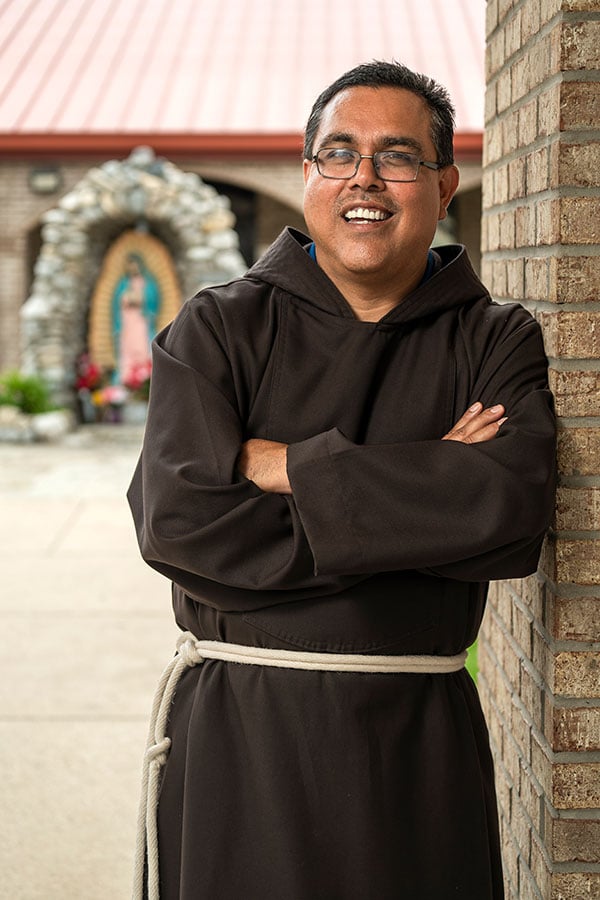
Friar Feliciano Torres Castro, OFM Cap., serves as pastor of Our Lady of Guadalupe Parish, a bustling parish in north Fort Worth that offers four Spanish and two English Masses each weekend.
“All the Spanish Masses are full, always packed,” he said. “But people are scared right now. No one wants to go out much. Still, attendance at church has increased. Curiously, people feel safe at church.”
As the pastor, he provides practical and spiritual support.
The parish offers citizenship classes for those who qualify, and Friar Torres said a record high of about 70 are enrolled. He also encourages parishioners to improve their English, which he too studies most nights.
Spiritually, he said, “We keep encouraging them to stay calm. God is with us, and the Church is here for them. I always tell people: Stay calm; stay faithful; pray; behave well; pay taxes; live peacefully. Be polite, kind. Live your life normally but be prepared — because we never know.
“Immigration even came to check on me once — to confirm I’m here legally and doing my job. Everything was fine,” he said.
In ministering to immigrants in an atmosphere of anxiety, Friar Torres Castro calls upon his formation as a Franciscan friar. “That’s my mission: to be an instrument of peace. And we have to say no to violence. That’s so important. And to learn how to express emotions, disagreements. Sometimes I don’t agree, but I express it through dialogue, not aggression.”
Detained, derailed
For a school with an enrollment that barely cracks three digits, Cassata Catholic High School has had three cases involving Immigration and Customs Enforcement.
The most recent was just days before school started in August, when Lucia, a Cassata senior, called and said her parents, who had worked in the U.S. for more than 20 years, had been detained that weekend. Concerned about the possible length of detention and the expense of a legal case, her parents decided to return to their country of origin.
She was able to speak on the phone with her mom, who told Lucia, “You need to be strong; you need to raise your middle-school sister as your own.”
Principal Julianna McConegly said the school sprang into action. “We spent the first week of school just making sure she had immediate assistance, then trying to get some legal help — that way she could get custody of her sister. It did help that she was 18.”
Cassata staff also set up passport appointments so Lucia and her sister will be able to see their parents in the future.
McConegly checks in regularly with Lucia, who finished her graduation requirements a few weeks ago and began working double shifts to support herself and her sister.
The principal said, “What should be one of the happiest times, finishing high school — she’s now under an immense amount of stress and pressure, knowing that she’s responsible for her sister.”
While Lucia and her sister are U.S. citizens, two recent graduates of Cassata who are not citizens were detained. Both were brought to the U.S. as infants.
One had just completed his graduation requirements when he was in a minor car accident. Police turned him over to ICE custody, where he remained for several months until he bonded out. He missed graduation and his college plans derailed.
Another Cassata graduate worked as a mechanic and married a U.S. citizen. When their baby girl was born, he felt he was living the dream. But this spring as he left work, police stopped him to ask if he knew anything about a nearby crime, then turned him over to the custody of ICE, where he remains in detention.
McConegly said she and others at Cassata have written letters in support of the two detained graduates.
These experiences have shown McConegly, “This is actually real. It’s not just nameless, faceless people. These are good kids who are trying to make something of themselves and contribute to our community.”
Wary students
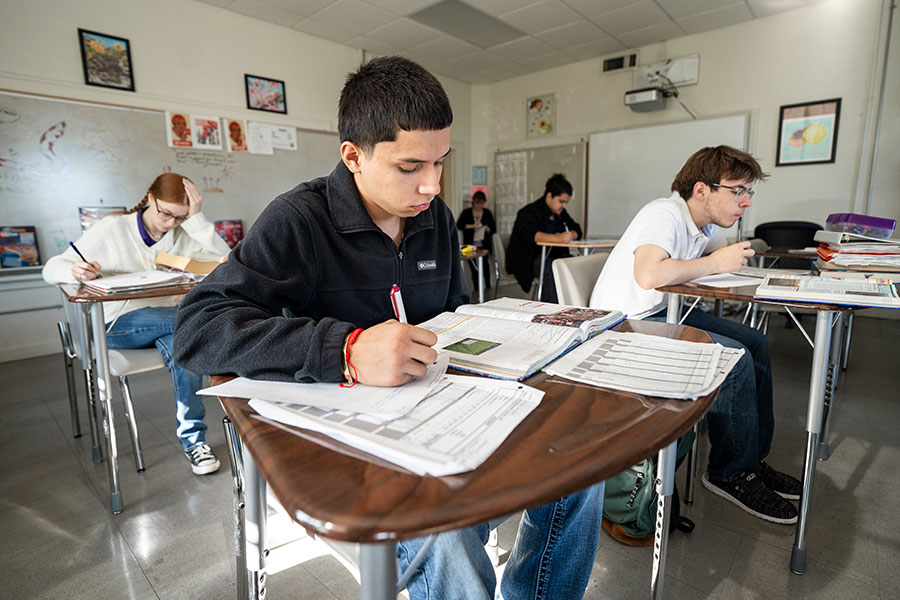
In her 10 years teaching English at Lamar High School in Arlington, Sarah Scheibelhut has faced external challenges to education before — remote learning during COVID being primary.
She’s always had immigrants from Spanish-speaking countries, Vietnam, and the Philippines in her classroom. In the past, they would spend their first two years in a newcomer center focused on learning English. This year, “They go straight to my classroom. They may not speak any English, and I have to teach them ‘Macbeth.’”
She’s observed more immigrant students staying with family friends instead of parents. “They lack the support they need to succeed in school,” she said.
In general, Scheibelhut, a parishioner of St. Jude Church in Mansfield, noticed, “Students have less trust in adults, less trust in the school system. I sense that they are wary about everything.”
She strives to have her classroom be a place where students are respected, valued, and comfortable. “I’ve always felt like this is my Calcutta,” she said, referencing St. Teresa of Calcutta’s dedication to the poor. “It’s my mission to be Christ to these kids; my goal to be the arms and hands of Jesus. I try to love them where they are; give them what they need, as much as I can. I want to give them a space to feel safe.”
Five-star citizen
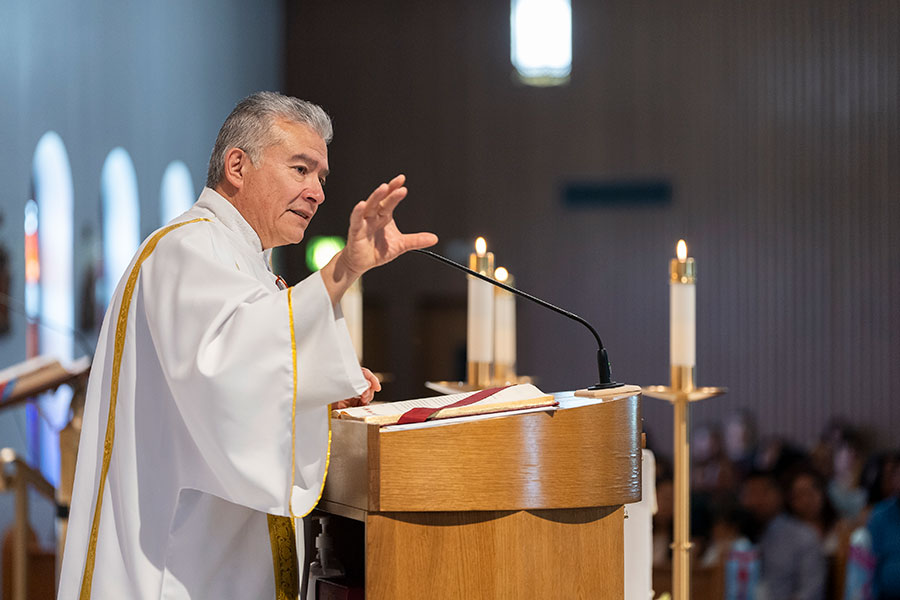
Deacon Mauricio Hernandez can be found weekends at the tri-parish community of Assumption of the Blessed Virgin Mary in Decatur; St. Mary in Jacksboro; and St. John the Baptizer in Bridgeport. During the week, he prepares Spanish speakers for the sacraments and conducts funerals, weddings, and quinceañeras at St. Stephen Parish in Weatherford.
He first crossed the border illegally in 1986, and he finally became a citizen in 2015. “All these years, I was with no papers. With my legal situation, to protect yourself: be invisible.”
He encourages immigrants “to be a five-star citizen in this country,” obeying traffic laws, avoiding large gatherings, and forgoing loud music.
“First, put your faith in the Lord. If you do everything right, don’t worry about it. For us immigrants, the church is the only island of refuge we find in this big sea,” he said.
He emphasized that immigrants should retain a sense of “gratitude for the U.S., where you have the opportunity to work, to support, to provide for your family. Appreciate that.”

Standing with the Church
The Bible, the Catechism of the Catholic Church, and the United States Conference of Catholic Bishops have much to say about treating migrants with the dignity and respect due every person, made in the image and likeness of God.
Bishop Olson, in his editorial in the September/October issue of the North Texas Catholic, said, “The distinction between criminals who have been involved with trafficking drugs or human beings and people who have come to our country without legal authorization and who have worked productively among us, sometimes for decades, is an important distinction for just, reasonable, and compassionate immigration reform.”
The Catholic Church is an advocate for the rights of immigrants, added Dcn. Leyva, and members of the Body of Christ need to align their attitude with Church teaching.
He said, “If we learn to see and to welcome the immigrant people as the Gospel teaches us to do, the Church and our communities will be much better off. But we need to step up and leave our fears behind and learn to be more human. We need to see the humanity of Jesus Christ. He came to teach us how to be good humans.”
Editor’s Note: Photographs are for illustrative purposes only, and Lucia and Felipe’s names have been changed to retain their anonymity.