
Wholly holy: how the Holy Land brings new understanding to Jesus' humanity
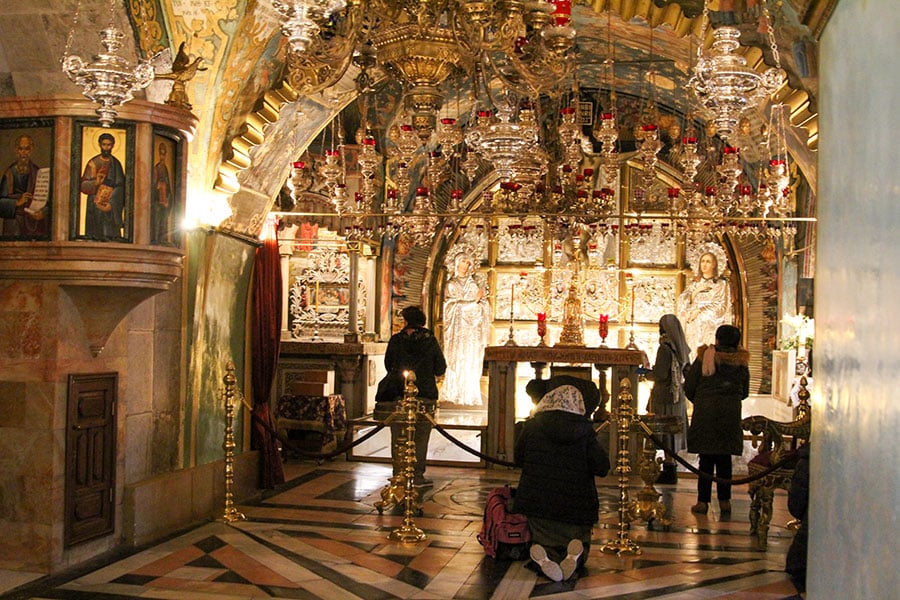
At the Church of the Holy Sepulchre, an altar stands over the site where Jesus hung on the cross. (NTC/Susan Moses)
Charles Gappa has traveled to each of the seven continents, absorbing the history, the culture, and the natural beauty of the world.
But, Gappa explained, “The only one that I repeat is the Holy Land. I keep going back to the Holy Land because it feels like I am going home.”
The retired DRE from St. Bartholomew Parish in Fort Worth is planning his eighth trip to Israel this fall, traveling as both the host of a pilgrimage and a pilgrim himself. Each trip, he said, involves discovery and rediscovery.
He said, “I love the Scriptures; I love walking to places where Jesus walked.”
Fully Human
The impact of a pilgrimage to the Holy Land stems from it being the land where Jesus was born, lived, and died.
Father Philip Petta, pastor of Holy Family of Nazareth Parish in Vernon, St. Joseph Parish in Crowell, and St. Mary Parish in Quanah, said, “If you go to the Holy Land, or you even just contemplate the Holy Land with its rich and extremely long history, it reinforces that our Lord was an actual human being that walked the earth among us.
“Sometimes we emphasize Christ’s divinity so much that we lose sight of His humanity — where He was a baby, where He was raised. He was an actual person who could get angry and get hurt. He was a boy; He was a man; He actually existed in human flesh,” the priest continued.
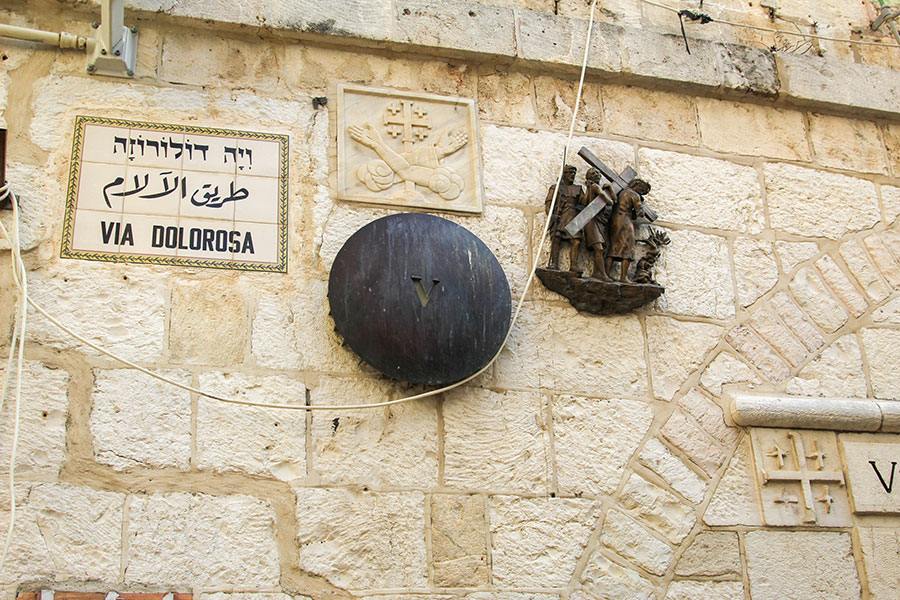
Gappa’s personal experience bolsters Fr. Petta’s view.
The Holy Land, said Gappa, “is a place where you go and you stand in awe and reverence when you go to the Temple. This is where Jesus preached and taught and was presented. Where He got lost also.
“The [Church of the] Holy Sepulchre is where Jesus died on the cross. It’s preserved for 2,000 years, and it’s a place where my Lord, my God, walked, died, and rose from that one place. It’s a reverence you experience when you go there. So it’s not just a dream or a reading in a book,” he said.
Holy sites
Tessy Ross wasn’t sure what to expect when she and her husband Bill went to Israel in 2006 on a pilgrimage hosted by Bishop Kevin Vann, who was then bishop of Fort Worth.
It quickly became an “awe-filled” experience, she said.
First stop was the Basilica of the Annunciation, where the archangel Gabriel visited Mary and told her she would be the mother of Jesus.
Ross recalled, “I remember Bill saying, ‘If this is all that we see, it’s been so — not just worth it — but so much of a blessing to be where the Blessed Mother received the message from the angel Gabriel.’
“Every subsequent visit to a church just kept adding more and more to the whole experience,” she recalled.
Until last fall, the Rosses served 18 years as section leaders of the Equestrian Order of the Holy Sepulchre of Jerusalem, which supports the Holy Land through “prayer, purse, and pilgrimage,” Ross said.
A mission of the international apostolate is to protect Christian locations in Israel. Ross explained, “We need to make sure those are available and present to future generations, number one, because they are holy sites and part of our faith tradition, where Jesus actually was here on Earth.”
Because the number of Christians who live in Israel is rapidly declining, the Order also helps support parishes, seminaries, and Catholic hospitals, schools, and orphanages.
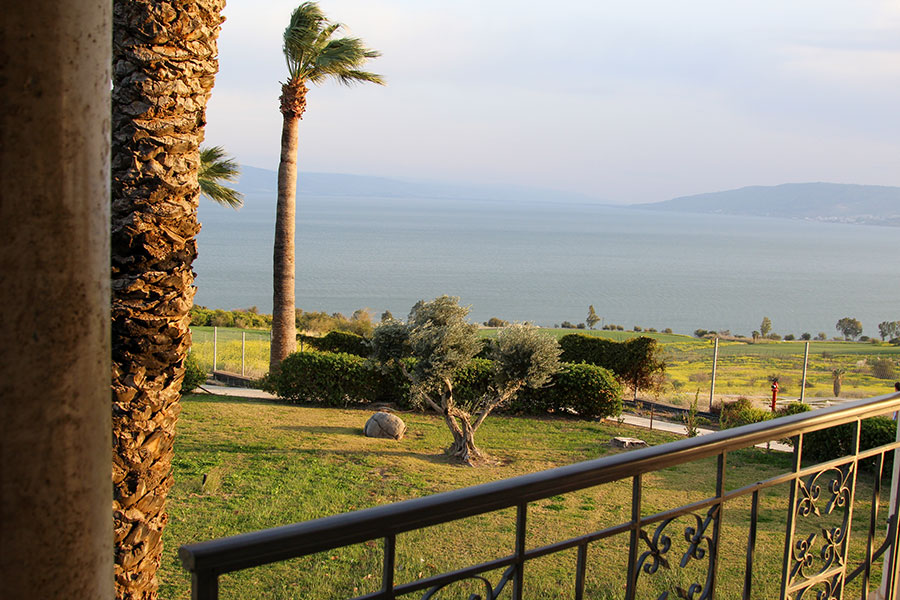
Pat and Joan Bridges, parishioners of St. Mark Church in Argyle, serve as current section leaders of the Order and have visited the Holy Land twice.
Their first visit, Pat said, left them feeling overwhelmed. “There’s so much over there. You’ve read the Bible, you know these words and places and see how they fit together.”
He remembered, “Actually traveling from point A to point B — this is where it happened, this is where Mary went to visit Elizabeth — it makes it more real to me. It was a deepening of your spirituality because you’re in these places and it’s just so moving to be there.”
The Fifth Gospel
Beginning at a young age, most Christians can cite the four Gospels where we learn of Jesus’ life: Matthew, Mark, Luke, and John.
But throughout history, saints and popes have referred to the Holy Land as the fifth Gospel.
St. Jerome in the fourth century is credited as saying, “Five Gospels record the life of Jesus. Four you will find in books and the one you will find in the land they call Holy. Read the fifth Gospel and the world of the four will open to you.”
In modern times, Pope Benedict XVI wrote in his apostolic exhortation Verbum Domini (The Word of God), “The stones on which our Redeemer walked are still charged with his memory and continue to ‘cry out’ the Good News. For this reason, the Synod Fathers recalled the felicitous phrase that speaks of the Holy Land as ‘the Fifth Gospel.’
“The more we turn our eyes and our hearts to the Earthly Jerusalem, the more will our yearning be kindled for the heavenly Jerusalem, the true goal of every pilgrimage, along with our eager desire that the name of Jesus, the one name which brings salvation, may be acknowledged by all.”
Reflections from the author on her March 2025 visit to Israel:
read part 1: entrepreneurs face challenges